From Belgium to Chianti, Bernard and Rita’s Dream
It’s an early August Saturday afternoon when Fabio Sarti calls to invite me to join him on a visit to one of his clients in Chianti.
“You’ll see, it’ll be one of those afternoons you love — vineyards, good wine, and carefree conversations.”
I know Fabio well: when it comes to wine and good vibes, we’re always on the same wavelength.
So I hop into his little Panda and we head off toward Greve, carrying that sense of anticipation that smells of Tuscan summers.
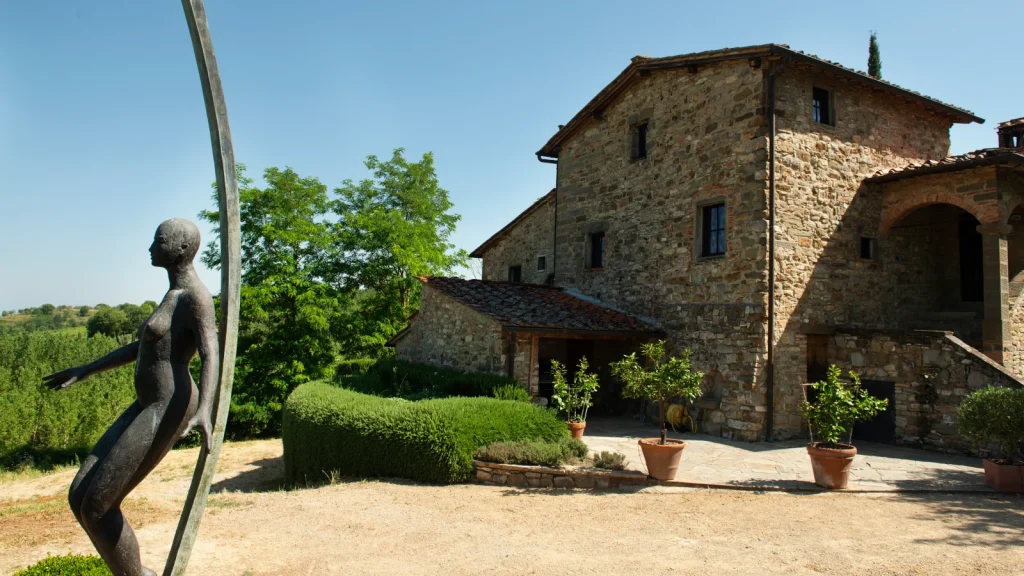
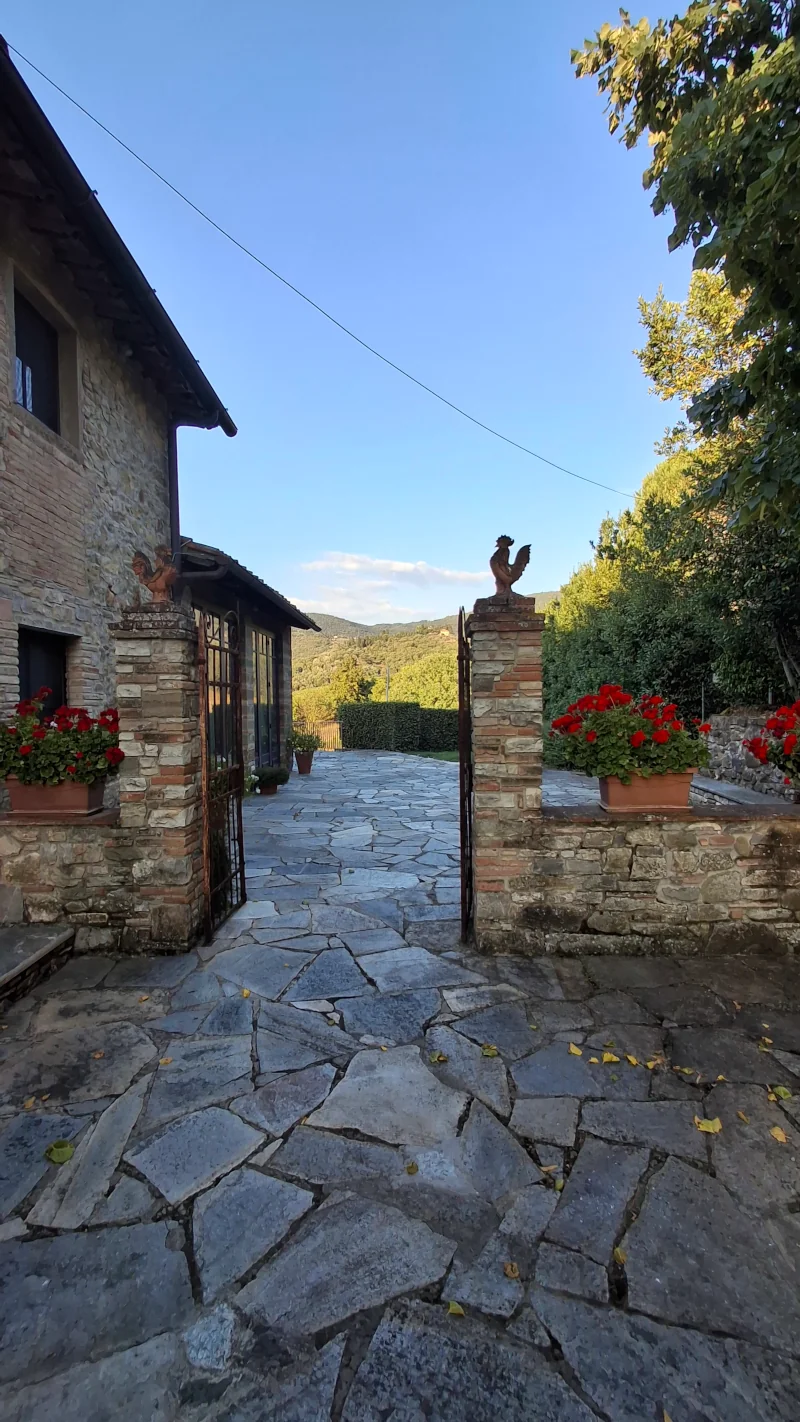
The road winds gently upward to Le Muricce, just outside Greve, toward Lamole. Waiting to welcome us in the garden overlooking the valley is the monumental statue of the Donna Doga, created by Flemish artist Jan Praet — a life-sized female figure who, since 2012, has watched over the vines and the cellar, becoming the symbol of the estate and its labels.
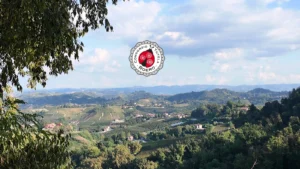
The view from up here is breathtaking — a mosaic of hills and vine rows rolling between Ruffoli and Lamole.
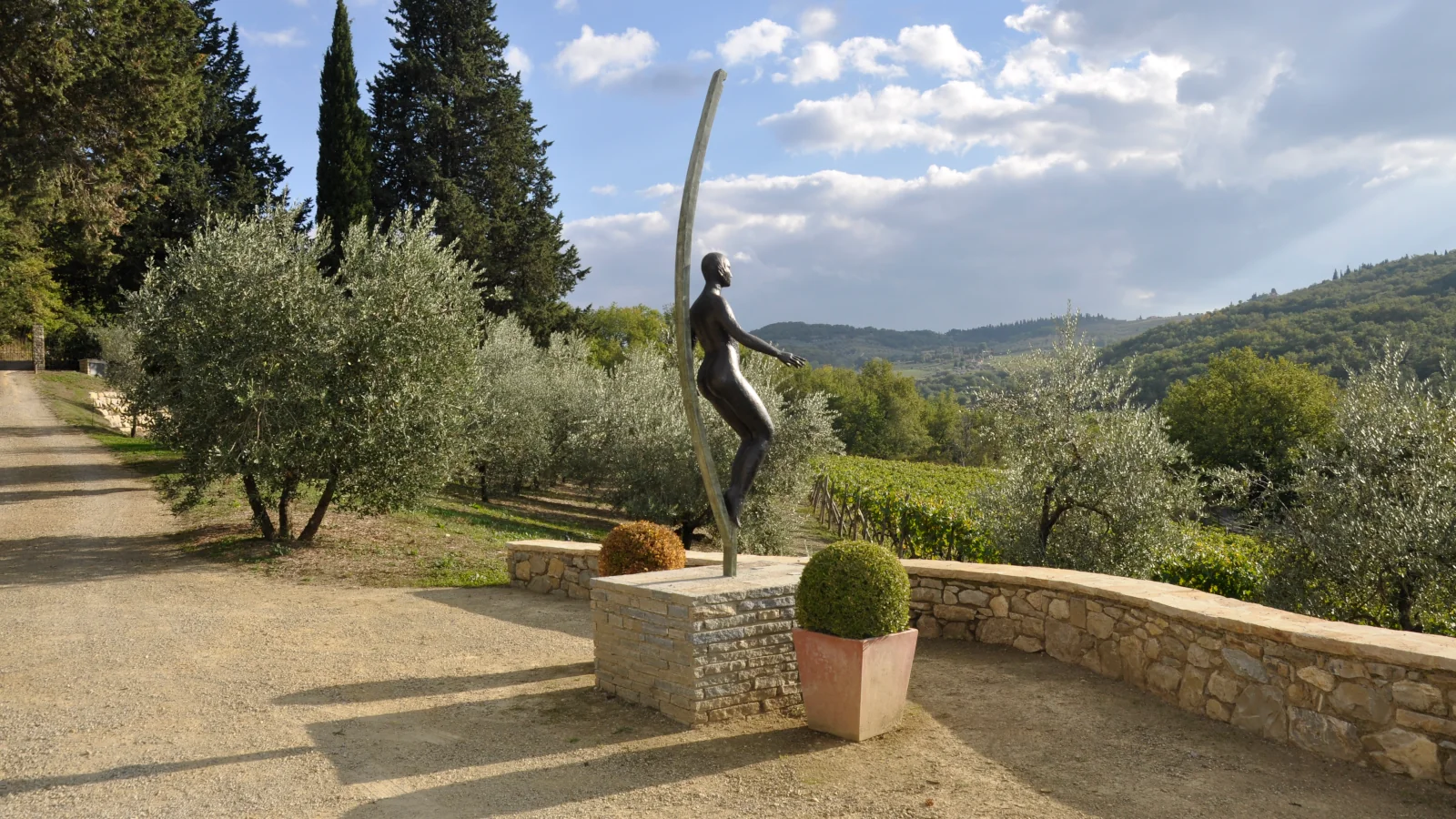
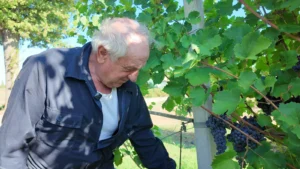
It’s right beside the statue that I meet Bernard: a warm smile, simple yet refined manners — that effortless kind of natural elegance that only a few people seem to carry with them.
He welcomes me like an old friend, telling me the story of this land chosen out of love, together with his wife Rita and their daughters Stefanie and Florence. Behind us, the beautifully restored manor house reflects that same balance of tradition and affection that runs through their entire adventure.
Bernard tells me his journey into wine began elsewhere, further north. France was his first choice — Burgundy, in particular, the homeland of his beloved Pinot Noir. There he became friends with Philippe Charlopin, the renowned winemaker from Gevrey-Chambertin, whose vineyards now include some of the region’s greatest crus: Charmes Chambertin, Echezeaux, Clos Saint Denis, Bonnes Mares, Mazis Chambertin, Corton, and Le Chambertin.
With Philippe, Bernard began tasting, buying wine, helping with harvests — and forging a friendship made of convivial dinners, good food, and good wine. It was Charlopin himself who, in 1997, proposed that Bernard buy a plot in Clos Vougeot. Bernard and Rita didn’t need to be asked twice — and to this day they still own that small corner of Burgundy, entrusted to Philippe’s care and vinification.
But destiny had other plans: despite the pride of owning a Clos Vougeot, the future of wine for Bernard and Rita pointed south.
The spark came as a sort of karmic encounter — in the shape of a bottle: Il Carbonaione by Podere Poggio Scalette.
Bernard and Rita had tasted it several times in Belgium, and each time they were captivated, as if the wine held an irresistible calling.
It was that very bottle that pushed them, in the summer of 1999, to travel to Greve, eager to meet its creators, Vittorio Fiore and his son Jurij — two figures destined to shape the history of Chianti winemaking.
After studying in San Michele all’Adige and Conegliano, Vittorio had worked with several northern Italian estates before becoming, in the 1970s, the General Director of the Italian Oenologists Association.
Shortly after moving to Tuscany, he pioneered a new role — that of the freelance consulting oenologist, offering producers his knowledge, sensitivity, and technical mastery.
Through his work, he helped lead the renaissance of Chianti Classico, freeing it from its folkloric, “cheap fiasco” image and restoring its dignity among the world’s great wines.
Jurij, trained at the Lycée Viticole de Beaune, would carry that legacy forward, becoming an authoritative voice for the region.
The meeting with the Fiores was love at first sight: Bernard and Rita immediately understood that their path could only run through these hills — where Chianti Classico was entering a new era, free from the shadows of the past and ready to reassert itself as a terroir of international excellence.
During that Chianti holiday, they also visited other iconic wineries — Fontodi, La Massa, Rampolla, Querciabella, Montevertine, Il Carnasciale, and Castello di Ama — and each encounter reinforced their conviction that Tuscany was the right place to put down roots.
Their new home was then surrounded by 1.5 hectares of Sangiovese, Cabernet Sauvignon, and Merlot. In 2011 came the purchase of La Casina, a forty-year-old vineyard along the road to Panzano, perched like a balcony overlooking the village church.
Soil of galestro with clay veins, perfect exposure, steep slopes — Bernard immediately recognized its potential, drawing on his experience at Clos Vougeot, where limestone and marl shape great wines.
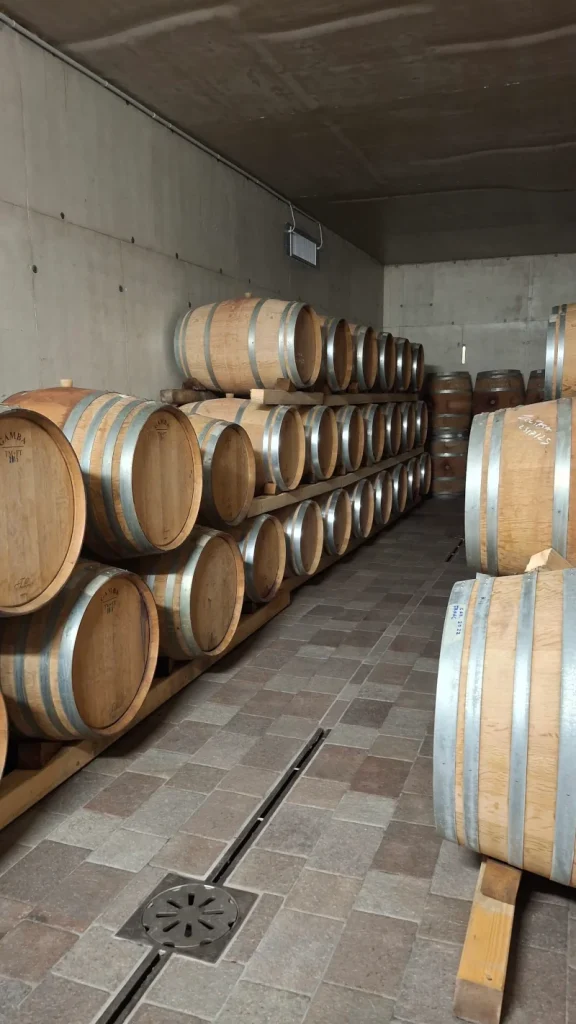
At La Casina he opted for low yields (never above 40 hl/ha) and a respectful approach. “Everything starts in the vineyard,” he tells me — and in the cellar, everything continues gently: soft pressing, no pump-overs, only délestage and frequent tastings to guide the process.
Since 2014, cultivation has been organic, with only natural fertilizers.
The elevated position of La Casina ensures constant ventilation, helping prevent disease and promoting significant diurnal temperature shifts (up to 36°C by day and 15°C at night), giving the wines freshness, juiciness, and elegance.
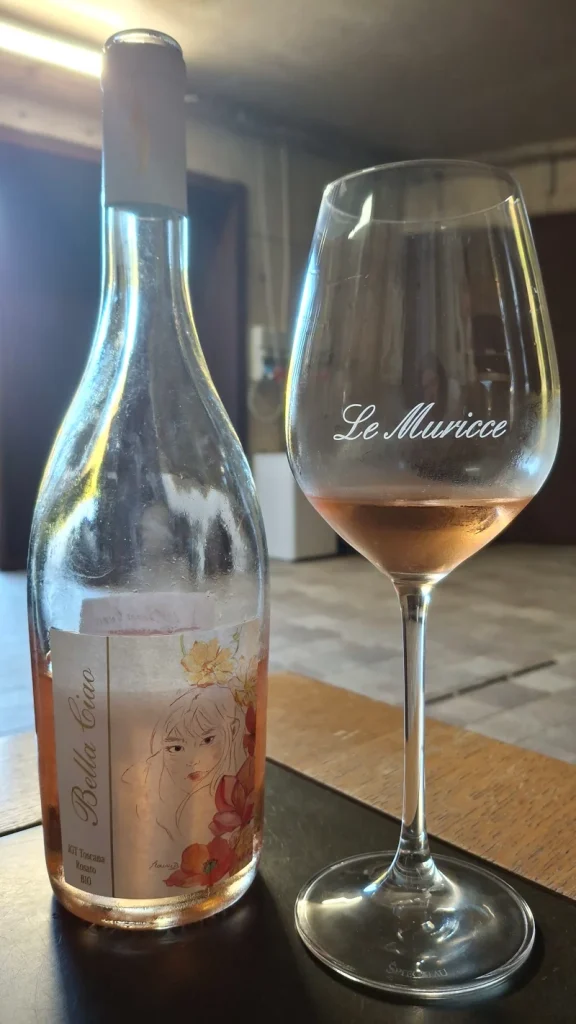
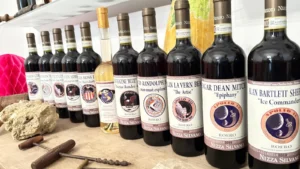
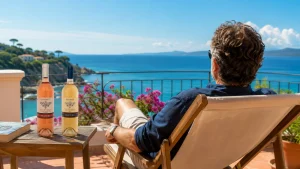
At this point, Bernard pours the first glass: Bella Ciao 2024. Just bottled in June 2025, this rosé marks a turning point — once a blend of Sangiovese with small portions of Viognier, Sauvignon Blanc, and Chardonnay, it now embraces the identity of pure Sangiovese.
It shows a peach-blossom pink reminiscent of Provençal rosés for its delicacy and brightness.
The nose is fine and elegant, with rosehip, iris, and balsamic hints of anise and verbena leaf enhancing its freshness.
On the palate, the varietal signature is clear: the citrussy touch of blood orange gives energy to the taut, vibrant acidity that carries through to the finish.
A clean saline note lingers, like a grain of sea salt on the tongue, blending with long-lasting fruit tones.
It’s the perfect prelude to Bernard’s philosophy: authenticity, freshness, emotion.
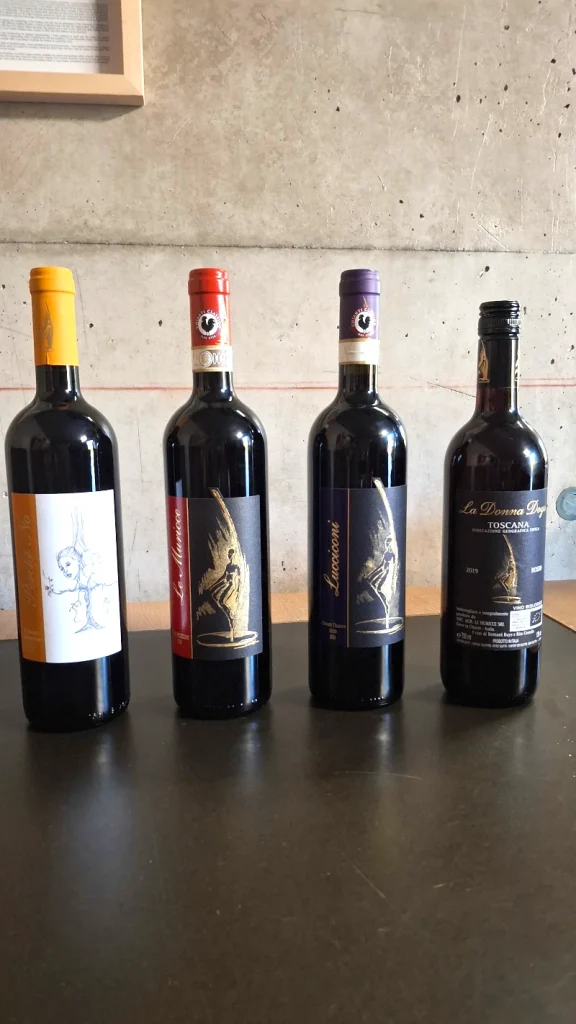
Next comes Lucciconi, the Chianti Classico 2020.
The name was born from Bernard’s wish to call it “Lacrima” — “tear” — a word he loved for its poetic power, but already used to designate a Marche grape variety. It was Jurij Fiore who suggested “Lucciconi,” a Tuscan dialect word evoking that shimmer in the eyes just before a tear falls.
Mainly Sangiovese with 2% Merlot, it ferments for twelve days in stainless steel, with malolactic fermentation split between steel and oak barrels (first and third passage).
In the glass, a medium-intensity carmine announces a floral and terroir-driven bouquet — potpourri of violet and rose, mulberry, blackcurrant, and elegant hints of caramel, incense, moss, and wet leaves.
The palate stands out for its vibrant citrusy acidity, well-integrated with the fine-textured, fruit-coated tannins, leading to a savory, lingering finish with cocoa notes.
The next glass is Le Muricce, Chianti Classico Gran Selezione 2018.
Born from very low yields (only 35 hl/ha), vinified in steel for twelve days, with natural malolactic fermentation and two years of aging in barriques of first, second, and third passage.
A vibrant carmine with garnet reflections anticipates a balsamic opening: licorice root, bay leaf, incense, and nutmeg spice.
Fruit follows with intensity — cherry in spirit and blackberry jam, enhanced by notes of china.
On the palate, fruit-driven acidity dominates, integrating the tannins toward a savory, harmonious close with echoes of china, cherry, and dark chocolate — almost reminiscent of a Boero chocolate.
Then comes Il Poeta 2021, a Supertuscan born from the so-called “vineyard of the poet,” where Merlot, Cabernet Sauvignon, and Sangiovese meet in a harmonious dance — each playing its part: the softness of Merlot, the structure of Cabernet, the freshness of Sangiovese.
A deep ruby with amaranth highlights, it offers a complex floral bouquet of lavender, iris, rose, and violet, followed by balsamic notes of bay leaf and nettle, and dark fruit of mulberry and blackcurrant.
Fresh and vibrant on the palate, it’s guided by a citrus-edged acidity merging with fine tannins, leading to a savory, persistent close.
Final notes evoke hazelnut chocolate and shades of tobacco — a balance between international flair and Tuscan roots.
The journey continues with Perché No 2022, a pure Cabernet Franc, aged in second-passage Sylvain Grande Réserve barriques.
In the glass, a deep, lively ruby with amaranth hues.
The nose is balsamic — bay and eucalyptus — preceding the depth of blackcurrant and blueberry, finishing with white pepper spice.
The palate is juicy and dynamic, acidity and fruit-coated tannins moving in sync across the mid-palate with cherry and plum echoes, offering balance and pleasure.
The tasting closes with Per Florence 2022, a pure Cabernet Sauvignon dedicated to his daughter Florence, aged in new Sylvain barriques.
An intense ruby with amaranth reflections; the nose reveals lavender, blackberry, and cassis, followed by balsamic hints of bay.
The palate opens with bright fruit freshness, giving rhythm and verticality to the sip, supported by fine, central tannins.
The finish is savory and persistent, recalling elegant notes of dried fruit — a wine that marries structure and grace, with an emotional imprint that makes it unique.
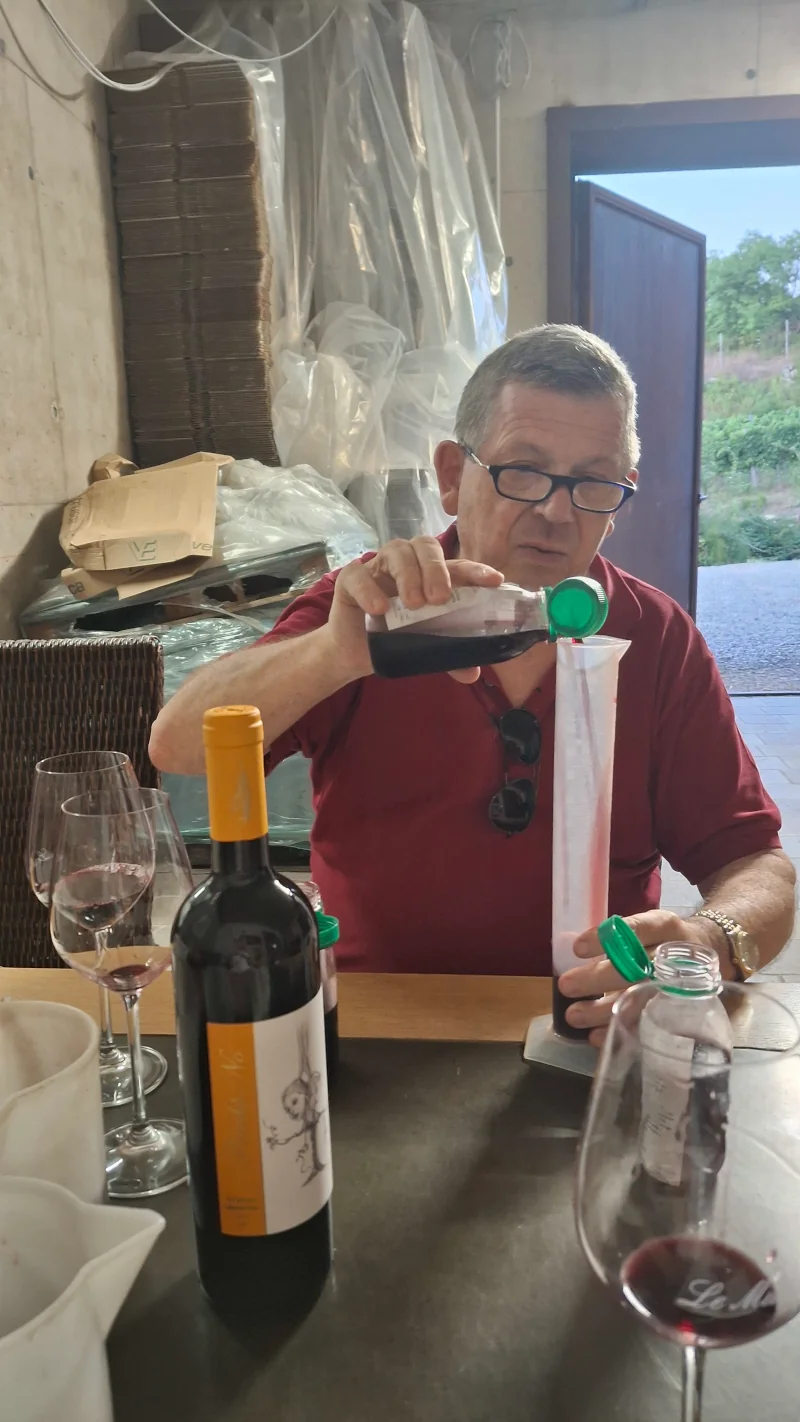
Together with Fabio, cellar manager and Bernard’s constant right hand, I experience a rare and precious moment: Bernard invites me to take part in blending his Cabernet Franc — shaping the future cuvée.
It’s not just a technical step, but an intimate gesture, almost a family ritual that opens the beating heart of his winery.
Tasting, discussing, deciding together what the soul of the wine will be means entering a circle of trust few are granted.
In that moment, I no longer feel like a mere guest but part of their world — an honor that moves me deeply and remains one of the most genuine and touching experiences of my journey.
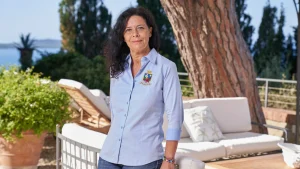
At the end of the day, Bernard welcomes me into his home, where I finally meet Rita, his life companion — a luminous presence completing the picture of this adventure.
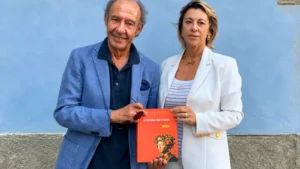
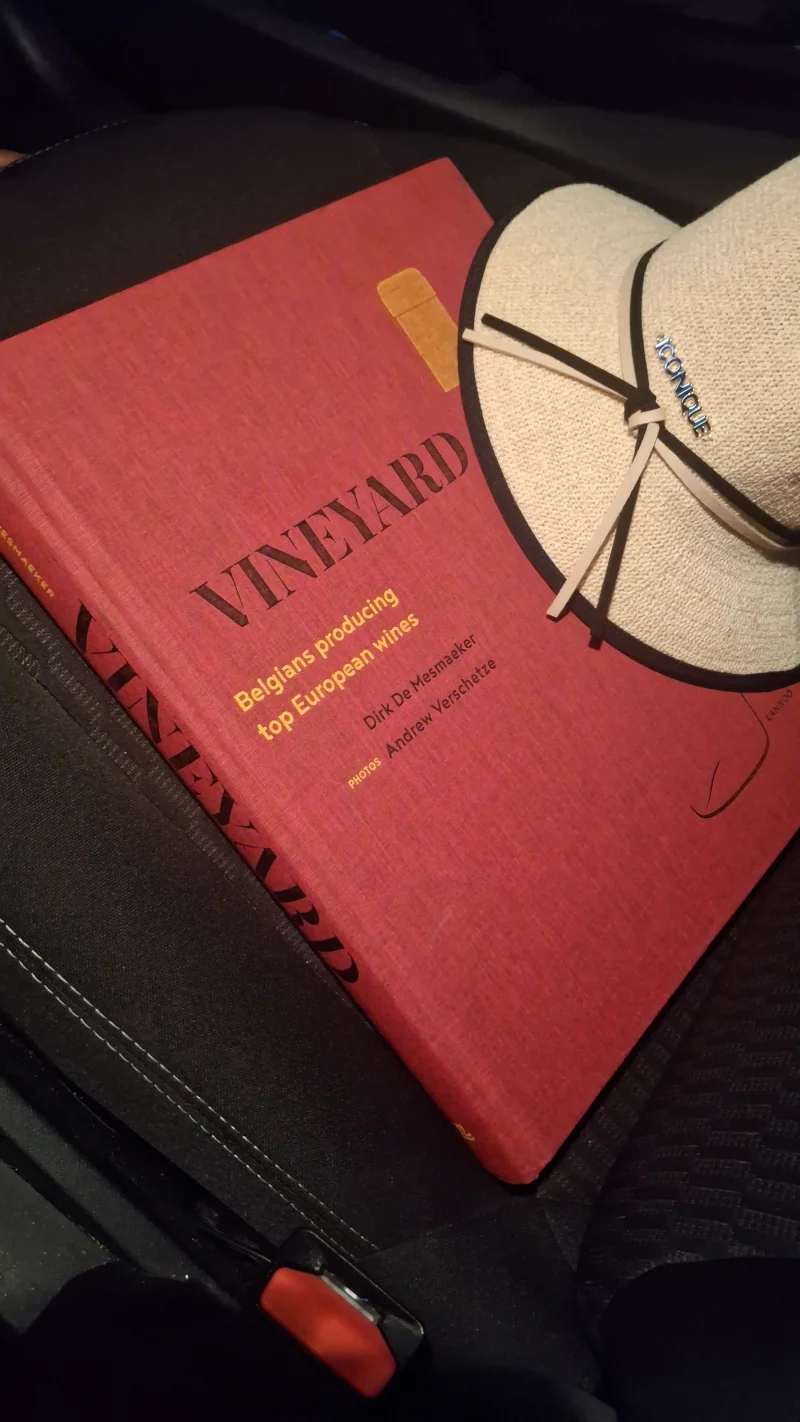
Amid smiles and conversation, Bernard offers me a gift: a copy of Vineyard, the book celebrating the most influential Belgian figures in the world of wine.
That simple yet meaningful gesture becomes far more than a souvenir — it’s the symbol of a bond that transcends wine, a trust that made me feel truly welcomed, as if I were part of their story.
In that moment, I felt a deep emotion — a tenderness that brought me back to the essence of why I love to tell stories about wine: because wine is sharing, it’s intimacy, it’s life intertwined with other lives — capable of stirring emotions that cannot be measured by points or technique, but by the quiet return of a memory that moves you when you least expect it.