From 18 to 20 September, Avezzano hosts the third edition of the widespread festival dedicated to the food and agricultural heritage of the Marsica region. At its heart are producers, local communities and a territory that has built a significant part of its identity around agriculture.
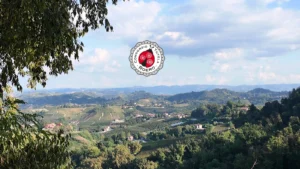
There are places where agriculture is not simply an economic sector, but a true expression of identity. Marsica and the Fucino plain fully belong to this category: a vast agricultural area surrounded by the mountains of Abruzzo, transformed over time into one of Italy’s most important production hubs and still capable today of telling the story of its landscape through what grows from the soil.
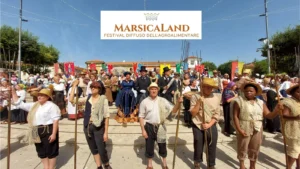
This is where Marsicaland takes shape. The widespread food and agriculture festival returns to Avezzano from 18 to 20 September for its third edition, bringing together local produce, culture, memory and new perspectives for development.
It all begins with a territory of considerable productive scale. The agricultural district of the Fucino covers around 13,500 hectares and involves a network of approximately 2,000 businesses, generating an estimated value of around €300 million. These figures help explain the importance of agriculture to the economy of Marsica, but they tell only part of the story.
Behind those numbers are family-run businesses, farmers, cheesemakers, charcuterie producers, olive growers, winemakers and small-scale artisans who help keep alive a heritage of knowledge, biodiversity and deep connections with the land.
Marsicaland was created precisely to make this network visible, taking it beyond the places of production and into the heart of the city. Avezzano thus becomes a meeting point between producers and consumers, between the farming world and the urban community, between tradition and new opportunities for development.
One of the symbolic spaces of the festival will be the Mercato della Terra, the Earth Market, conceived not simply as a place to buy local products, but as an opportunity for direct contact with the people who produce them. Tasting the food, meeting those behind it and understanding where it comes from gives the idea of a short supply chain a meaning that goes well beyond commerce.
Marsica, after all, is a land deeply shaped by its relationship with the landscape. Today’s Fucino plain is the result of the transformation of what was once Italy’s third-largest lake, drained in the nineteenth century and gradually converted into one of the most fertile agricultural areas on the peninsula. It is a history that still influences the economy, the organisation of the territory and even the local imagination.
This is also why Marsicaland aims to go beyond the simple celebration of local produce. The festival becomes an opportunity to reflect on the future of inland areas, generational renewal, mountain agriculture and the impact that climate change may have on places where production and the environment are closely intertwined.
Alongside talks and moments of discussion, the programme includes workshops, tastings and show cooking led by local restaurateurs, who are invited to interpret the raw ingredients of the territory through their cuisine. This is an important step, because it allows each product to be understood not as an isolated element, but as part of a broader gastronomic culture.
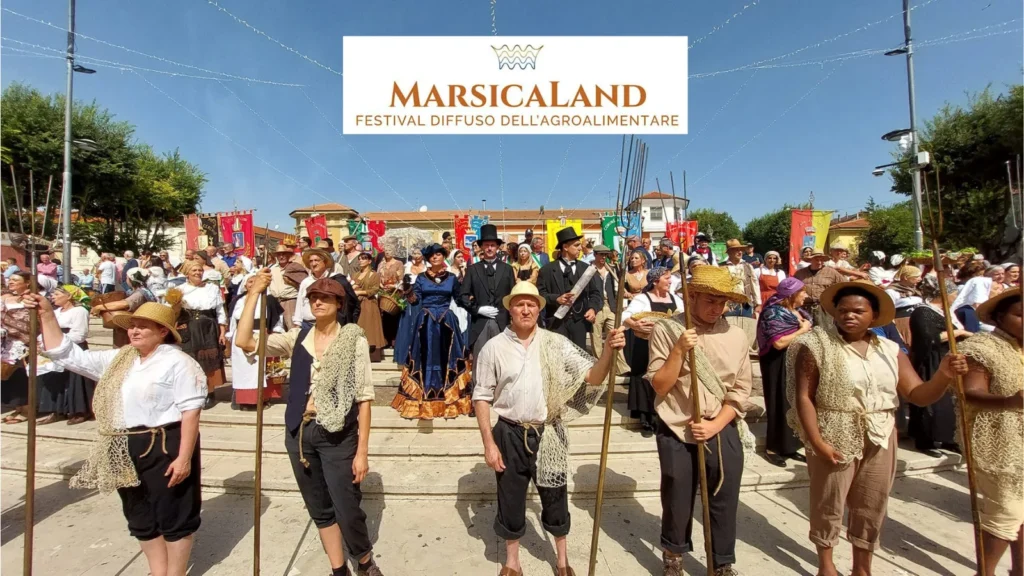
Then there is the community dimension. The Corteo storico dei Marsi, the historical parade of the Marsi, with its traditional costumes and references to the area’s roots, brings an element to the festival that goes beyond food and restores a sense of belonging to a community that continues to recognise itself in its own history.
Marsicaland therefore attempts to bring together two dimensions that do not always find it easy to communicate with one another: on the one hand, a modern and productive agricultural sector capable of supporting a significant part of Abruzzo’s economy; on the other, the memory, villages, landscapes and traditions that give meaning to those same products.
And perhaps this is where the festival finds its most compelling identity. Not simply a showcase for local food and agriculture, but an attempt to tell the story of Marsica through what its land produces and through the people who continue to work it.
From 18 to 20 September, Avezzano therefore becomes the centre of a story that begins with agriculture but reaches much further: towards culture, tourism and the possibility of transforming a productive heritage into a true territorial identity.