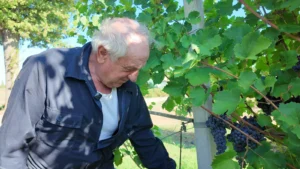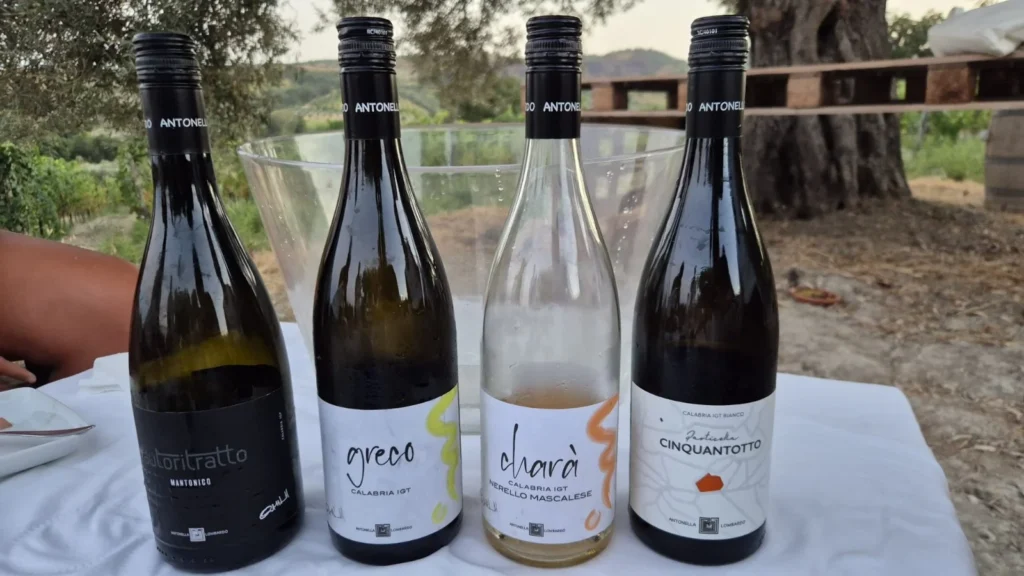
At the end of August, in the countryside around Bianco, you have to wait until late afternoon before the heat finally begins to ease. The sun is still unmistakably that of Calabria’s Ionian coast, stubborn even as it starts to drop, but among the vineyards the air slowly becomes breathable again. Under a large olive tree, Antonella Lombardo has created an outdoor hospitality area using the wooden platforms normally used to pack pallets for shipping. Just a few metres away are the vineyard rows; in between, almost seamlessly, grow caper bushes, wild liquorice and Mediterranean scrub.
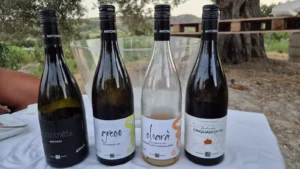
Cured meats, cheeses and traditional Calabrian dishes arrive at the table. In the glasses, almost the entire range of wines produced by the estate. More than an organised tasting, it feels like a long collective conversation stretching from full daylight into evening. And that is probably the best way to approach Antonella Lombardo’s wines, because here landscape and bottle are constantly reflecting one another.
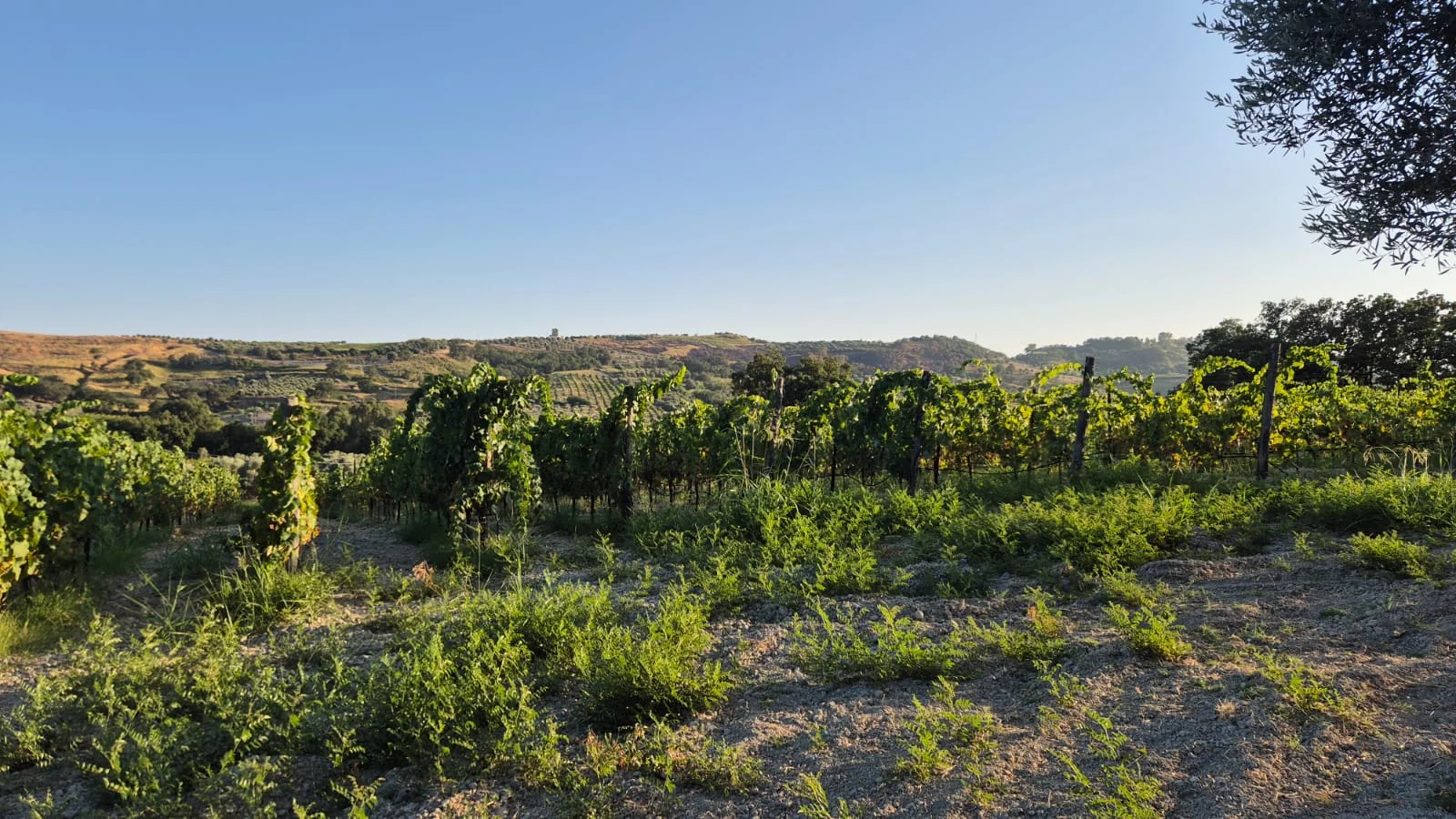
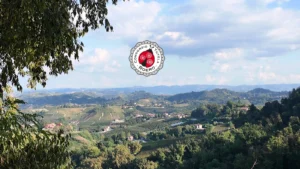
We are in Bianco, on the Jasmine Coast, in the Locride area, one of Calabria’s oldest wine-growing regions and, at the same time, one of its least talked about. All around are clay ravines, the Ionian Sea lies ahead, and the Aspromonte mountains rise behind. Not far away, between Bruzzano, Casignana and Ferruzzano, hundreds of ancient rock-carved wine presses still survive, evidence of a wine culture that predates any modern production regulations by centuries.
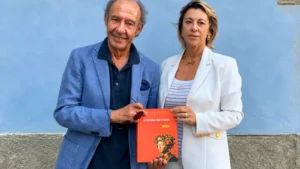
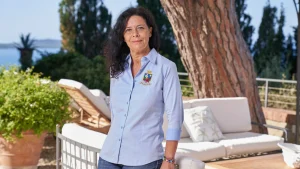
Antonella Lombardo did not enter this world through family inheritance. She was previously a lawyer, including for a time in Milan. Then came the return to Calabria, sommelier studies and, in 2019, the beginning of a project built almost entirely from scratch: leased land, other plots purchased, new plantings and an old cooperative winery brought back into operation. Today she cultivates around seven hectares, personally oversees both vineyard and winemaking, and works with agronomist Stefano Dini and oenologist Emiliano Falsini.
Told this way, it might sound like one of many stories of returning to the land. But the interesting part begins afterwards. Lombardo chose to focus the project almost entirely on what this territory already had: Greco di Bianco, Mantonico, Gaglioppo, Calabrese Nero and Nerello Mascalese. Not as a catalogue of native grapes to display on labels, but through a gradual attempt to understand vineyards, plots and the differences between one soil and another.
It is no coincidence that she names Burgundy among her references, alongside the Langhe and some of Tuscany’s great wine territories. Not because she wants to imitate their styles, but because of the idea that a wine should progressively narrow its focus: from region to territory, from territory to vineyard, and finally to the individual parcel.
Mantonico and a gamble that goes all the way to sparkling wine
If there is one grape that captures this search particularly well, it is probably Mantonico. An ancient Calabrian variety, long relegated to the margins, it has become one of the pillars of the estate.
Autoritratto offers its most composed expression: a structured white without heaviness, capable of combining substance and tension. Mediterranean herbs, citrus and a pronounced saline note emerge in the glass, but above all there is a texture that makes it difficult to confine Mantonico to the category of simply fresh, immediate whites. This is a wine that seems more interested in time than in instant effect.
The most intriguing gamble, however, comes with Folie de l’été, a traditional-method sparkling wine made entirely from Mantonico. The project began with the very first vintages and reached its first release only after a long stay in the cellar: 48 months on the lees, pas dosé, just 600 numbered bottles.
The choice might seem almost eccentric in a land associated, in the collective imagination, with sun and ripeness. In the glass, however, the idea makes sense: Mantonico has enough structure and acidity to handle both time and secondary fermentation. Zero dosage leaves the palate dry and taut, without seeking reassuring softness. Rather than imitating models created elsewhere, this is a way of discovering just how far a still largely unexplored grape variety can go.
Greco di Bianco, a celebration of aromatic salinity
The other pillar of white wine production inevitably centres on Greco di Bianco, the Malvasia delle Lipari biotype that in this area gives rise to an extraordinary passito, but not only that.
The wine previously called Pi Greco is now simply named Greco and is perhaps the most immediate interpretation of the grape: fruit, freshness and, above all, that saline quality that returns insistently in wines from these vineyards.
Particella 58 moves into a different register. The name itself already suggests a narrowing of focus to a single plot. A brief maceration on the skins adds depth without turning the wine into an exercise in extraction: the palate gains substance, remains dynamic and retains a saline vein that seems to connect it to the more immediate expression of Greco.
Then there is Cheiras, the passito made from Greco di Bianco, perhaps the wine in which the weight of local tradition is most evident. Here the interesting part lies precisely in avoiding turning tradition into a relic. The style is not one of opulent sweetness: peach, herbs and Mediterranean scrub accompany a palate that seeks movement and freshness, distancing itself from the more concentrated and caramelised interpretations of passito.
And what about the red grapes?
Even when moving on to the reds, the impression is that the aim is not to demonstrate the power of the South. If anything, quite the opposite.
Aoristo starts from Gaglioppo and looks above all for agility and freshness. The fruit is not pushed towards concentration, the tannin keeps the character of the grape without becoming dominant, and the oak accompanies the wine without shaping it in its place. It leaves room for earthy, darker notes as well as saline, sun-filled, almost Mediterranean tones, ranging from porcini mushroom to dried datterino tomato, with hints of rust, liquorice and tea rose along the way. It is a reading far removed from the red Calabria that for years sought authority through power, extraction and ripeness.
Charà, made from Nerello Mascalese vinified as a rosé, works even more through subtraction: red fruit, citrus, a subtle spicy component and a savoury palate that never sacrifices personality in the pursuit of easy drinking.
Ichò, meanwhile, brings together Gaglioppo, Nerello Mascalese and Calabrese Nero. Here the weave becomes denser: the fruit turns darker, sanguine and spicy notes appear, and the tannin becomes more pronounced. Yet the intention remains the same: not to weigh the wine down, to preserve movement even as structure and depth increase.
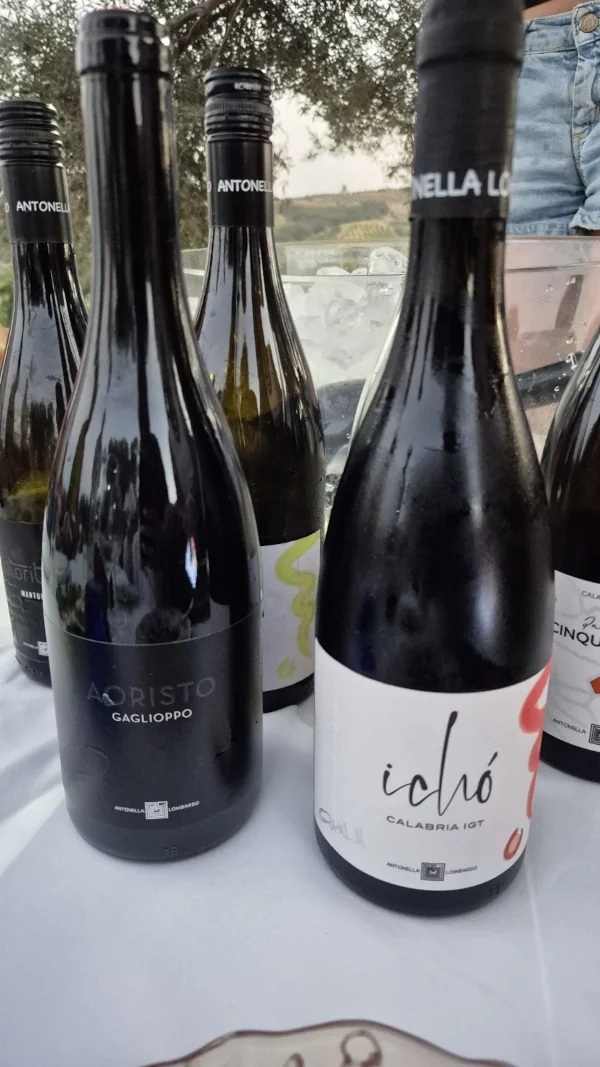
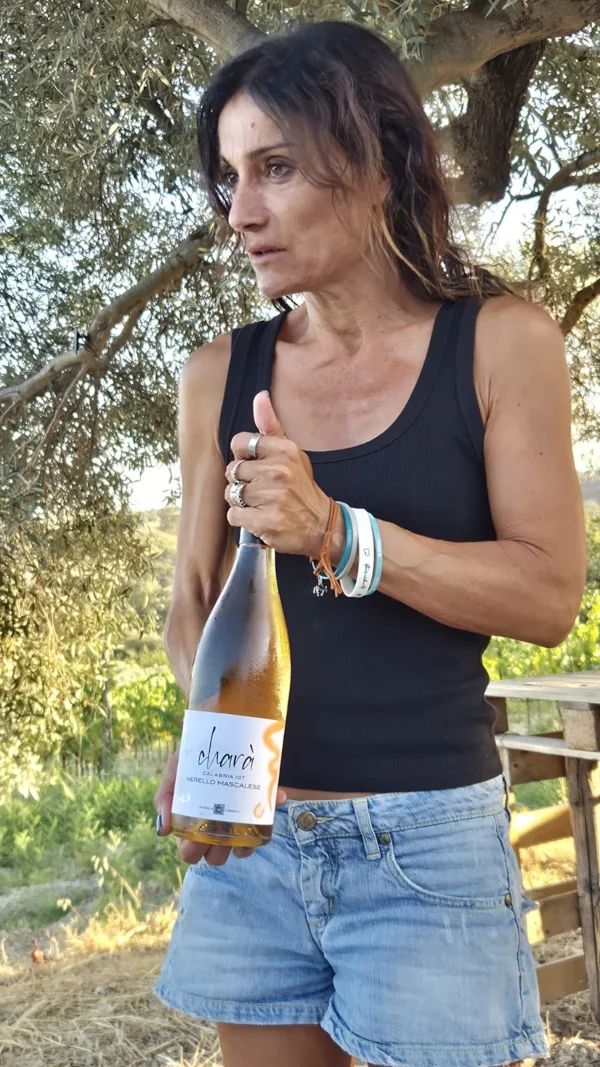
Tasted one after another, the wines reveal a coherence that goes beyond the differences between the individual grapes. They do not try to erase the warmth of this part of Calabria; that would feel artificial. Instead, they seek to control it, maintaining freshness, acidity and, above all, a saline quality that recurs from whites to reds.
Meanwhile, beneath the olive tree, the tasting stopped being a tasting a long time ago. Dishes keep moving around the table, some bottles are revisited, the conversation wanders and then returns to wine. Around us, the light has changed and the heat has finally begun to retreat.
Perhaps it is precisely while walking through those vineyard rows, brushing past a caper bush or recognising wild liquorice growing between one vine and another, that some of the most overused words in wine recover a tangible meaning. Identity, territory, biodiversity: terms that on brochures all too easily begin to sound the same.
Here, they simply become what grows all around.
And Antonella Lombardo’s wines seem to start from exactly there.