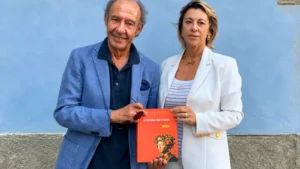
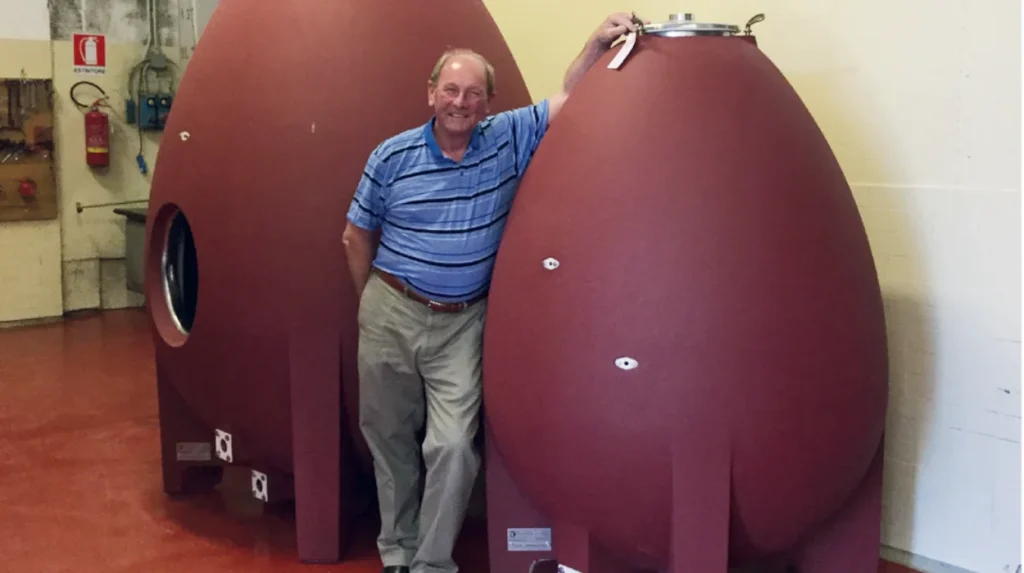
Some approach wine out of passion. Others because of tradition, and still others by chance. But when I met Robin Baum in Radda on May 25th, I understood that there’s much more to him: there’s a vision. A sparkling, curious gaze that betrays that touch of madness that often accompanies the greatest dreamers. He’s English, affable, with the lightness of someone who has never stopped chasing their inner fire. And today, that fire burns in the form of wine. A wine that is born from the land, breathes in the clay, and moves in the round embrace of amphorae.
Robin is a man with multiple lives. The first was that of a lawyer: a law degree, a solid career in corporate law, a consultant for Rothschild—and inevitably, Bordeaux. It was there that wine entered his life, like a thunderbolt foretold. France was the first flame, but Italy—more precisely Tuscany—conquered him in 2000, when a friend introduced him to Brunello di Montalcino, particularly that of Tenuta di Argiano. From there, the purchase of two barriques, followed by five years of collaborations and a silent promise: “One day, I’ll make my own wine.”
The second life began with Winemakers WB London, an Italian wine import company in the UK, later passed on to his son John. But it’s with his third rebirth that Robin truly found his voice. A voice that speaks of craftsmanship, selection, and above all, respect for what the land and the vine know how to express, without filters.
The Art of the Amphora: A Millennia-Old Choice
Baum’s wine is not born out of fashion, but out of an expressive need. And it finds its perfect space in the amphora, a container as ancient as wine itself. Used in Georgia for over 6,000 years (the famous Qvevri), the amphora allows for slow micro-oxygenation thanks to the porosity of the clay, without releasing tertiary aromas like wood. It is a method that returns the authentic voice of the grape and the terroir.
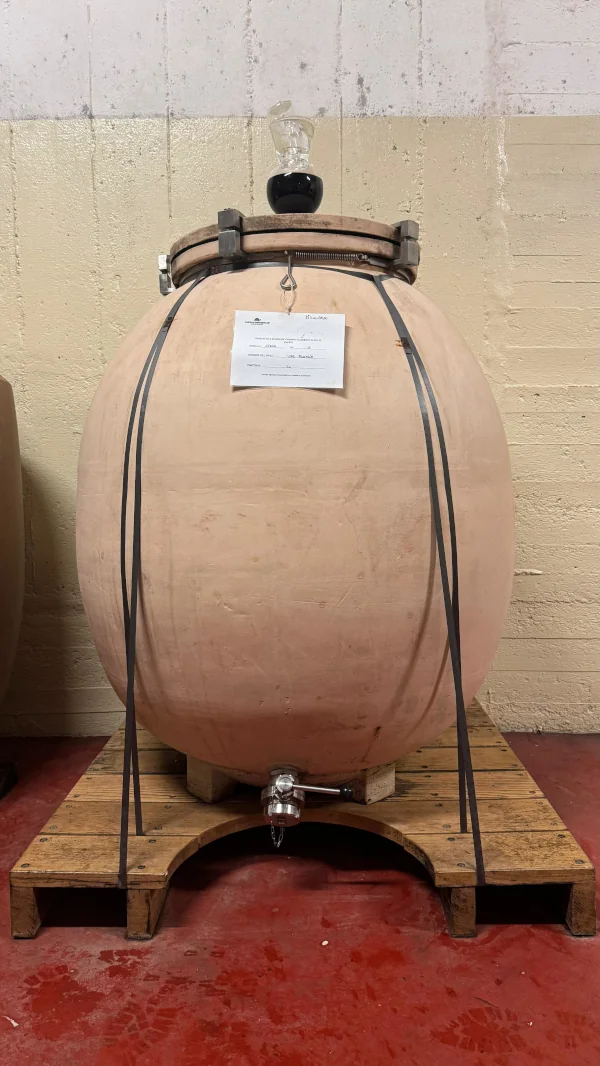
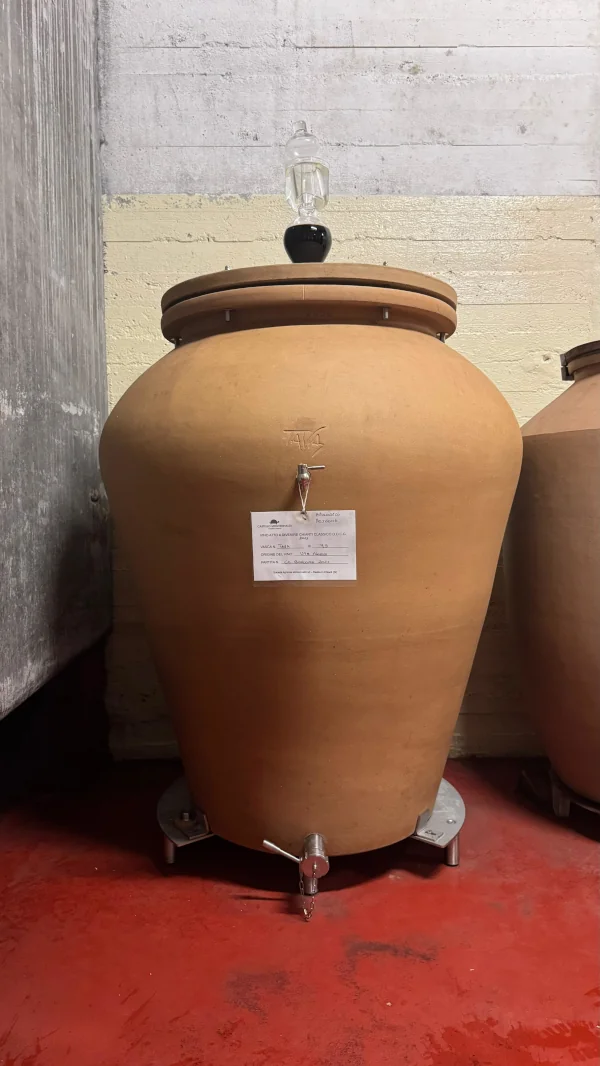
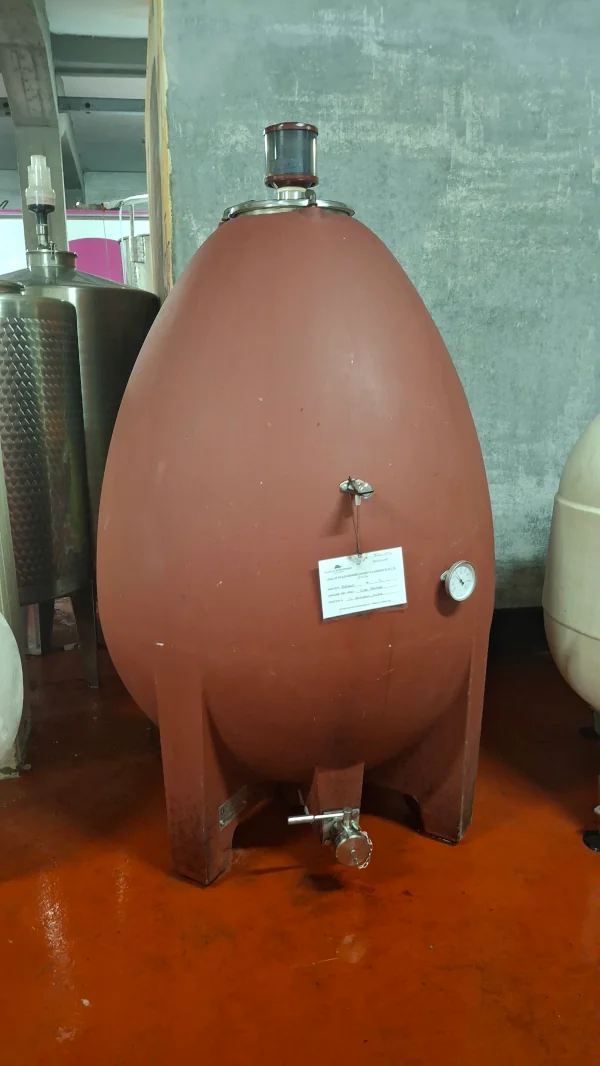
Robin, together with Fabio Sarti—his cellar master and trusted collaborator—selects small batches of grapes from outstanding producers. The winemaking takes place in amphorae fired at around 1,200°C, a key temperature that regulates the size of the pores in the clay: the higher the firing, the lower the porosity, and therefore the slower the oxygenation. The amphora is not just a container, but a natural thermal conductor: cool air enters through the micro-pores and regulates the temperature of the fermenting must, without external intervention.
The shape? Oval, inspired by the Roman amphora. An ancient geometry that encourages the natural circulation of wine inside, generating a kind of spontaneous batonnage: just rotate the egg, and the mass becomes even, without invasive interventions. A delicate dynamic that enhances the structure of the wine without ever forcing it. This is also where Robin’s nickname comes from: The Egg Man.
The Heart of Radda and the Power of Selection
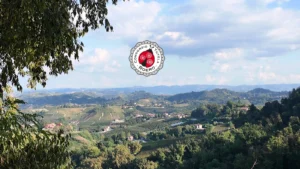
Robin chose Monterinaldi, between Panzano and Radda in Chianti, as the beating heart of his project. It is here that he met Mauro Bennati, the estate manager open to experimenting with amphorae. But every wine from Baum is a journey, a fragment of Italy told through alternative containers, respectful vinifications, and a biodynamic approach when possible.
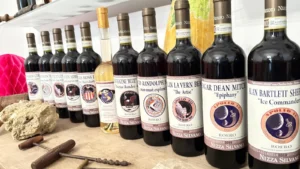
Limited production of 5,000 bottles per year, certified organic, and biodynamic techniques for some labels: each wine is a clear photograph of the place from which it originates, with natural lenses and no unnecessary stylistic filters.
A Tour of Italy in Six Glasses
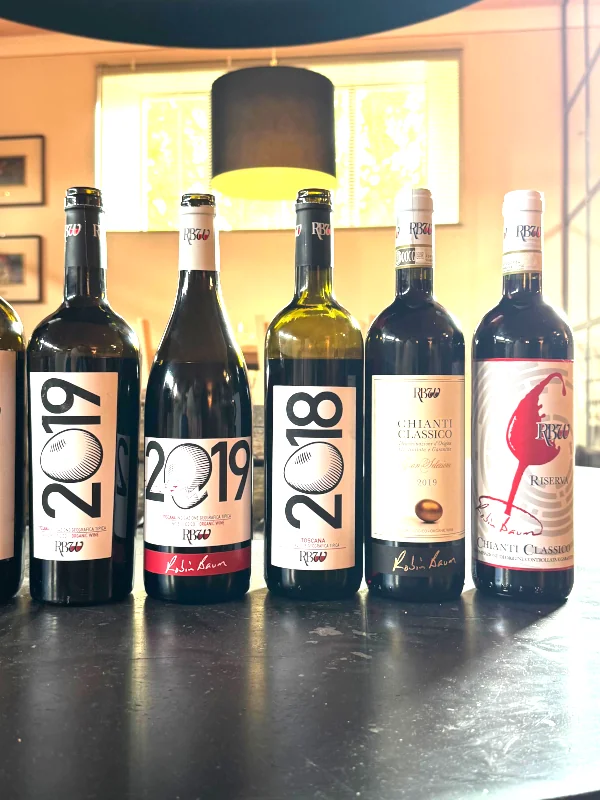
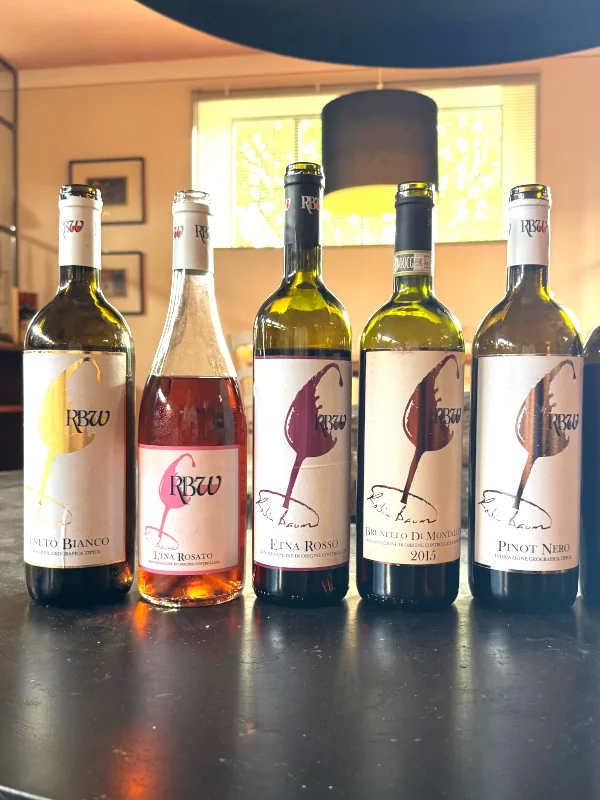
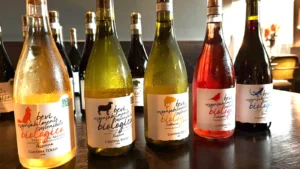
And so, one afternoon in Chianti Classico, Fabio Sarti guided me through a tasting that felt like a Giro d’Italia in a glass: an oenological race starting in the north, in Veneto, with a pure Garganega from Contrà Soarda.
Pale yellow, mineral like its volcanic soil, it whispers of medicinal herbs, citrus fruits, and an elegant smoky finish, recalling toasted hazelnuts. On the palate, it’s sharp, almost sandy, with acidity and saltiness chasing each other in a bitter finish that vibrates with energy and materiality.
Next is a Pinot Noir, also from Veneto, with an elegant carmine hue. Lavender, peony, and cyclamen on the nose, followed by dark fruits and hints of honey. On the palate, it is fine, elegant, with a sculpted tannin and harmonious salinity that recalls the terroir with surgical precision.
It is with the 2018 Sangiovese that Tuscany enters the scene. And it is here that everything changes: this is the wine that, in Radda, conquered me. An encounter that wasn’t just tasting but a revelation; from here, my desire to discover who Robin Baum was began—the man who lets Sangiovese speak with such disarming honesty.
On the nose, rose and wisteria open the aromatic spectrum gracefully; followed by spicy whispers and a balsamic touch that anticipate the depth of the taste. On the palate, the wine is genuine and vibrant, with silky, elegant tannins, and a salty persistence that stretches naturally, telling the essential beauty of Chianti Classico.
Further south, in Montalcino, the Brunello is caressed by the amphora after its classic aging. Elegant, balsamic, profound. Notes of licorice, coriander, dried rose, and dehydrated fruit. On the palate, the spiciness intertwines with refined tannins, creating a Brunello that is both typical and surprising.
In Castellina in Chianti, the tasting journey changes register with an elegant and unusual blend: 95% Merlot and 5% Alicante Bouschet, vinified in a three-way dance among cement, barrique, and amphora. The color is intense ruby, compact, a prelude to a spicy, velvety nose, where the Alicante adds peppery notes, while the Merlot responds with blood-like softness and creamy roundness.
On the palate, the sip is rich, full, and harmonious, in a balanced game between the silky depth of the Merlot and the lively aromaticity of the Alicante, closing with a salty, persistent finish. A wine that seduces without raising its voice.
Baum’s Syrah represents an intriguing deviation from the amphora thread. In this case, the wine is aged in Hungarian oak, and the choice is not accidental: it’s a precise desire to explore how a container, however different, can still speak the language of balance and elegance. The label, in perfect British humor style, winks at the audience with a small detail: the stylized egg appears here in red and broken, ironically signaling its absence. A note of spirit in a project that never loses its sense of humor while maintaining absolute rigor in the glass.
Visually, the Syrah presents a vivid, deep color, leading to an intriguing olfactory complexity. The opening is balsamic: licorice and bay leaf take center stage, followed by a floral whisper reminiscent of rosewater. Then, suddenly, a sweet, retro note: that of Leone violet candies, a gentle, nostalgic hint that adds grace to its aromatic structure.
On the palate, the sip is consistent with the nose: a well-centered, elegant tannin, sculpted but not intrusive, moving harmoniously with a floral heart and a finish of subtle salinity, reminding us that even outside the amphora, Baum can maintain that distinctive trait that makes his wines a coherent and unmistakable sensory story.
Baum’s Oenological Journey Ends with a Dive into the Earth’s Depths: Mount Etna
The Etna Rosato, made from pure Nerello Mascalese, presents itself with a vibrant, almost electric salmon color: a hue that already foreshadows that nervy freshness which will dominate the sip. On the nose, the initial floral note is spring-like—cyclamen and primrose—followed by crisp, juicy red fruit, between marasca cherry, currant, and pomegranate.
On the palate, it’s surprising: light in body but not in intensity, with a central tannin, perfectly sculpted, intertwined with a sharp, almost marine saltiness, in a slightly bitter finish created by the meeting of tannic vibration and mineral component. This is no ordinary rosato, but a red disguised, telling the story of altitude, wind, volcanic stone, and the tension of a territory that makes its presence known even in the most delicate wines.
And then there’s the Nerello Mascalese vinified in red, the Etna Rosso DOC, which Robin interprets with almost theatrical depth. Visually, it announces itself with a dark and profound robe, and with the first breath, one realizes that we are facing a wine with a cap on its head and a rifle in its soul. Licorice root, bay leaf, wet earth, but also blood-like notes, red orange, and caper flowers: a carnal, material nose, alive like the rock that birthed it. The scents layer, blending with smoky notes that seem to evoke footsteps on black basalt, between lapilli and sky.
On the palate, the sip is muscular but elegant: tannins present, polished, accompanied by a good acidity that keeps the rhythm and sustains the drink through a salty and bitter finish, where bitter orange and aperitif bitters reappear. It is a wine that walks confidently on the slopes of the volcano—wild yet controlled, extreme yet balanced—and closes the journey with a seal of authenticity and strength.
One Man, One Amphora, An Entire Italy
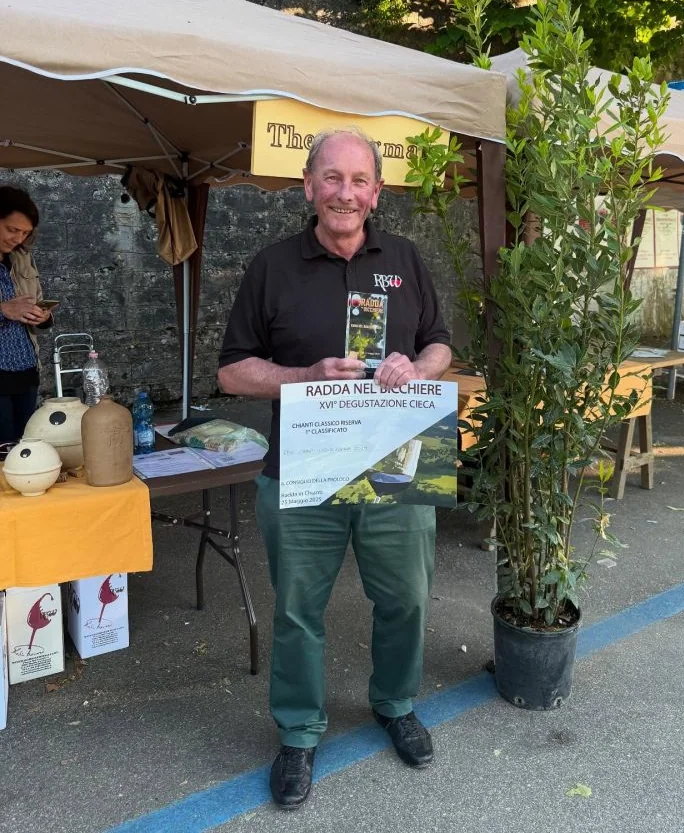 Robin Baum does not reinvent wine. He listens to it. He speaks to it softly, caresses it, lets it express itself without force, as one does with something they truly love. With him, the amphora is not just a container but a messenger of time, a bridge between the earth and memory. Baum is a gentle alchemist, one of those rare modern artisans who knows when to intervene and when to step aside. In a world that often shouts to be noticed, he chooses the eloquent silence of raw material, the slowness of transformation, the humility of listening.
His wine does not follow trends but traces sincere paths. From Radda to Etna, passing through Montalcino, Bassano, and Castellina, every bottle is a page of Italy written with the clean handwriting of terroir. No overwriting, no masks. Just identity, depth, and respect.
Baum doesn’t impose a style: he gives back a soul. And he does so with the lightness of great artists, with wonder still alive in his eyes and that spark of lucid madness that belongs to visionaries.
“Less is more,” says a famous motto of English architecture. But here, between selected vines and terracotta eggs, between fragrances that tell the story of slow dawns, hands marked by work, and beats of anticipation, less is everything. Because when you remove the superfluous, only the truth remains. And in Robin Baum’s glass, that truth is clear, alive, and moving.