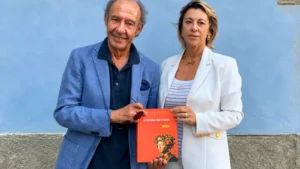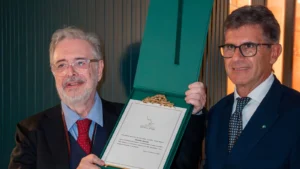
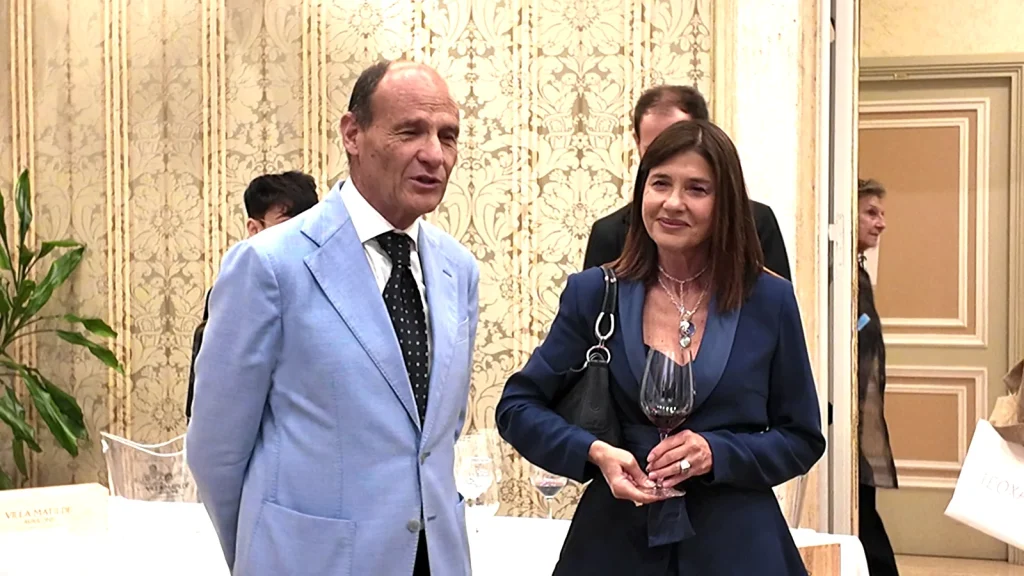
On June 20th, in the Sala Zuccari of Palazzo Giustiniani, a special afternoon event was held, promoted by the Italian Senate to celebrate the centenary of the birth of lawyer Francesco Avallone.
An occasion to honor the man behind the revival of Falerno del Massico and to reflect on the cultural significance of a wine whose roots trace back to ancient Rome. A story spanning more than two thousand years, brought back to life thanks to one man’s vision and determination.
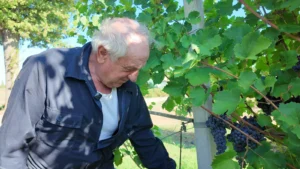
As the Avallone family recounted during the event, the Falerno project was born from their father’s tenacity. After the devastation caused by phylloxera in the 19th century, which wiped out this legendary wine for over a century, Francesco Avallone began an extensive process of research and recovery. He selected native grape varieties from Roman times and replanted vineyards on the very lands that, in the days of Julius Caesar and Cleopatra, had once produced the renowned Falerno.
It was also an opportunity to reflect on how today’s Falerno, while proudly carrying within it 2,500 years of history, is very much “a product that looks to the future.” The young entrepreneurs of Villa Matilde spoke candidly about engaging younger generations, with the goal of building a more authentic and engaging cultural narrative around wine.
They explained that their “great team,” supported by their “wonderful parents,” enables them to carry forward the legacy of Falerno “without obstacles,” maintaining a perfect balance. With two new generations now leading the company, there is a clear vision for international growth and a desire to bring Falerno to emerging markets, honoring its roots while embracing innovation.
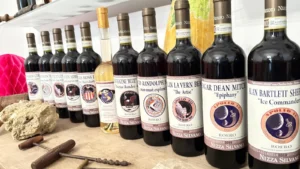
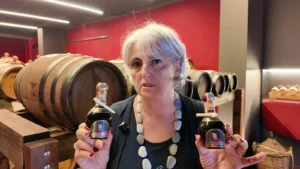
The afternoon closed with a particularly moving moment: the presentation of a limited edition of fewer than 2,000 magnum bottles, “Francesco Avallone – 1925,” produced from the finest grapes of the Vigna Camarato vineyard, as a tribute from the family to the founder of Villa Matilde. A gesture that served not only as a personal homage but also as a sign of gratitude from an entire territory, whose winemaking heritage is once again recognized and appreciated on an international level.
An event that showed how passion and vision, when combined with a strong family project spanning generations, can turn wine into more than just a product — it becomes a living testament to history, identity, and innovation.