From the cellar to the kitchen, passing through agriculture and livestock farming: at Pitti Taste a reflection on the future of food and wine between technology, sustainability and the rediscovery of raw ingredients.
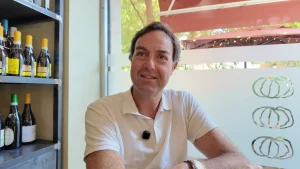
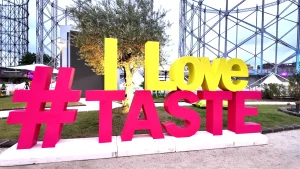
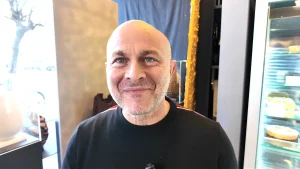
At Pitti Taste, the Florentine event dedicated to gastronomic excellence, the conversation with Carlo Giusti quickly becomes something more than a simple discussion about wine. The dialogue begins in the cellar but soon expands to broader themes: energy in wine, the economic sustainability of production, and the increasingly delicate relationship between technique and raw ingredients.
When the discussion turns to wine, Giusti immediately introduces a concept that might seem new but is actually rooted in natural phenomena.
“It isn’t really a novelty,” he explains. “Inside a liquid mass, magnetic fields naturally form between the inside and the outside. These create movements that can be interpreted as a kind of cleansing of the liquid mass.” The idea is to use magnetism to support clarification and filtration processes without resorting to chemicals or invasive mechanical systems.
“We’re not talking about carbon filtration, filtration with powders, or tangential filters,” Giusti explains. “Instead, a magnetic field is created inside the wine using metal microparticles that generate a stronger magnetism. This causes deposits to form on the walls of the tank, which effectively represent the natural cleaning of the liquid.” Once the wine is racked or decanted, it results clarified without chemical interventions or traditional filtration.
But for Carlo, technological innovation is never an end in itself. The real issue today is the economic sustainability of wine. “Wine must return to having a sustainable cost,” he says. “For years we pursued extremes: aggressive rootstocks, extreme clones, very high planting densities.”
A model that today is colliding with two major changes: climate and the way people drink wine.
“Harvests are now showing sugar levels very different from those of just a few years ago,” he explains. “At the same time, the way people consume wine is also changing.”
For decades viticulture pushed toward extremely low yields, forcing vines to produce very little fruit. “We asked vines to produce one kilo, one and a half kilos of grapes per plant,” Giusti recalls. “Today we could have plants producing six or seven kilos, especially if we work with resistant varieties.” Such an approach could reduce interventions in the cellar and allow wines to be produced at more accessible prices.
“A clean wine, one that sits comfortably on the table, should be able to leave the winery at around ten euros,” he says.
The conversation then shifts to gastronomy and the restaurant world, where Giusti believes a movement back toward the essence of ingredients is emerging. “For years we’ve been victims of a market that tried to characterize everything,” he explains. “Animals fed with cocoa berries, fed with acorns… but often these are simply marketing constructions.” The risk is losing the original identity of food.
“I don’t want an egg that tastes like something artificial,” he says. “I want an egg that tastes like an egg.” True quality, according to Giusti, comes from respecting raw ingredients and natural cycles. “A real pasture changes the meat depending on the season,” he explains. “Meat from March is different from meat from April or October. But these differences are often forgotten today.”
Parameters such as marbling, tenderness, or aging have become synonymous with quality, but they do not necessarily tell the whole story.
The real challenge, he says, is to return to raw ingredients with the knowledge we have today. “Young people today have extraordinary preparation,” he notes. “We must use that knowledge to bring territory and product back to the center.”
This is where a key concept for wine also returns: terroir.
“Terroir is the meeting of place, living beings – whether plant or animal – and human beings,” Giusti explains. “These three elements must respect one another.” When one of them dominates the others, balance is lost. Perhaps it is precisely this search for balance that represents what he calls his own “madness.”
“I am a man in love with perfection,” he concludes with a smile. “Even if perhaps perfection does not exist. Maybe true perfection lies in simplicity.”