There was a time when talking about pizza meant discussing doughs, fermentation, flours, and rankings. A time when the conversation revolved almost entirely around the pursuit of the perfect pizza. Today, that era seems to be giving way to a new awareness. Pizza is still about technique, research, and flavor, of course, but it is increasingly becoming a cultural, economic, and social phenomenon—one capable of questioning its own future.
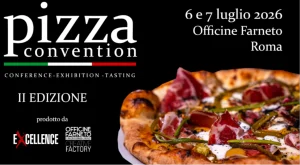
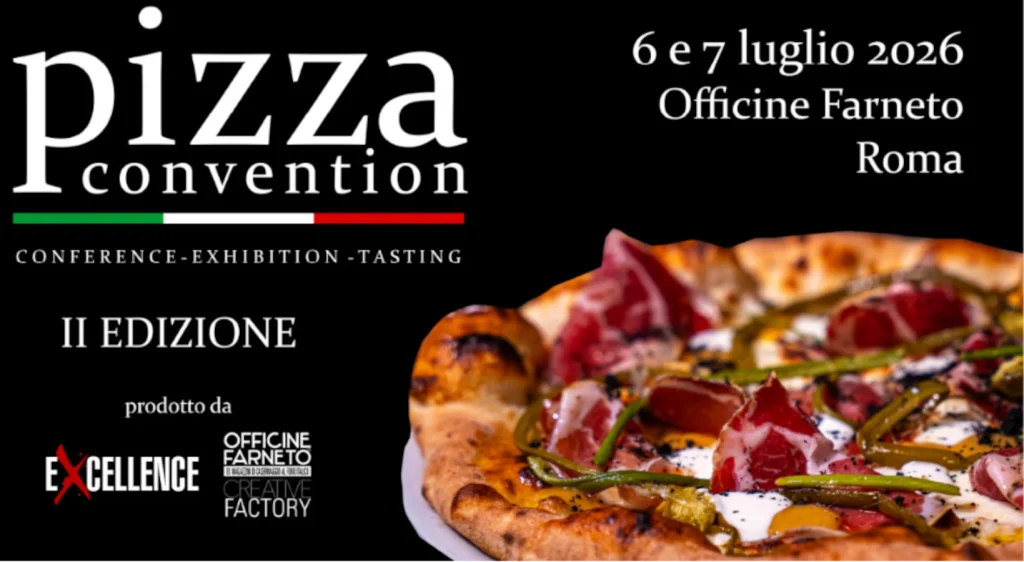
This is perhaps the true meaning behind the second edition of Pizza Convention, taking place on July 6 and 7 at Officine Farneto in Rome. While the event will once again feature show cooking and tastings, its real ambition is to address fundamental questions: who can truly call themselves a pizzaiolo? How should a profession that has become one of Italy’s most recognizable gastronomic symbols be protected? And why, in 2026, do women still account for only two percent of professional pizza makers?
These are questions that reveal a sector reaching maturity. When a profession begins discussing education, institutional recognition, inclusion, and responsibility, it has moved beyond the pursuit of commercial success and started defining its own identity.
This is no minor issue. The Italian pizza industry is worth more than €15 billion annually, with over 50,000 pizzerias, around 300,000 employees, and millions of pizzas served every single day. Yet despite these impressive figures, one contradiction remains: virtually anyone can call themselves a pizzaiolo, even though no shared professional pathway or mandatory technical standards currently exist.
For this reason, one of the convention’s most significant moments will be the presentation of the manifesto “Pizzaiolo: A Profession Worth Protecting,” promoted together with the Associazione Verace Pizza Napoletana and institutional representatives. The document aims to launch a process toward the official professional recognition of the pizzaiolo, bringing together some of the leading figures who have transformed contemporary Italian pizza, including Franco Pepe, Renato Bosco, Corrado Scaglione, Roberta Esposito, and AVPN President Antonio Pace.
The discussion becomes even more meaningful when considering that the art of the Neapolitan pizzaiolo has been recognized as a UNESCO Intangible Cultural Heritage, while Italian cuisine has also recently received international recognition. Such acknowledgements cannot rely solely on celebration; they require competence, education, and consistently high standards.
Alongside this debate comes another equally important reflection: the role of women. Research conducted by the Socio-Economic Observatory of Neapolitan Pizza, promoted by AVPN in collaboration with the National Research Council and FIPE, shows that women represent only two percent of professional pizza makers. Rather than questioning technical ability—which has long been proven—this figure highlights the cultural barriers that still limit women’s access to what has traditionally been considered a male profession.
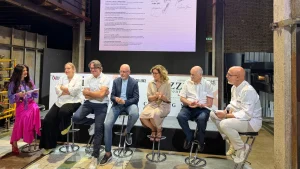
The “Maestra della Pizza” award, presented to some of the industry’s most respected female professionals, together with the panel discussion moderated by Laura Mantovano, therefore represents far more than a ceremony. It reflects a sector willing to examine itself critically.
Naturally, Pizza Convention also remains a showcase for technical excellence. Some of Italy’s finest pizzaioli will alternate between ovens and conference stages, exploring dough development, toppings, ingredient selection, and new interpretations of contemporary pizza. The AVPN’s Vera Pizza Napoletana Champion competition will return, alongside Sorì’s contests dedicated to young pizza makers under 35 and competitions celebrating the art of frying.
Perhaps the most fascinating aspect, however, is pizza’s growing dialogue with the wider world of gastronomy. Increasingly, pizza is engaging with wine, extra virgin olive oil, agricultural producers, and ingredient research. It is a transformation that Wining.it follows with particular interest because it mirrors the evolution experienced by wine itself over the past decade: no longer the sole protagonist, but part of a broader gastronomic experience in which every element contributes to telling a story.
The evening tastings, “Spicchi di Stelle” (“Slices of Stars”), paired with wines from local producers, perfectly embody this vision. They are not simply food-and-wine pairings, but conversations between professionals united by a shared commitment to quality, identity, and territory.
Perhaps this is the real evolution of Italian pizza. Not merely the pursuit of the perfect dough, but the ability to recognize itself as the expression of a sophisticated gastronomic culture where craftsmanship, research, entrepreneurship, education, and a sense of place all coexist.
Pizza Convention seems determined to tell precisely this story. Because the future of pizza will not depend solely on how well a dough rises, but on how successfully the industry values the people whose work makes it possible every single day.