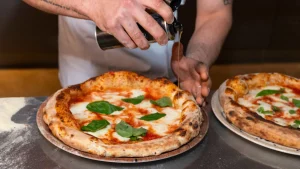
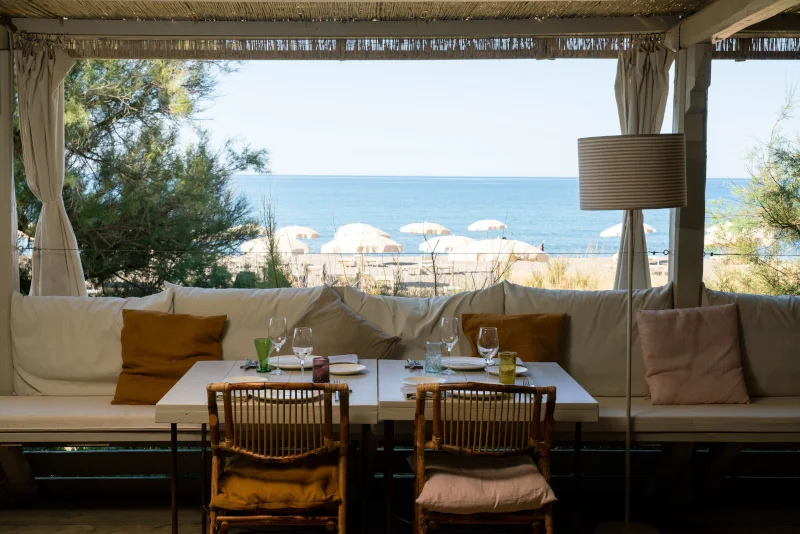
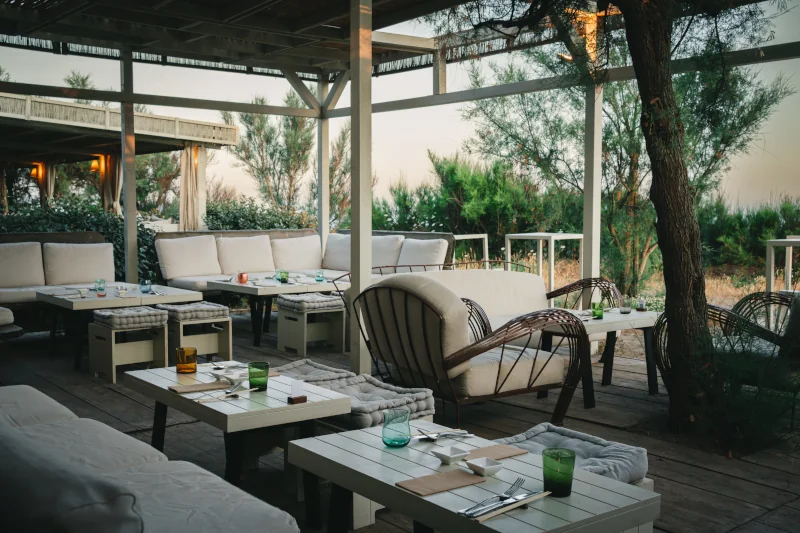
There are places that are born as destinations. And then there are places that, almost unintentionally, end up telling the story of a territory. La Dogana in Capalbio belongs to the latter category. Overlooking one of the most evocative stretches of coastline between Lazio and Tuscany, surrounded by dunes and Mediterranean scrubland, it is far more than a beach club. It is a project that has gradually built its own identity, bringing together hospitality, gastronomy, landscape and a contemporary vision of seaside living.
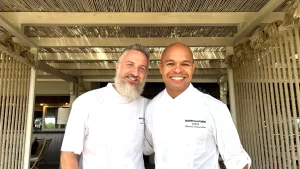
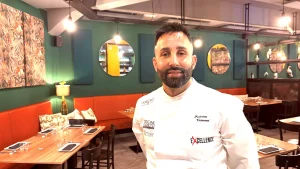
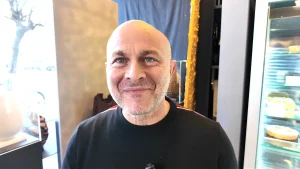
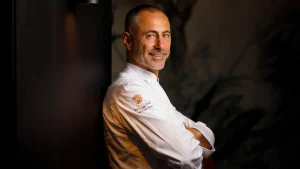
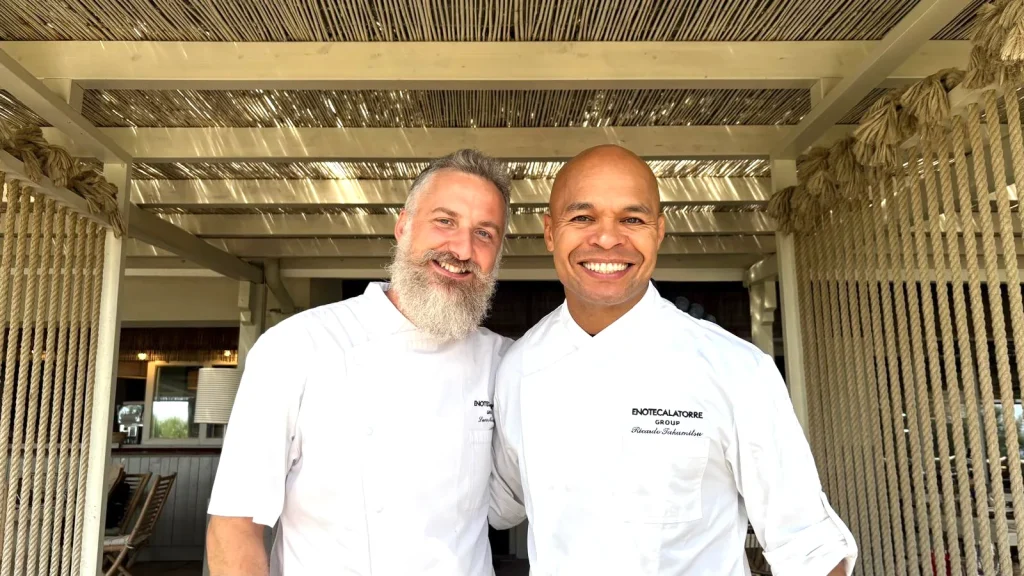
The intuition of Silvia Sperduti and Michele Pepponi, through the Enoteca La Torre universe, was to create a place capable of offering different experiences while maintaining a strong and coherent narrative. Today, that vision reaches a new level of maturity through the coexistence of two distinct yet complementary culinary souls: La Terrazza, led by chef Luca Morroto, and the newly launched Doganino, entrusted to the creativity of Ricardo Takamitsu.
Two very different chefs. Two seemingly distant culinary languages. Yet both find their common ground in the sea.
Luca Morroto tells the story of Maremma without ever falling into cliché. When asked which flavor best represents this territory, he does not point to a specific ingredient. Instead, he speaks about simplicity.
A simplicity that does not mean simplicity of execution, but rather the ability to let every ingredient preserve its own identity. In his cuisine, fish, vegetables, herbs and local products coexist without unnecessary embellishments. Every ingredient must remain recognizable, readable and understandable.
This philosophy probably stems from his Maremman roots and from a professional path that did not pass through Michelin-starred kitchens, but through the solid foundations of a cuisine built on substance, flavor and respect for the product. Yet it would be reductive to define his cooking as purely traditional. His words reveal a continuous search for improvement. The substance remains, but it becomes increasingly refined. It is a cuisine that evolves without losing touch with its origins.
It is no coincidence that references to authentic Tuscany continue to emerge throughout his menu. A panzanella meeting the sea. A pappa al pomodoro reinterpreted through a marine lens. Dishes that do not chase trends but instead tell a story of identity.
What is particularly interesting is that Morroto cannot identify a single signature dish that defines him. Every preparation contains a piece of himself. Every dish represents a fragment of his story.
If La Terrazza speaks the language of the Tuscan coast, Doganino looks outward to the world.
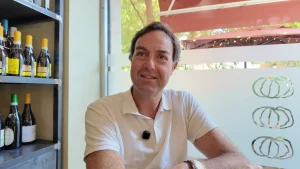
Ricardo Takamitsu brings with him a personal story that spans continents and cultures. Japanese origins, Brazilian upbringing, Italian experience. A journey that could easily have become an exercise in fusion cuisine for its own sake. Instead, the result is something far more personal.
He pinpoints a precise moment: 2023. That was when he stopped seeing himself simply as an interpreter of traditional sushi and decided to build a cuisine that truly carried his own signature.
“It’s not sushi. It’s not fusion. It’s Ricardo,” he says.
A statement that perfectly captures the essence of his work. On one side remains the rigor of Japanese technique, still evident in his knife work, fish preparation and respect for ingredients. On the other emerge Mediterranean sensibilities, Latin influences and the creative freedom developed over the years.
The result can be seen in dishes such as the Carpaccio Takamitsu, perhaps the most authentic expression of his culinary vision. A dish that uses fish as a canvas upon which to paint textures, colors, citrus notes and aromatic nuances, without ever losing technical precision.
Interestingly, when asked about his favorite dish to eat, the answer comes not from Japan but from Italy: spaghetti with clams. Perhaps because within that seemingly simple dish lies the same philosophy shared by both chefs at La Dogana: absolute respect for the ingredient.
His relationship with wine also reveals much about his personality. His passion began with sparkling wines, particularly Champagne, which he studied and explored firsthand in France. Today, however, his enthusiasm is increasingly directed toward Sicily and the great volcanic white wines of Mount Etna, which he considers perfect companions for seafood and sushi.
What makes La Dogana particularly compelling is not merely the presence of two different culinary concepts. It is the relationship that has developed between the two chefs.
Morroto openly speaks of an immediate understanding that has grown stronger through daily work. No internal competition. No overlap. Rather, a shared awareness of being part of a common project.
Perhaps this is the true secret behind La Dogana’s growing maturity: the ability to offer different experiences without fragmenting the identity of the place. On one side, the Mediterranean, territorial and reassuring cuisine of La Terrazza. On the other, the international energy of Doganino. Between them, the sea of Capalbio, acting as the element that unites everything.
And the project continues to evolve.
Among the ideas currently taking shape is a new grill concept, designed to further broaden the offering and complete the property’s gastronomic mosaic.A natural evolution for a place that seems unwilling to choose between being a restaurant, a beach club, a gastronomic destination or a travel experience.
Perhaps because today, more than ever, La Dogana is all of these things at once.