I didn’t know much about Hungarian wines. A few encounters with Furmint in its pure form and Tokaji on a handful of occasions — and little else. When this bottle arrived, the first thing I did was check where it came from. My past as a water polo player took me to Hungary several times — a country where the sport is almost a national institution — and I was hoping to associate this wine with some familiar place from those trips. But no, the region was completely new to me.
Whenever I have bottles to taste, I enjoy sharing them, and this time was no exception. We gathered — safely — at my friend Giulio Burtone’s place, Conciabocca, in Testaccio. With a platter of cured meats to start and a magnificent carbonara to follow (the “follow” is important, because Giulio’s carbonara tends to take over everything…), we began opening the bottles.
Everyone tasted the wine blind, but since I already knew what we were dealing with, I allowed myself to become curious about the wine, the producer, the region, and the grape varieties — many of which were unfamiliar to me.
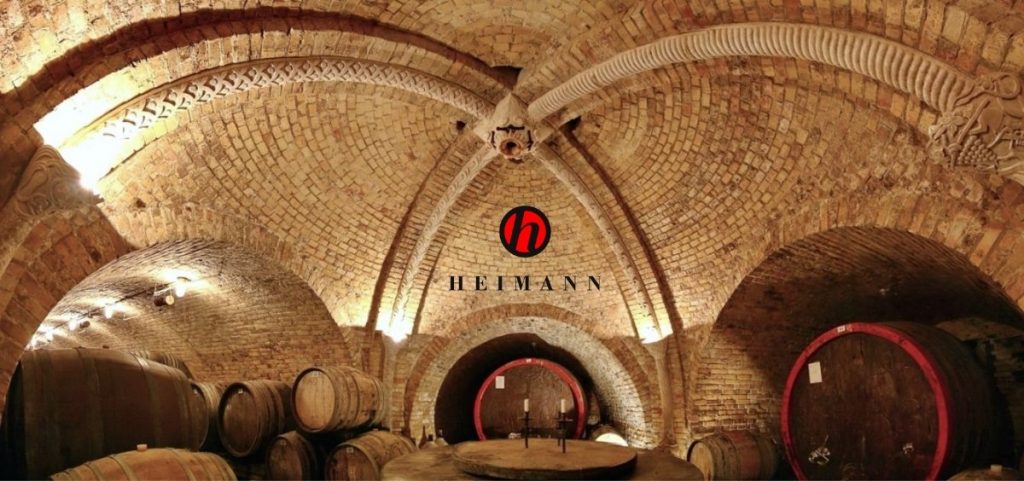
The story of the Heimann family, as I read on their website, began about twenty years ago with the import of Cabernet Franc and Merlot cuttings from Bordeaux. Later they dedicated part of their vineyards to Viognier (the only white variety grown in the area), but also to Tannat and Sagrantino, two undisputed “world champions” when it comes to tannic power.
I must admit that the idea of Sagrantino in Hungary is a little disorienting… but let’s get to the wine itself: Barbàr. A name that instinctively sounded like a declaration of strength and intensity, but which I later discovered was actually inspired by a piano piece by the Hungarian composer Béla Bartók.
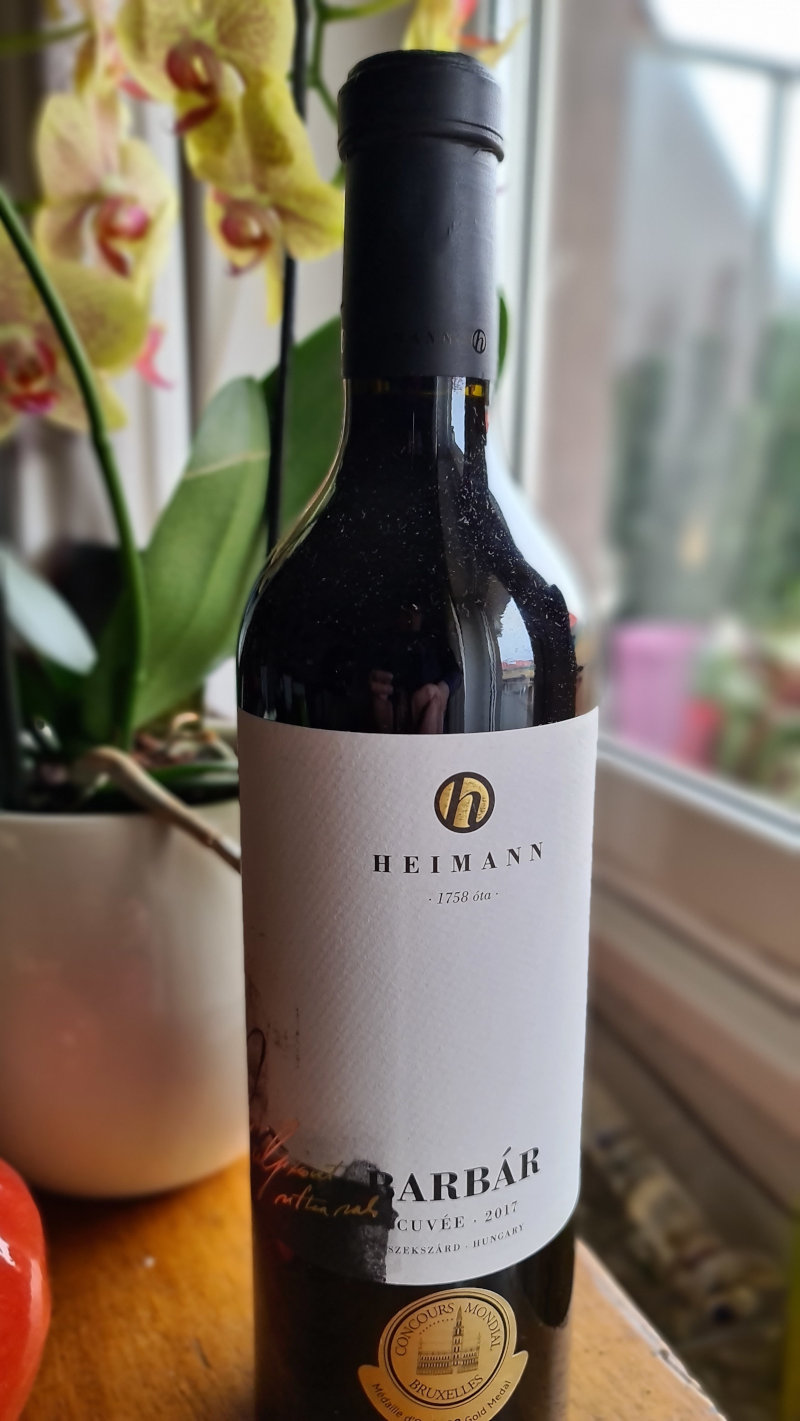
It is not a wine produced every year. A blend of grape varieties that immediately intrigued me. Merlot and Cabernet, the two varieties originally brought from France. Then Tannat and Kékfrankos.
The first two are aged in oak barrels. The other two are vinified separately and aged in larger barrels, destined to give Barbàr both fruit and power.
With Tannat, often called the “tannin of the devil,” I can easily imagine its role. Kékfrankos, on the other hand, was less familiar to me. After doing a bit of research, I discovered that it is one of the most widespread grape varieties in Central Europe. Hungarians call it Kékfrankos, while Austrians, claiming its origins, call it Blaufränkisch. Interestingly, the “Blau” seems to derive from the color of Napoleon’s uniforms… In any case, it is a grape capable of giving wines both fruit and acidity, often used in blends but increasingly also vinified on its own.
But what is Barbàr like? Without a doubt, it is a wine capable of captivating. It is no coincidence that at the recent Concours Mondial de Bruxelles it earned one of the coveted Gold Medals.
It shows a very deep ruby-red color… but I enjoy sharing the judgment with my — more than sommeliers — “drinking friends.”
Barbara Nocco finds pronounced aromas of tobacco, leather, chocolate and plenty of ripe red fruit, with a vanilla finish. On the palate it is warm, enveloping and full-bodied, with velvety tannins and a long, charming finish.
Claudia Meo points out a nose marked by dark forest berries and earthy notes of moss, leaves and undergrowth. On the palate those berries release all their liveliness. She describes it as a powerful, elegant and engaging wine, velvety and juicy, with what she calls “polished” tannins.
Matteo Gerardi is struck by a very pleasant bouquet: aromas of plum, hints of mint and eucalyptus, notes of licorice and quinine, and puffs of vanilla. He describes the sip as soft and warm, with silky tannins and a very long persistence.
As for me, I find Barbàr to be a surprising wine. Complex and elegant. Smooth, with oak used in a very measured and never intrusive way — just enough to give the wine a refined underlying spice. The entry on the palate is extremely pleasant and not at all dominated by the tannins, which I expected to be more aggressive (perhaps influenced by the presence of Tannat), but which instead add an unexpected sense of class.
At the end of the glass, everyone asks me:
“Where can we find this wine?”
I wouldn’t know. I don’t sell wine — I drink it. But one thing is certain: the medal was more than deserved.