There was a time when rosé wine was often seen as a “middle ground” category: neither white nor red, frequently confined to summer aperitifs or communicated through a light and superficial narrative. Today, however, the landscape has changed dramatically, and Italian rosé is experiencing a new era defined by identity, territory, character and an increasing focus on quality.
It is precisely from this awareness that “100 Best Italian Rosé” was born — the guide-ranking dedicated to the best rosé wines from Italy and neighboring territories — presented during the twentieth edition of VitignoItalia 2026.
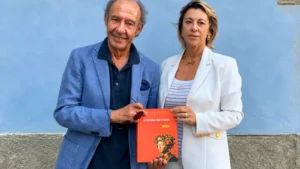
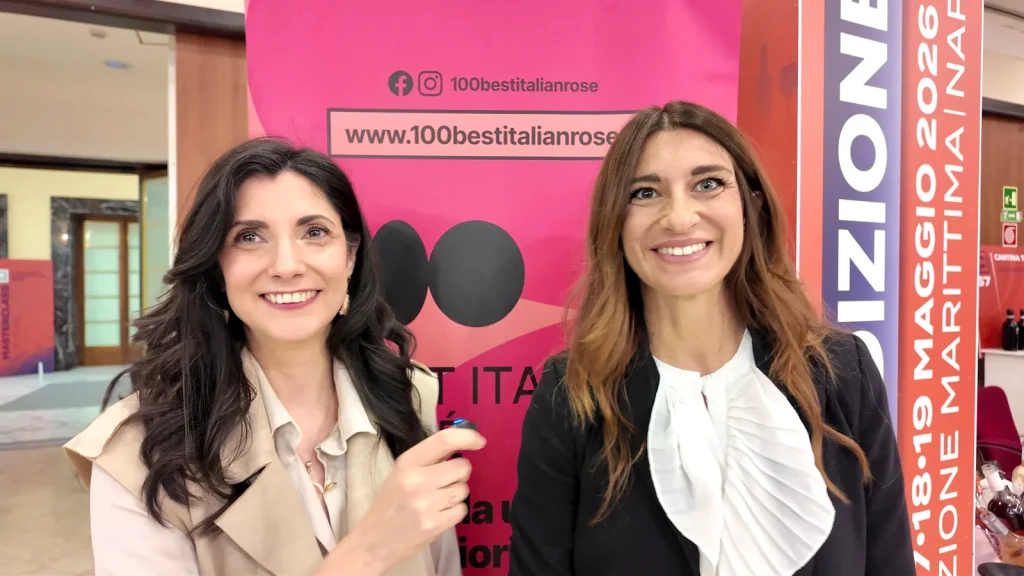
Journalists Chiara Giorleo, Adele Granieri and Antonella Amodio, shared the philosophy and vision behind the project, now in its sixth edition, which aims to highlight the extraordinary diversity of contemporary rosé wines.
“We tell the story of the best rosés from Italy and border territories such as Canton Ticino and Slovenia,” explained Chiara Giorleo. “The goal is to showcase the incredible variety of styles and to break down the many prejudices that still surround this category despite its evident market success.”
The project goes beyond simply selecting labels. Its ambition is to build a new culture around Italian rosé wine, freeing it from the stereotypes that have followed it for years.
“Rosé is still often considered a hybrid between red and white wine, or a wine associated mainly with women or with seasonal consumption,” said Adele Granieri. “Instead, we want to restore dignity to this category by telling the stories of producers who truly believe in rosé wines and do not make them merely to complete their portfolio. The best Italian rosés are identity-driven wines with character and a strong gastronomic presence.”
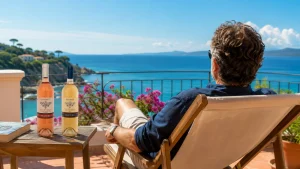
One of the most interesting aspects discussed during the interview was the relationship between aesthetics and consumer perception. In the rosé world, color itself becomes a fundamental storytelling element.
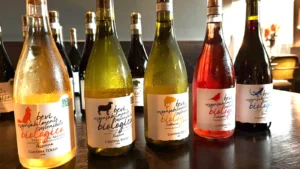
“Rosé is sold and communicated starting from its aesthetics,” Giorleo explained. “More than 90% of rosé bottles worldwide use transparent glass, so color immediately conveys a style, an interpretation and a message. From the very pale Provençal-inspired rosés to deeper and more structured Cerasuolo styles, every shade expresses a precise identity often linked to grape variety and local tradition.”
The word “diversity” constantly emerged throughout the conversation: diversity of territories, interpretations, food pairings and consumption occasions.
Although rosé still retains a degree of seasonality, the market is increasingly moving toward higher-quality rosés designed to be enjoyed all year round.
“Consumers are now looking for more gastronomic rosé wines,” said Granieri. “Not just wines for summer or aperitifs, but bottles capable of accompanying an entire meal and fitting naturally into many different occasions.”
This is also why the decision to create a ranking-style guide was intentional.
“We chose the Top 100 format because it is immediate, engaging and easy to use,” Granieri explained. “The guide is free and available online: whether you are in a wine shop, at a restaurant or browsing social media, you can quickly find a rosé that inspires you.”
The initiative also features a strong female presence, although the founders prefer not to frame it exclusively in terms of gender.
“We are simply three journalists passionate about wine and rosé,” they said with a smile. “The fact that we are women is almost incidental. What is certainly positive is seeing the growing presence of women in wine communication and gastronomy every year.”
And while glasses filled with some of the featured wines circulated through VitignoItalia 2026, the final message was simple yet powerful: “Long live rosé, and long live the diversity of rosé.”