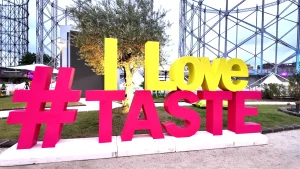
There are places where trends are born, and others where meanings are redefined. The Pizza Expo in Las Vegas—one of the world’s leading industry events—is both.
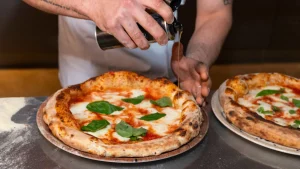
At a time when pizza is increasingly global, hybrid, and open to bold reinterpretations, a project emerges that moves in the opposite direction: bringing it back to its roots. It is called “Pizza Napoletana 100% Campana”, and its intent is clear from the name itself. Not a limitation, but a choice.
In a context where pizza is often reinterpreted—sometimes even distorted—the idea is to rebuild a direct connection with its place of origin. Campania thus returns as the reference point, not only geographically but culturally, for a product that finds there its deepest identity.
Presenting such a project in Las Vegas might have seemed like a gamble. In reality, it proved perfectly aligned with a market increasingly attentive to authenticity, traceability, and quality. Especially among American pizzaioli, curiosity quickly turned into genuine interest—and interest into a desire to explore further.
Because this is not just about ingredients. It is about a system. A way of thinking about pizza that starts from the supply chain and builds coherence: flour, tomato, dairy, technique. A return to origins that does not reject pizza’s international dimension, but rather strengthens it through identity.
The response from the audience confirmed an increasingly clear trend: in a global market saturated with options, clarity and authenticity make the difference. Not as nostalgia, but as a contemporary choice.
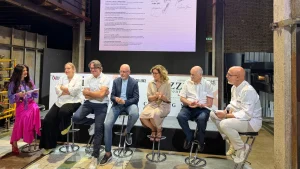
Around this vision, tastings and shared moments created a collective narrative. Not just demonstrations, but opportunities to translate a territory into a pizza—and to show how that story can travel without losing meaning.
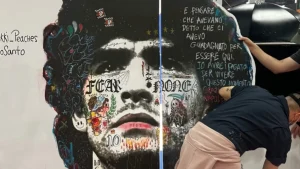
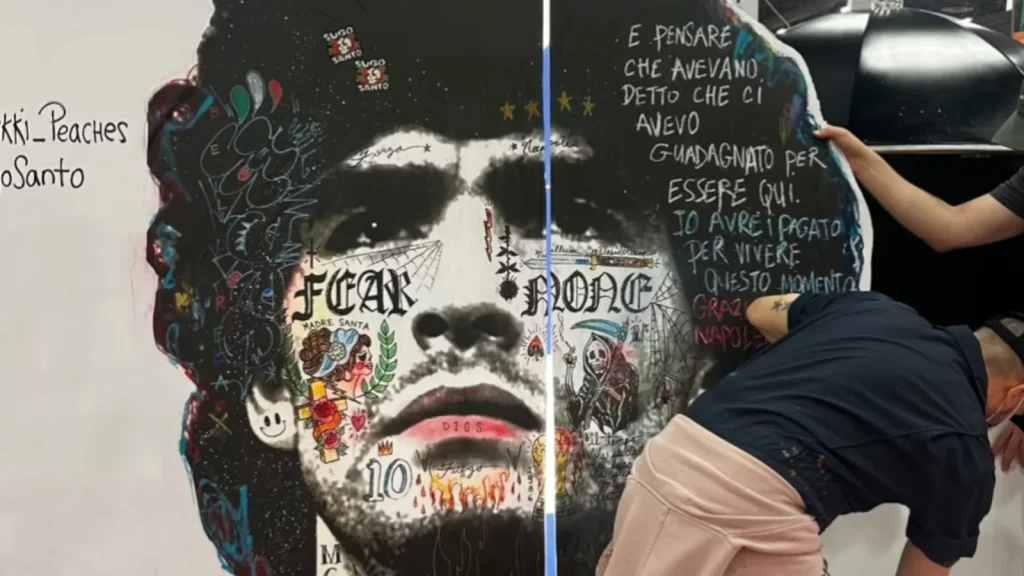
Completing the picture, a symbolic moment: an artistic tribute to Diego Armando Maradona. A figure capable of connecting Naples to the world, just like pizza itself. An “event within the event” that added another layer of interpretation, between popular culture and identity.