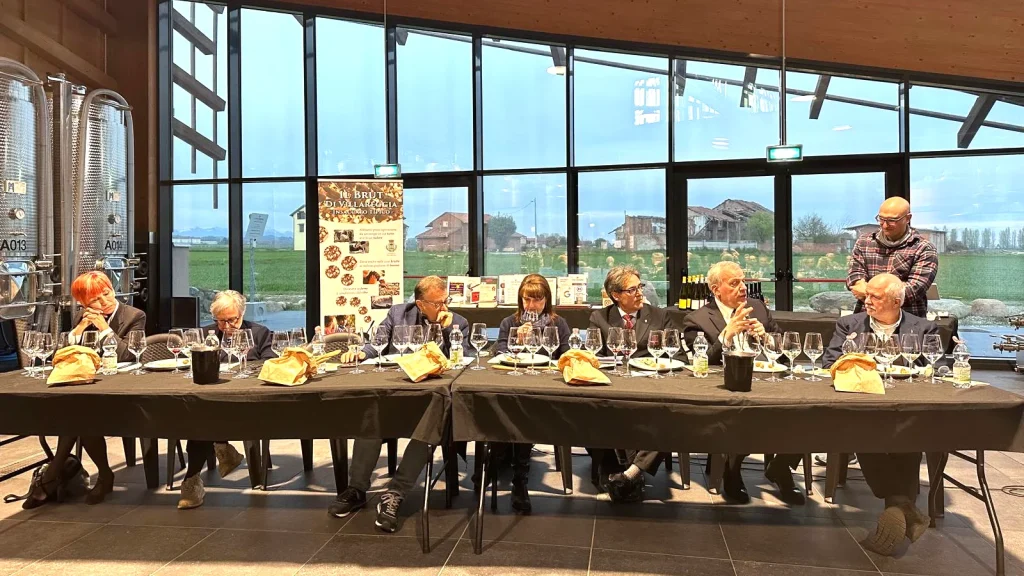
There is a moment, in certain events, when you realize that you are not simply attending a tasting. It happens when the narrative goes beyond the product, and the product becomes territory, culture, shared identity. This is exactly what happened in Villareggia, during the Sagra del Brut, where Cantina Luca Leggero hosted a masterclass with a provocative title: “Brut is not a Sparkling Wine.”
A title that plays on ambiguity to shift the focus elsewhere: a traditional cured meat, little known beyond local borders, yet deeply rooted in the area’s heritage. Not just a tasting, but a true roundtable, featuring some of the leading Italian wine associations – AIS, FISAR, ONAV, ASPI – alongside organizations such as Slow Food and ONAS, highlighting how the dialogue between wine and food is now more central than ever.
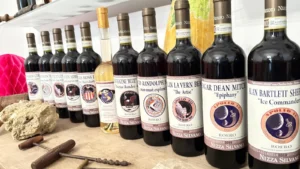
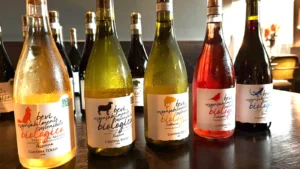
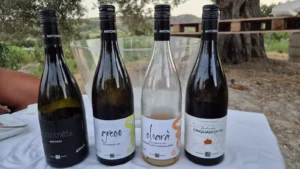
And dialogue was indeed the common thread of the entire day. The winery’s wines guided this journey: from Erbaluce di Caluso DOCG, in its various interpretations, to Canavese Nebbiolo, passing through a Langhe Dolcetto capable of telling a story of everyday life that is anything but ordinary. Not a technical sequence, but a progressive narrative, where each glass accompanied – and often challenged – the different expressions of Villareggia’s Brut.
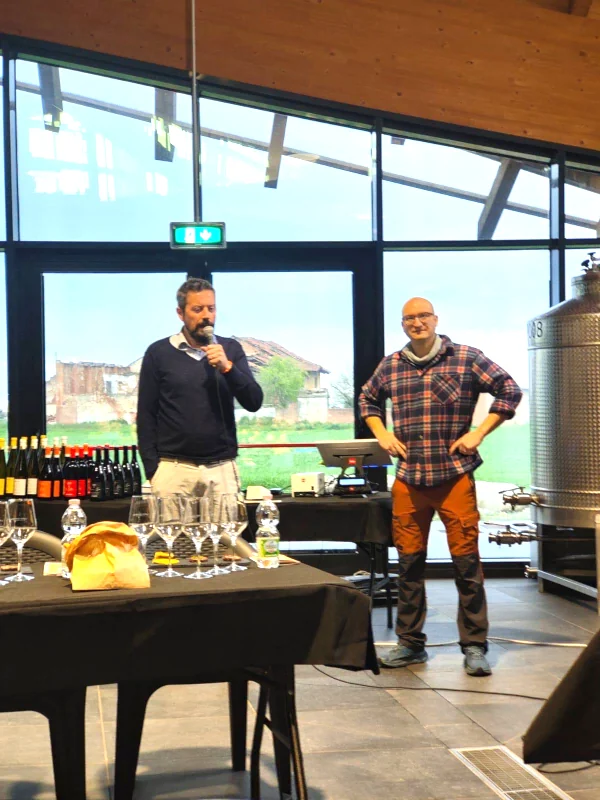 If in its most authentic version Brut presents itself in its pure simplicity, it is through reinterpretations that the vitality of this product truly emerges: from salsa verde to frittata, from risotto to its fried version, Brut reveals a surprising versatility, transforming from gastronomic memory into a living ingredient, capable of evolving and engaging with contemporary culinary languages. It is precisely in this space, between tradition and experimentation, that the true enhancement of local products takes place today.
What made the event even more meaningful was the rare presence of so many voices from the wine world gathered around a single table, not in competition but in genuine sharing of purpose – an important signal, especially at a time when the wine sector is facing new challenges, often cultural as well. For one day, Villareggia became a small laboratory of vision, a place where wine is not just a product but a tool for connection.
Behind all this, however, lies a fundamental element: the community. The joint effort of local administration, Pro Loco, and producers demonstrated how true enhancement begins with internal awareness, with the ability to recognize the value of what one has before telling it to the outside world. The success of the initiative is therefore not just in the numbers, but in the direction taken: that of a territory choosing to act as a system. In the end, the feeling is that this was not just a masterclass, but a real statement of intent, because when wine, food, and territory truly begin to speak to each other, they do more than tell a story – they build the future.