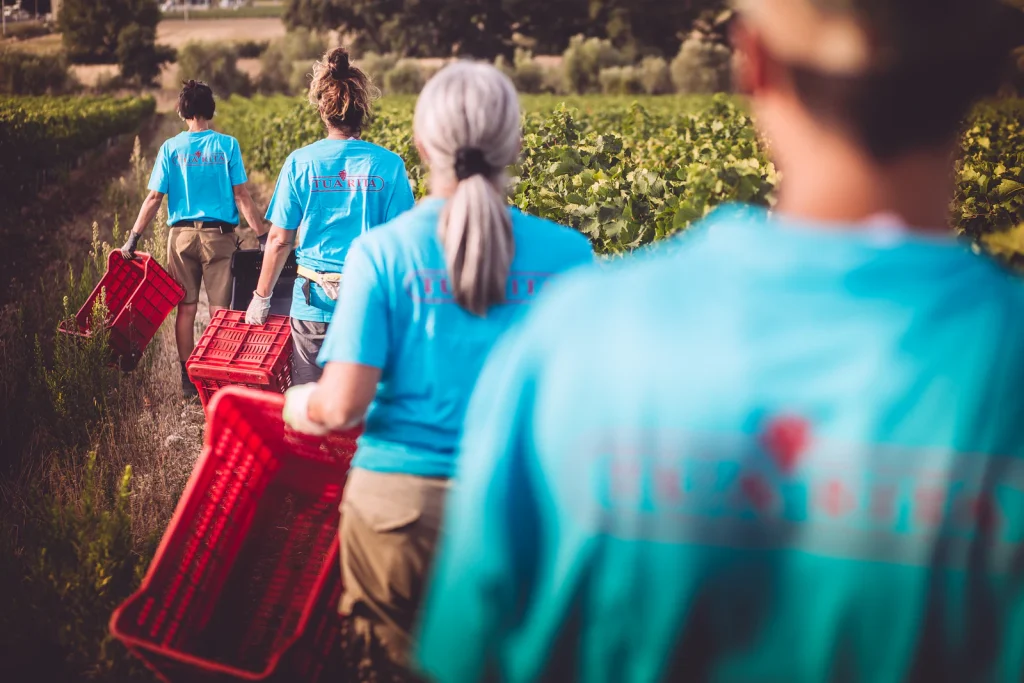
My summer in the Maremma was a red thread weaving together Bibbona, Bolgheri and finally Suvereto, where the road grows quieter and the landscape changes its breath. It is here, in the heart of the Alta Maremma, that I arrive at Tua Rita.
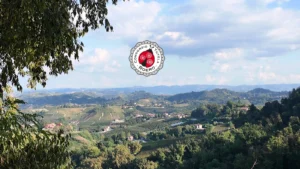
Waiting for me is Giulio. I hop onto the golf cart and the winery reveals itself little by little, along a dirt road that cuts through vineyards still lush and green in August, kissed by the sun and caressed by a constant breeze. A breeze that here is not a detail, but an integral part of the story: it shapes aromas, dries the grapes, and defines the character of the wines.
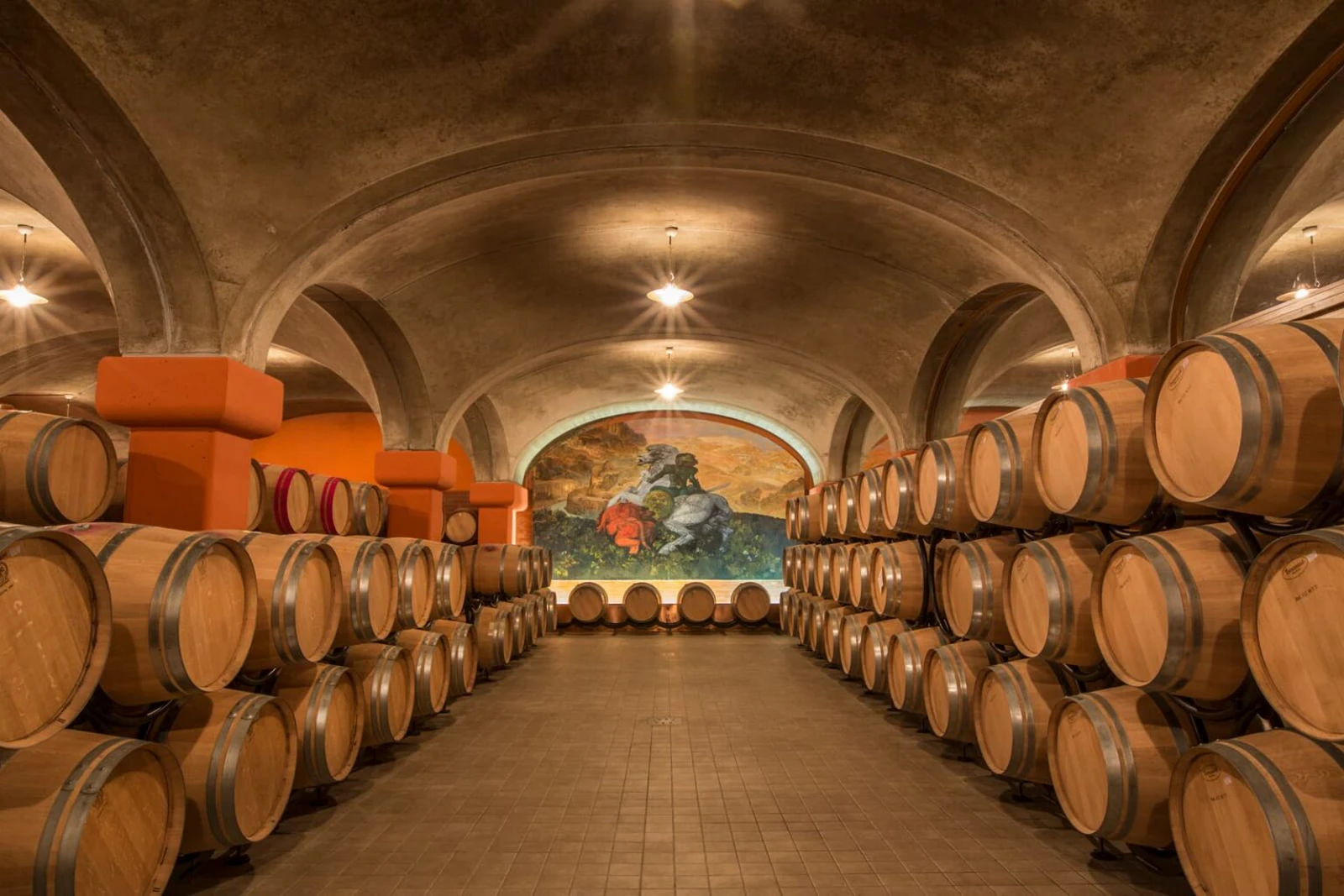
If the vineyard is the beating heart of Tua Rita, the cellar is its lungs. Entering it means learning to listen, in silence, to the wine’s breathing.
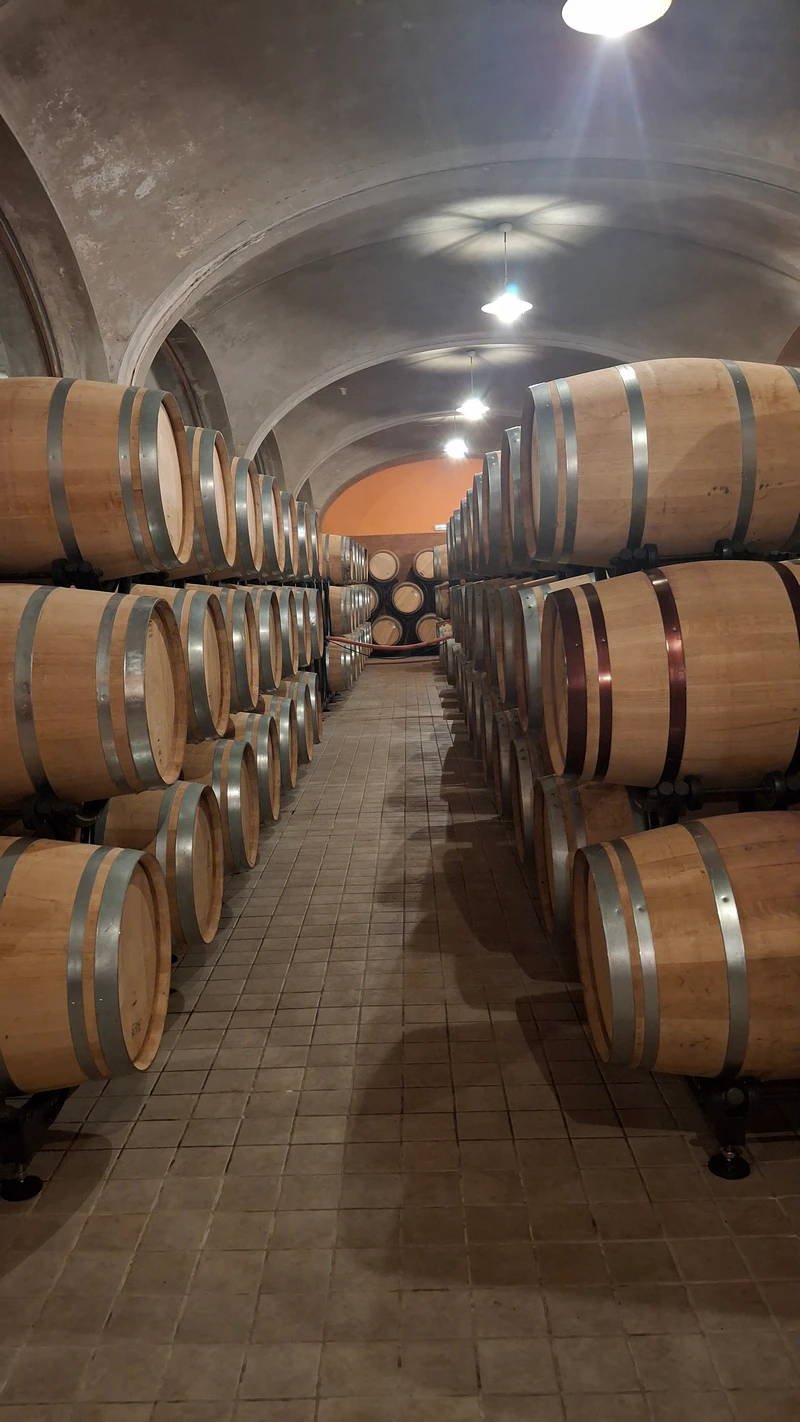
The orderly rows of barriques, the concrete vaulted ceilings, and the large wall fresco signed by Raffaele De Rosa create a suspended atmosphere.
Here, art is not a frame but substance, and that great fresco in the barrel room recalls the silence and slowness required for creation, the austerity of the time needed for a wine to become a work. Wine that—like art—is in constant evolution.
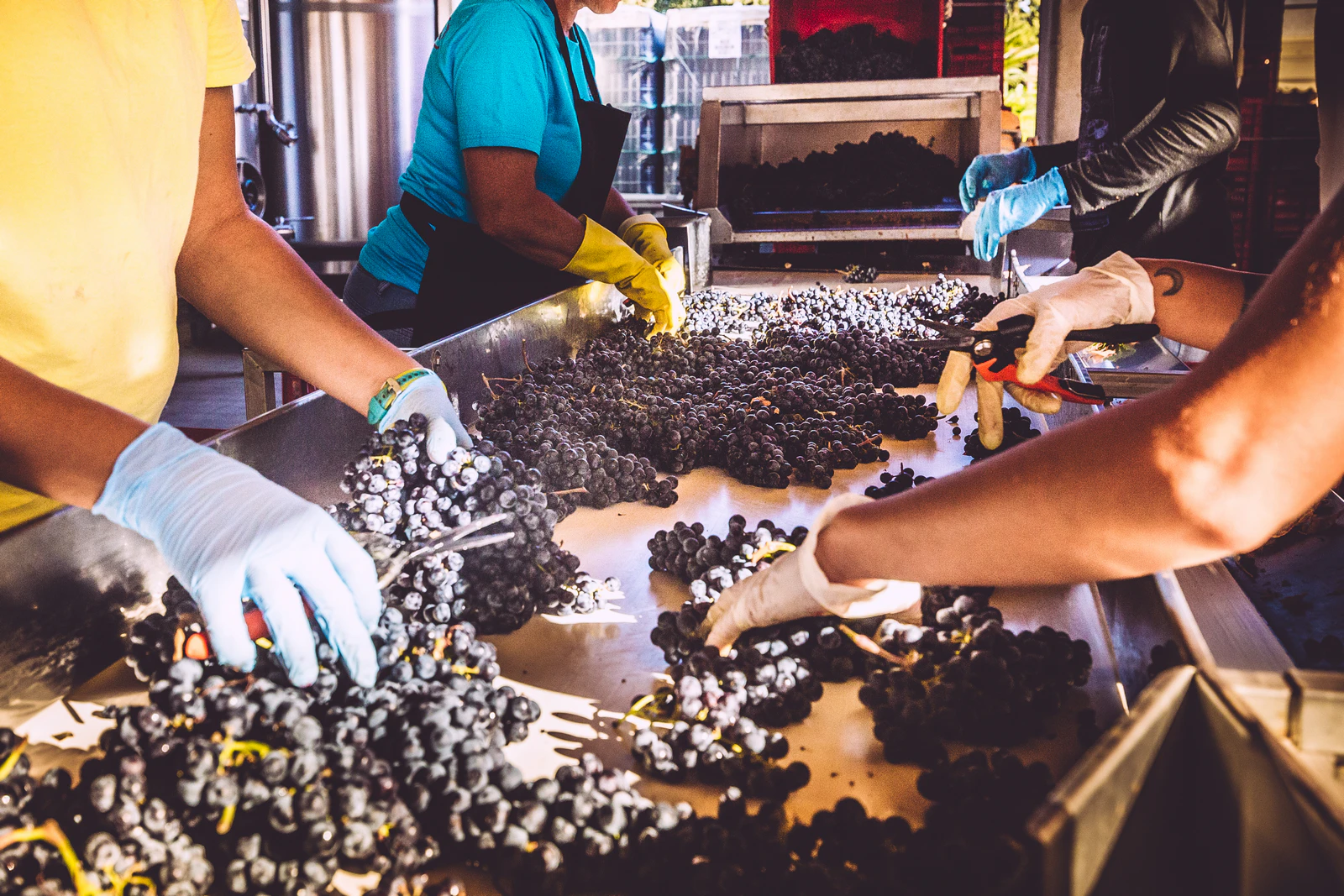
Tua Rita’s production philosophy is born in the vineyards: 65 hectares tended like gardens, with planting densities ranging from 5,000 to 9,000 vines per hectare. Simple and double Guyot alternate, following the principles of sustainable agriculture, oriented toward the health of both grapes and environment.
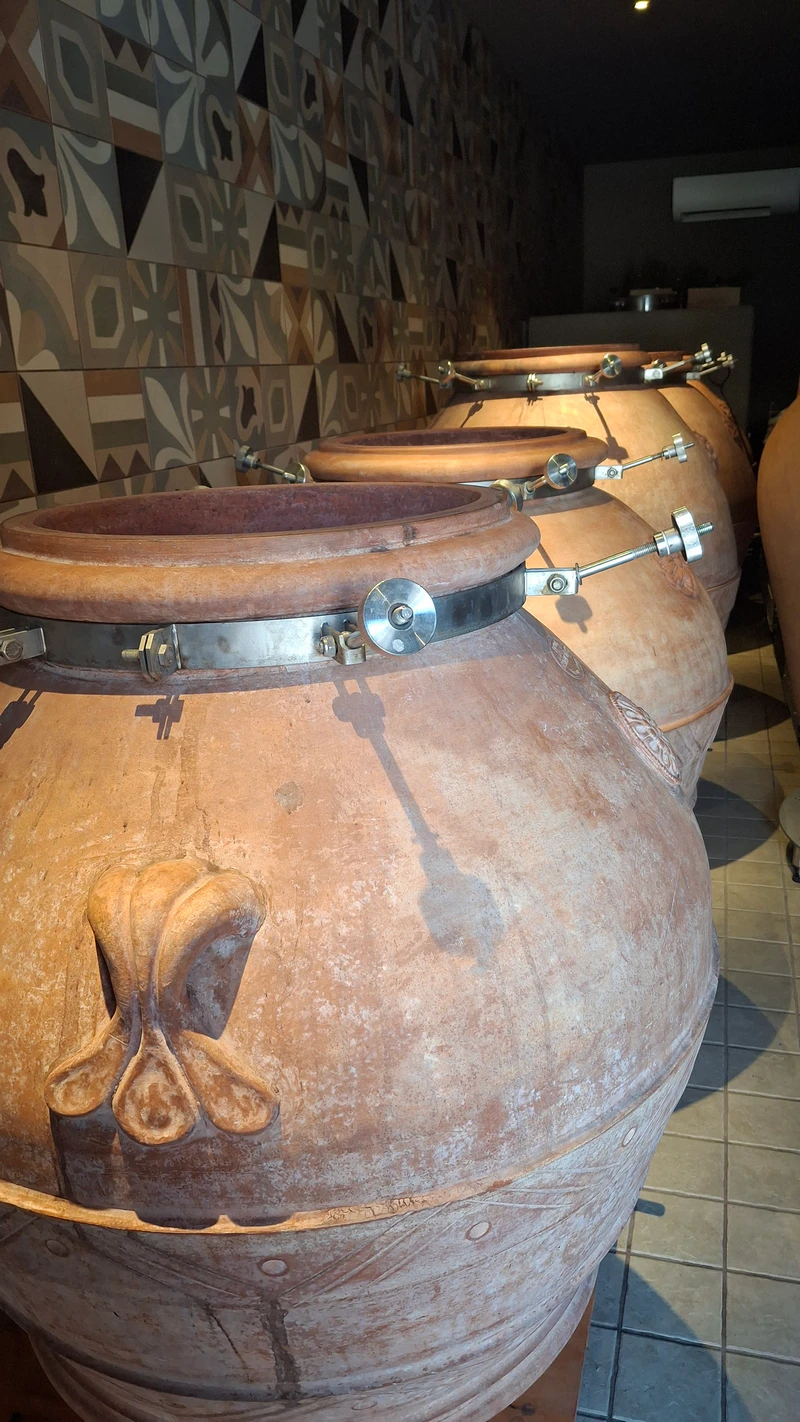
The grapes reach the cellar in small crates, hand-harvested and carefully selected. Gentle pressing, fermentations in truncated-cone wooden vats or concrete, slow macerations (25–30 days), measured pump-overs and punch-downs. Then the wine, by gravity, finds its rest in barriques, where time works in silence.
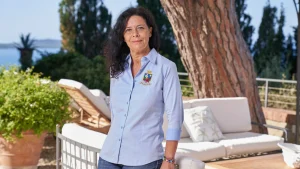
Tua Rita comes to life in 1984, when Rita Tua and her husband Virgilio Bisti purchased these lands with the idea of living close to nature. Then the passion for wine took over and changed everything. From the first two hectares cultivated with an almost “vin de garage” spirit, growth has been steady, always guided by an awareness of the potential of this land, suspended between the Tyrrhenian Sea and the Metalliferous Hills. After Virgilio’s passing in 2010, continuity is ensured by their daughter Simena together with her husband Stefano Frascolla and their son Giovanni, without losing anything of the original soul. Even the winery’s name is a simple, recognitive gesture: the inversion of Rita’s first and last name.
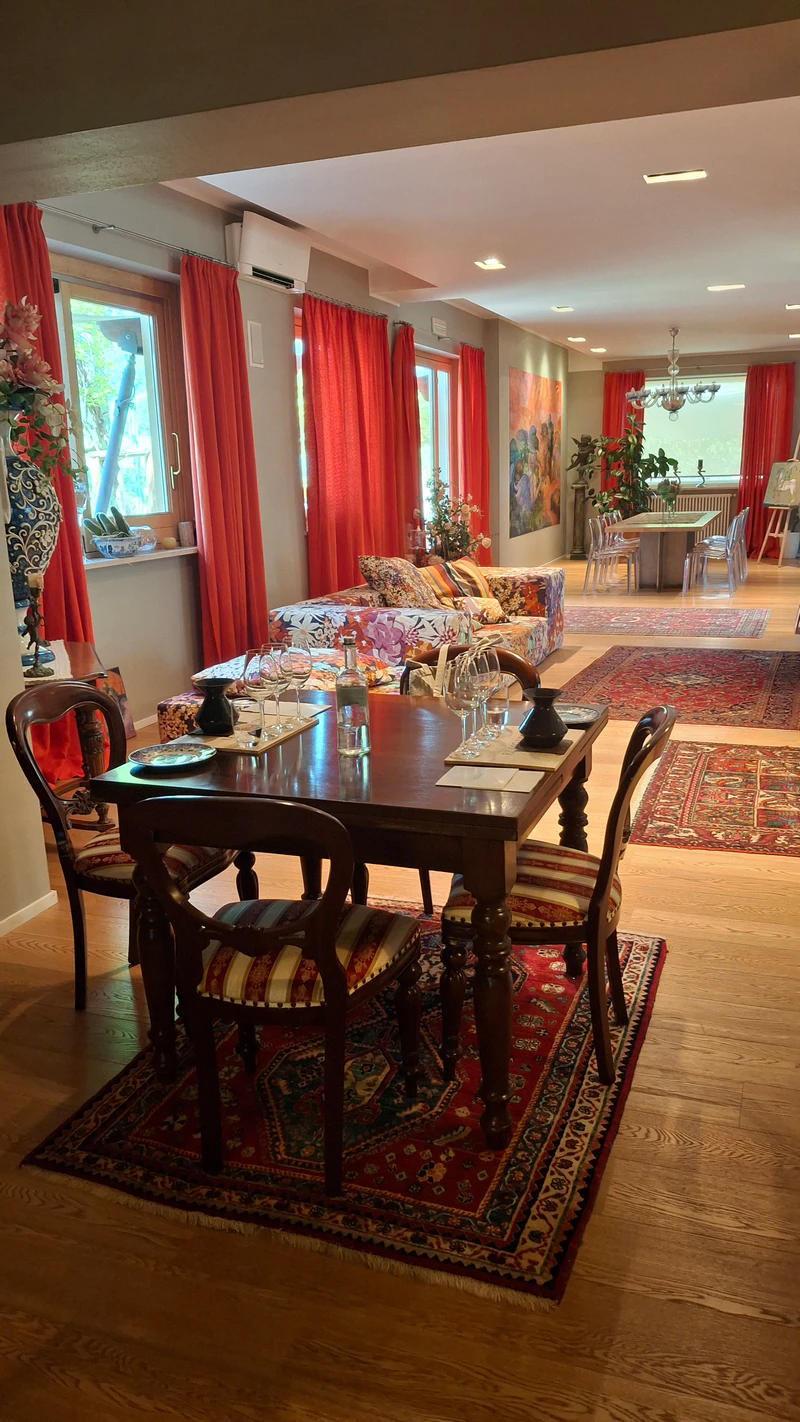
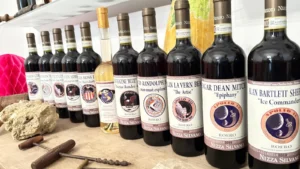
Arriving in the hospitality area feels like entering a lived-in home—elegant, rich in memories. Art converses with wine: references to Sicilian ceramics, colonial suggestions, colors and dynamism that coexist with a refined austerity. It is a room that prepares you for tasting even before you sit down, telling the wines through their labels, which are painted stories.
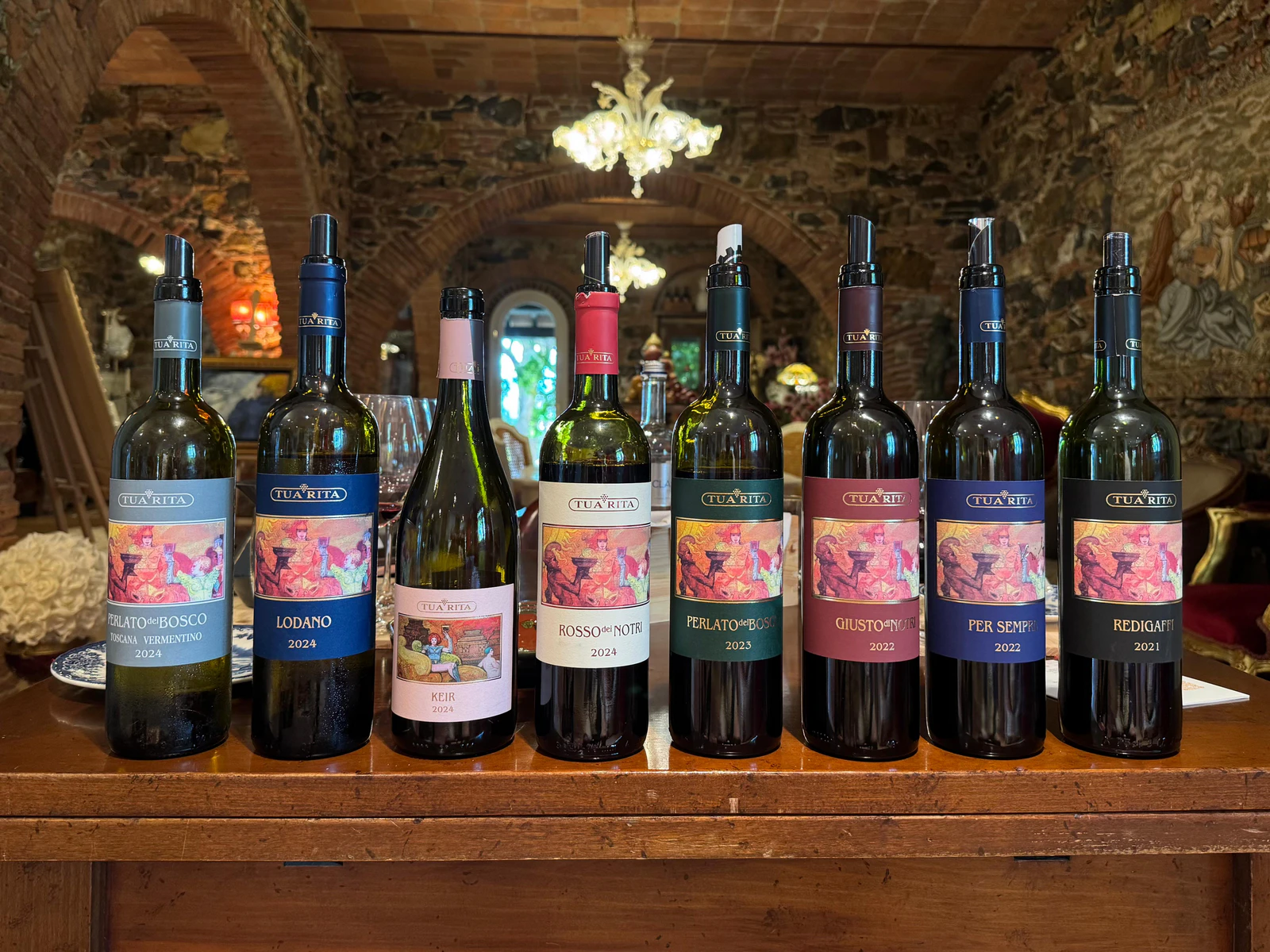
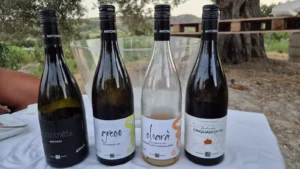
The dance opens with Perlato del Bosco Vermentino 2024, 100% Vermentino from clay soils with skeletal presence and mineral richness. In the glass it is a vibrant gold. On the nose, the first gesture is floral: white rose, jasmine, then a balsamic breath of nepitella that leads straight to the Mediterranean scrub with a memory of thyme.
On the palate the mid-palate becomes full, almost honeyed, then citrus acidity arrives to lift the sip, giving dynamism and drinkability. And just when you think it has said it all, here comes the salinity—clean, final—like a wave retreating and leaving salt on the skin.
Then comes Keir Ansonica 2024, and the atmosphere changes: it is like moving from morning light to a more oblique, more material light. Keir is a 100% Ansonica that immediately declares its choice: skin maceration in amphora (about two months), no fining, no filtration.
Vibrant gold, on the nose it feels painted: yellow roses, orange blossom, then citron and that brushstroke of candied ginger that brings spice and freshness at the same time. It is an aromatic profile with texture, not just perfume. On the palate it is soft and enveloping yet never tiring, thanks to a citrus acidity on lime notes that cleans, sculpts, and keeps the sip straight through to the finish. Here the sensation is of a living, almost tactile wine. The amphora does not “mark” it: it sculpts, brings it into relief.
With Lodano 2024 we enter Rita’s more intimate world, because Lodano is her own bet: to create a white of charm with an atypical blend for the area—Traminer, Riesling, and Chardonnay in equal parts. In the glass it is brilliant gold and truly “tells the blend” without asking permission: Riesling opens with a flinty memory, Chardonnay signs with softer notes of dried fruit and a tropical nuance between lime and passion fruit, while Traminer rises as an elegant rose perfume. But it is on the palate that Traminer takes the stage: echoes of rose and lychee return, in an aromatic harmony that is not sugary but fine and precise. The body is important yet balanced: softness, fullness, and acidity hold hands like three characters who have learned not to steal each other’s lines. It is a white that makes you long for a long table, more structured dishes, a cuisine unafraid of refinement—because Lodano knows how to stand its ground.
The reds then take the stage, starting with the vin d’entrée, Rosso dei Notri 2024, born from the pre-selection of the youngest vineyards in a blend of Cabernet Sauvignon, Merlot, Syrah, and Cabernet Franc.
In the glass it is ruby with amaranth reflections, and on the nose you immediately sense that “breath” that concrete can give. Cherry and blueberries emerge, then a wild incense that brings balsamic notes, and a floral touch that is not cloying but recalls instead the temper of the Cabernets in hints of geranium and cyclamen petals, fading into an elegant vegetal note of rose stem. The finish is graphite—clean, mineral—almost reminding you where it comes from, those metalliferous hills that always leave a trace. On the palate, freshness integrates a fine, central tannic weave, and the drinkability is immediate yet not simple: it is “easy” in the way well-made things are easy.
Perlato del Bosco Rosso 2023 is the most surprising interpretation of Sangiovese according to Tua Rita, a wine born to dialogue with the dry climate and hot summers of the Tuscan coast. Here Sangiovese does not seek the classic austerity of the inland areas, but a new tension—more solar, more maritime—without ever losing depth.
In the glass it shows a luminous ruby with amaranth reflections. The aromatic impact is deep and layered: it opens on dark fruits like blueberries and cassis, followed by a hint of bitter orange that introduces a citrus dimension, almost tactile. Then the wine slowly opens onto underbrush, an elegant balsamic note of nettle leaf and licorice root, until it decisively evokes the Mediterranean scrub, with myrtle notes that tell the story of the Maremma without need for captions. The aromatic closure is entrusted to a fine, chiseled spiciness: white pepper, lightly pungent, and nutmeg, sweeter, completing the picture with restraint.
On the palate it finds its most authentic signature in balance. The entry is fresh, supported by a citrus acidity that recalls the bitter orange perceived on the nose, while the tannic texture unfolds with elegance—fine and well integrated—never drying or aggressive. The mid-palate is harmonious, with fine substance, and the gustatory progression leads to a coherent, persistent finish, where balsamic sensations return along with a subtle mineral salinity that lengthens the sip.
Then there is Giusto dei Notri 2022, the “soul” wine, the one that has accompanied the winery since its birth: 80% Cabernet Sauvignon, with Merlot and Cabernet Franc. In the glass it is deep ruby, and the nose has an almost drawn elegance: a floral opening of rose and lavender lending a fine, slightly soapy touch; then balsamic notes take the path of bay leaf and licorice, closing on sweet hints of carob and bourbon vanilla. The entry is dominated by a citrus freshness that lights up the structure: the tannin is fine and central, and the final savory trail lengthens the sip with memories of dried fruit and cocoa.
Per Sempre 2022 is Virgilio’s declaration of love, the winery’s founder: “Syrah, forever.” 100% Syrah, in the glass it reveals a dense ruby with amaranth reflections, a prelude to subtle lavender meeting juicy cherry. Then the varietal arrives, unmasked: baked olives and olive pâté, followed by the aromatic, spicy edge of Sichuan pepper.
On the palate fruit dominates, acidity integrates the central tannic weave, while salinity stretches the finish on that juicy cherry that lingers in memory.
And then, inevitably, comes Redigaffi 2021, pure Merlot—one of those wines that carries with it an aura that is not marketing but history: born in 1994 from vines planted in 1988, it became cult also because the 2000 vintage received significant recognition from Robert Parker and Wine Spectator, inevitably marking a symbolic moment in the winery’s international perception.
In the glass it is deep ruby, and on entry it wins more on the floral side than on fruit: lavender, peony, camellia. Then it fades into balsamic bay leaf and licorice root, up to flowering rosemary that accompanies the closure on memories of juicy cherry. On the palate it is exactly what one expects from a great Merlot: silky, with velvety, central tannins, a composure that is not rigidity but elegance, and a salinity that extends into echoes of cherry and cocoa, finishing with that memory of a boero chocolate that remains on the tongue like a signature.
And when you think the story ends here, Tua Rita takes you to Sicily with SESE 2022, Passito di Pantelleria DOC, 100% Zibibbo. A project that came to life in 2016, when the estate acquired a plot of no more than two hectares of vines trained as the traditional pantesco bush vine.
In the glass it is a vibrant amber that recalls the island’s sun. On the nose it is a crescendo: apricot juice, helichrysum honey, sultanas, dried fig, date, then a hint of macerated yellow rose and walnut. On the palate agility reigns. Sweetness is evident, but it is exemplary balanced by a freshness that cleanses and reopens into a very long persistence on endless echoes of caramel and barley candy. A perfect finish, because it makes you want another sip not out of greed, but out of nostalgia.
When I leave Tua Rita, I carry with me the rare sensation of having passed through a place where wine is not just a product, but a language. The art on the walls is not scenery, but a reminder. It tells you that to reach a glass like this you need slowness, you need silence, you need that gentle austerity of time that cannot be bought or rushed. Every bottle is a work that never stops changing, yet remains faithful to the original gesture. A simple, stubborn, beautiful gesture: waiting until the wine learns how to breathe.