The story of Cantina Terlano (or Kellerei Terlan, if you prefer) is a fascinating one. It begins in 1893, the year when the winegrowers of Terlano decided to found a cooperative winery, driven by the desire to preserve their traditions and by the courage to free themselves from dependence on large landowners.
In fact, the history of viticulture in this territory goes back much further. Some archaeological findings even point to a pre-Roman wine culture. Today the winery counts 143 members, working across 190 hectares of vineyards for a total production of around 1.5 million bottles.
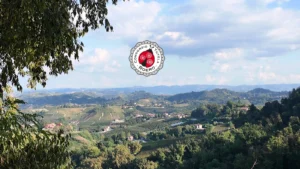
We are located northwest of Bolzano, in an area particularly suited to viticulture. Protected to the north by the Alps, open to the south to the mild air of the Po Valley, and exposed to the west to benefit from excellent sunlight. A microclimate that guarantees significant day–night temperature variations.
This is a territory where white wines account for about 70% of production, and where the winery allows itself the luxury of giving wine the time it needs to mature.
One particularly fascinating aspect of Terlan is what can truly be considered an oenological archive. Originally conceived by cellar master and winemaker Sebastian Stocker, this underground space—located 13 meters below ground—carefully preserves around 100,000 bottles, with vintages ranging from 1955 to the present day. To be honest, there is also a bottle from 1893 in the archive, though I imagine it would take a great deal of courage to open it…
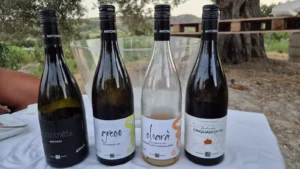
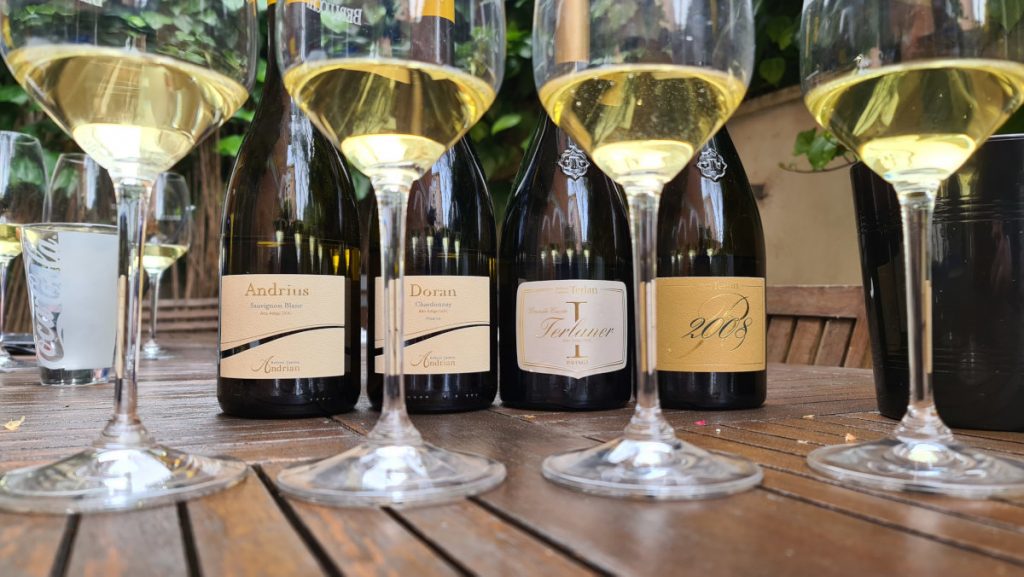
On the table before us are four wines, and we can hardly wait to bring our noses (and not only our noses) to the glass.
It is worth noting that during the tasting we encountered labels bearing two different brands: Cantina Terlano and Cantina Andrian. Two brands, but one single company. Since 2008, in fact, Cantina Terlano has acquired Cantina Andrian.
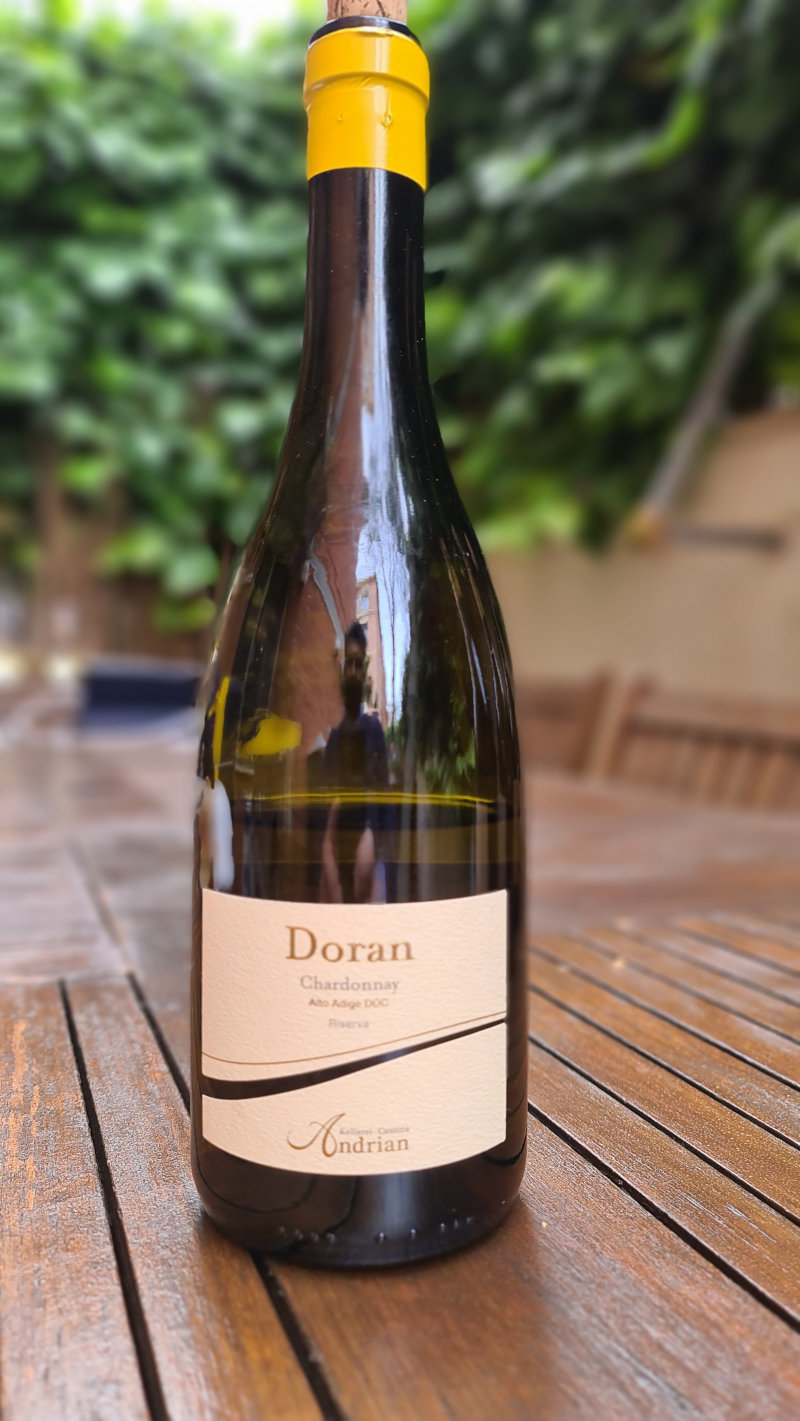
Andrian Doran Chardonnay Riserva 2018
Perhaps the least immediate of the four wines. A wine that requires a more attentive reading. Yet this Chardonnay has a beautiful structure—persistent and certainly not the usual Chardonnay. I would be curious to try it at the table, putting it to the test with more demanding dishes than those typically paired with a white wine. I suspect it might deliver some very pleasant surprises.
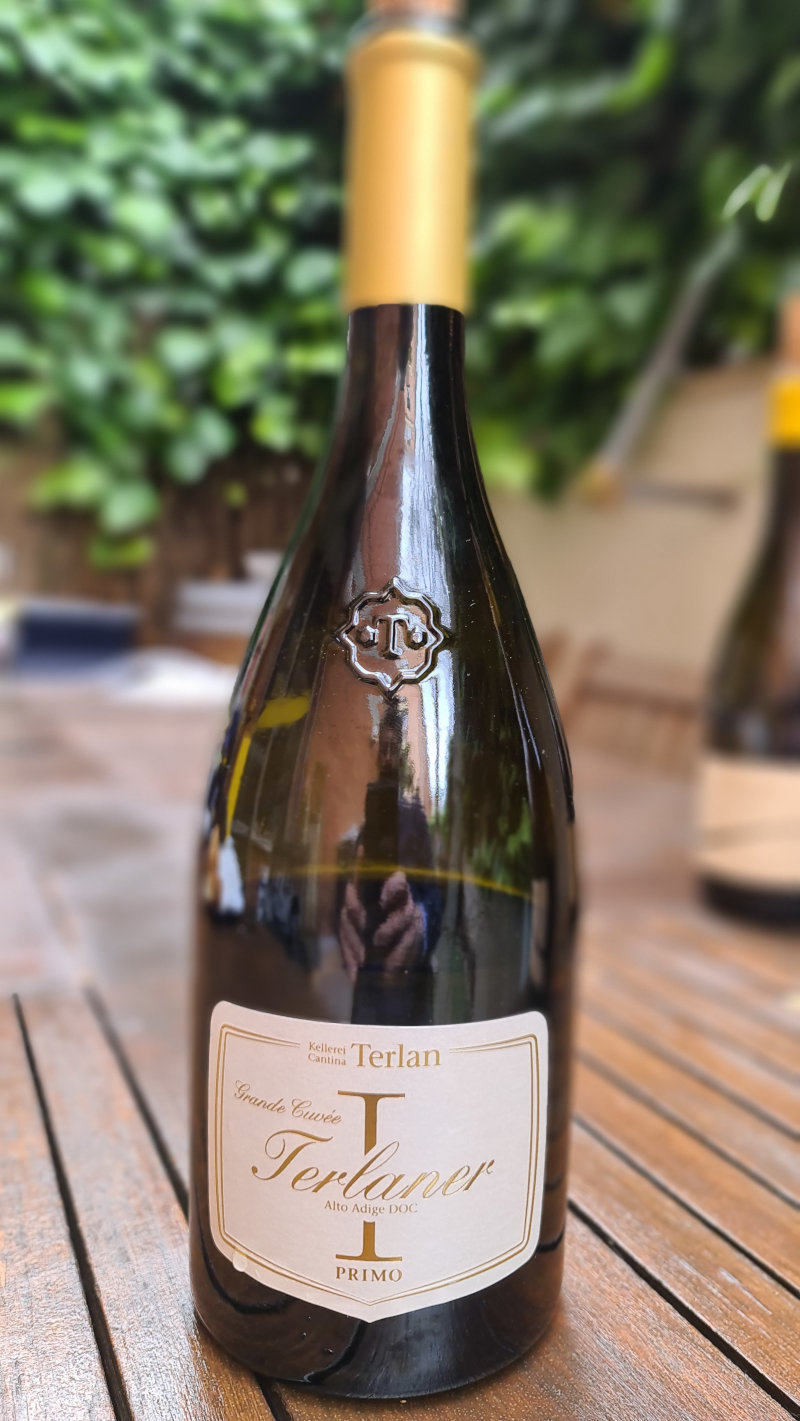
Terlaner I “Primo” Grande Cuvée 2018
A cuvée composed of 65% Pinot Bianco, 32% Chardonnay, and a small percentage of Sauvignon Blanc. Made from the best parcels of the estate—always the same vineyards—this is a wine with excellent structure and remarkable complexity. Its minerality stands out, accompanied by citrus notes and a light herbaceous hint. The oak also plays its role, but in a subtle and elegant way
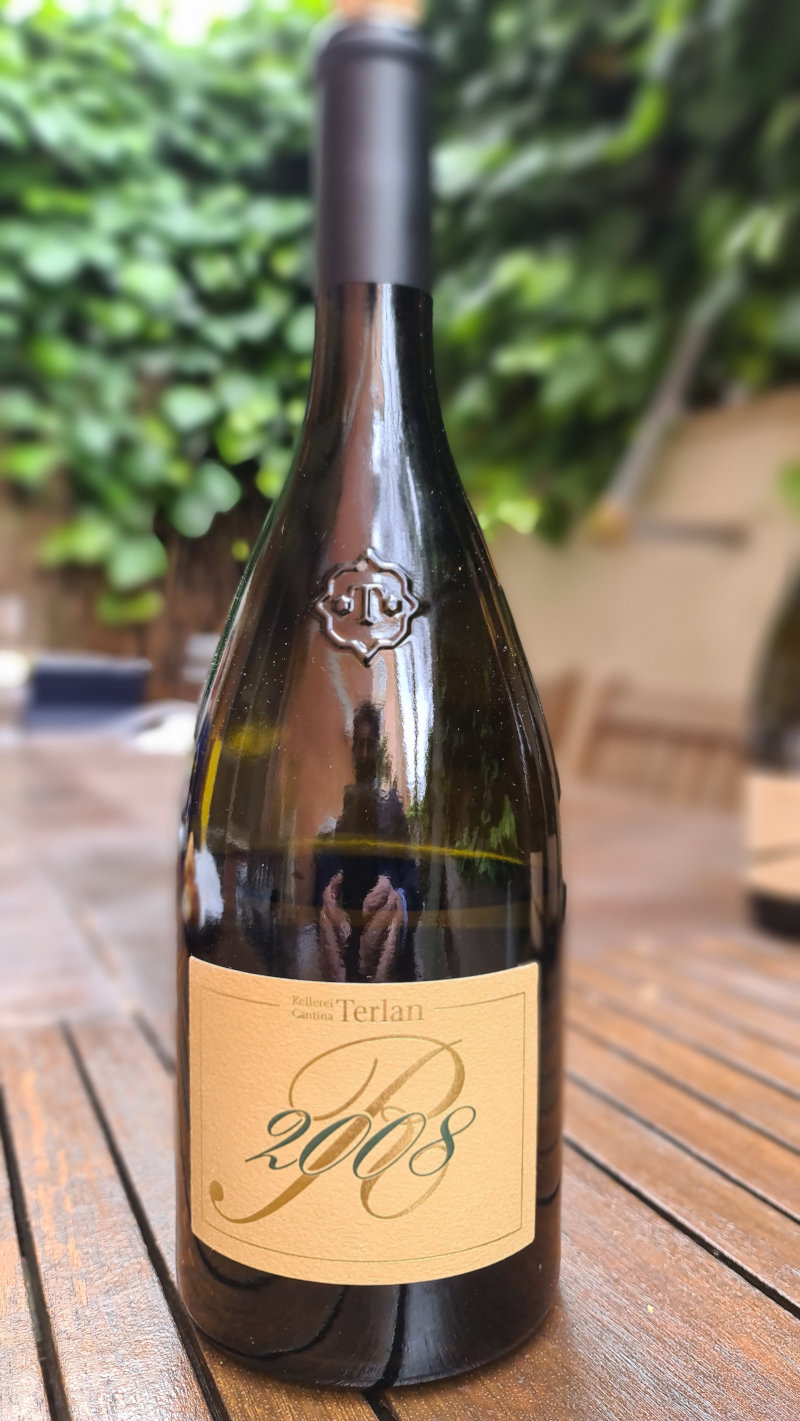
Terlaner Rarity 2008
60% Pinot Bianco, 30% Chardonnay, 10% Sauvignon Blanc. The Terlan Rarità changes its grape composition every year. These wines are aged using the Stocker method, which, after an initial maturation in oak barrels, involves transferring the wine into small stainless steel tanks where it rests for 10 to 30 years, followed by an additional 4–5 years of bottle aging. What can I say—this is a wine with an aromatic profile that I find fascinating, precisely because it is so different from the usual. Chamomile and herbs take center stage on the nose, while yeast notes also play their part, contributing to the complexity and elegance of a truly intriguing wine.
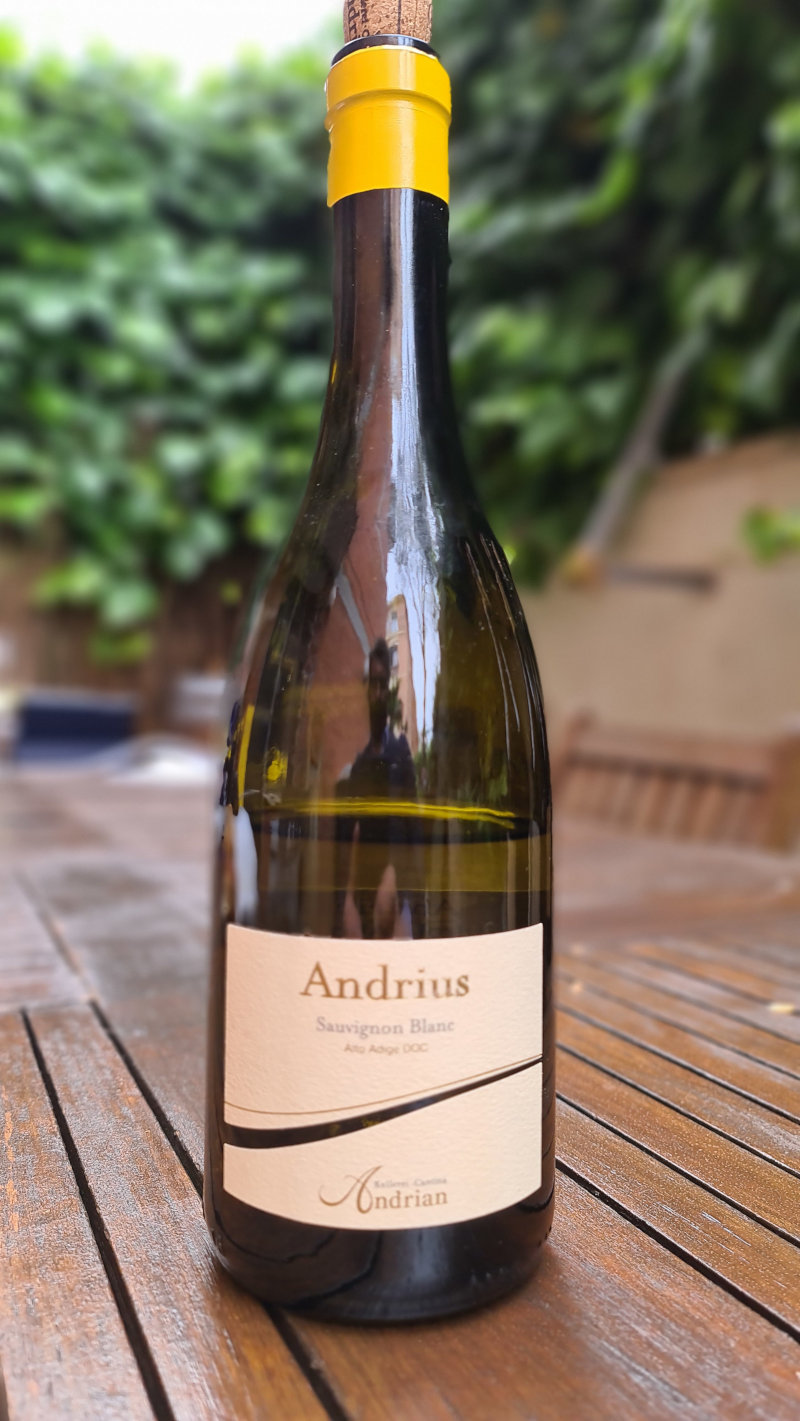
Andrian Andrus Sauvignon 2019
There isn’t much to say except that this Andrus is a great Sauvignon, capable of captivating you before, during, and after the tasting. Intense and expressive on the nose, it fully confirms its character on the palate, with excellent length and persistence. Exactly what one expects from a top Sauvignon. A truly great Sauvignon.