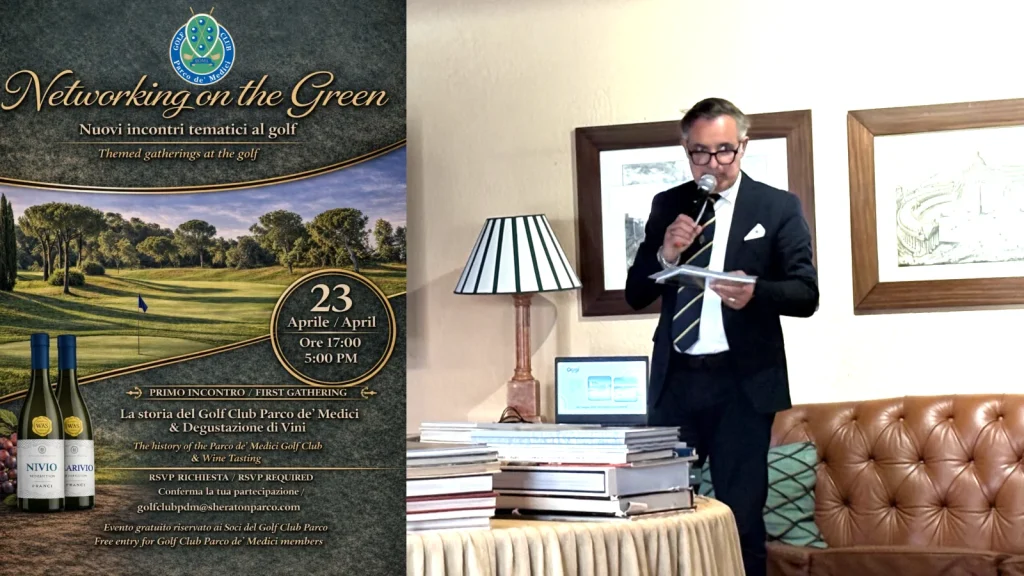
There’s a new way to meet, and it runs across the green. At Parco de’ Medici Golf Club in Rome, “Networking on the Green” takes shape as a series of events designed to create authentic connections between people, ideas, and territories, in a setting that blends elegance, sport, and wine culture.
The first event, held on April 23, focused on a theme that is both symbolic and deeply rooted in identity: the story of the club and a guided tasting, where wine becomes a tool for storytelling and connection. Not just an event, but a format aimed at transforming the golf club into a space for dialogue, where networking is built through shared experiences.
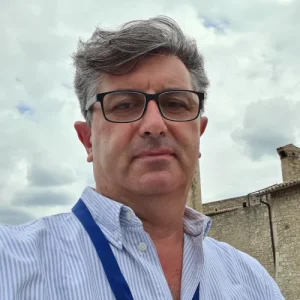
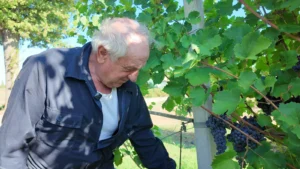
It is precisely in this context that we met one of the most interesting and unconventional players in the contemporary wine scene: Elio Franci of WAS (Without Added Sulfites).
Calling him an “enthusiastic experimenter” is not an exaggeration, but rather the starting point for understanding a project that began in 2009 and has been developed with consistency and determination. “We started this experimentation to produce wine in a different way, and today we can say we are satisfied with the journey and the results we’ve achieved.” A journey rooted in a personal and family dimension, becoming a story told through the glass.
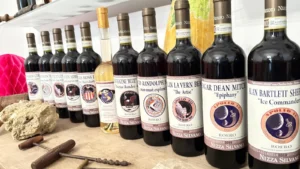
The winery’s first wine is a significant red, Mariò, dedicated to his father. A Cabernet Franc (80%) with a share of Cabernet Sauvignon (20%), born from a deeply meaningful moment: “My father passed away six months before we bottled our first product. Dedicating the label to him was only natural. He loved wine.” A complex wine also from a technical standpoint, as Cabernet Franc is a fascinating but challenging grape that requires precision and sensitivity. The result is a wine that has gained recognition and appreciation over time, becoming the symbol of a clear production philosophy.
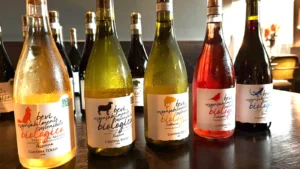
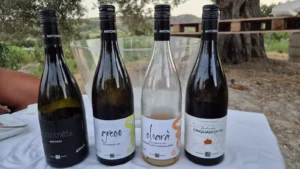
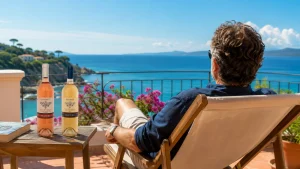
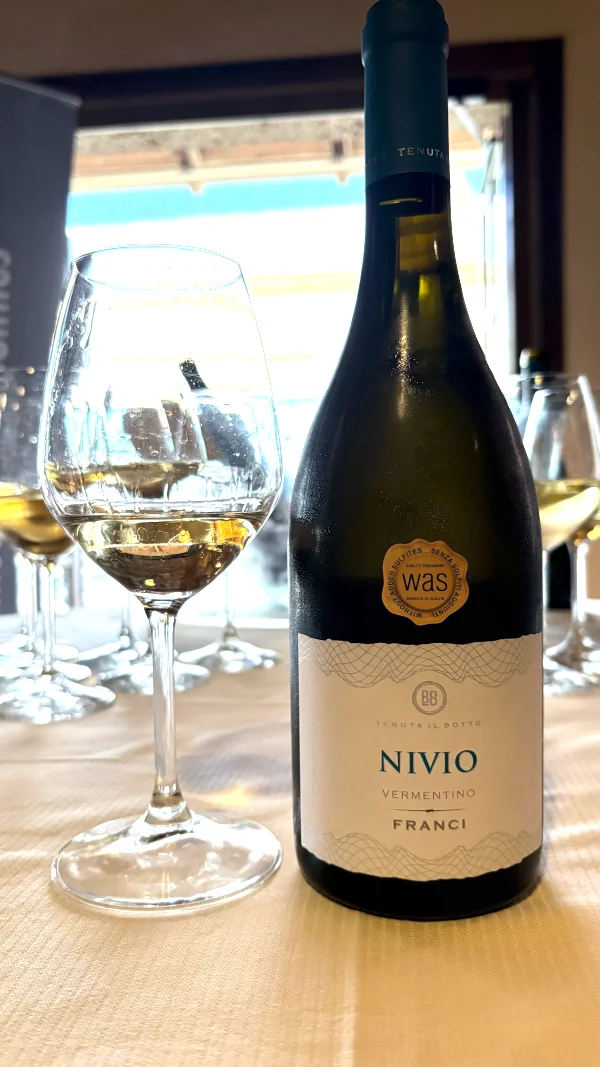 If the red represents the origin, the whites tell the story of evolution. Presented during the event at Parco de’ Medici, they are born from a blend of Vermentino (90%) and aromatic Malvasia (10%), developed after four years of trials. The difference lies in the vinification: one version is more traditional, with about ten days on the skins followed by stainless steel aging, while the other is more extreme, with around two months of skin maceration before moving to steel. Two wines identical in origin yet different in outcome, demonstrating how cellar decisions can profoundly shape the expression of the same grapes.
With him, the conversation inevitably turns to sulfites. This is not a trend, but a personal necessity that became a production philosophy: “It all started from my intolerance. We met people who introduced us to this path, and from there we developed our own method.” Today, the winery produces wines with total sulfur dioxide that is non-detectable, certified by specialized laboratories. An approach that goes beyond traditional organic practices: “Organic farming works very well in the vineyard, but something is still used in the cellar. We chose not to use chemistry in the cellar. It’s a clear, even ethical position.” A complex choice that requires control, knowledge, and great attention at every stage of the process.
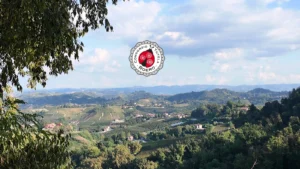
Production is split between an estate located between Orvieto and Bagnoregio and another in Valdobbiadene, dedicated to Prosecco DOCG, while the main market is largely international, more ready to understand and appreciate this kind of approach.
The event at Parco de’ Medici once again showed how wine is much more than a product. It is storytelling, memory, experimentation—a bridge between people. In a setting like a golf club, where time slows down and relationships develop naturally, it becomes the perfect tool to create genuine connections. “Networking on the Green” starts from this very idea: that value lies not only in the glass, but in the stories that glass is able to generate.