“We got it wrong.”
There are words that do not come from the mind, but from somewhere much deeper. Words that emerge before the filter, before form, before even the decision to speak them.
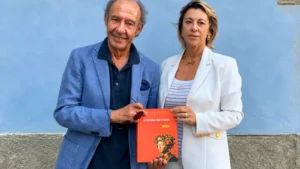
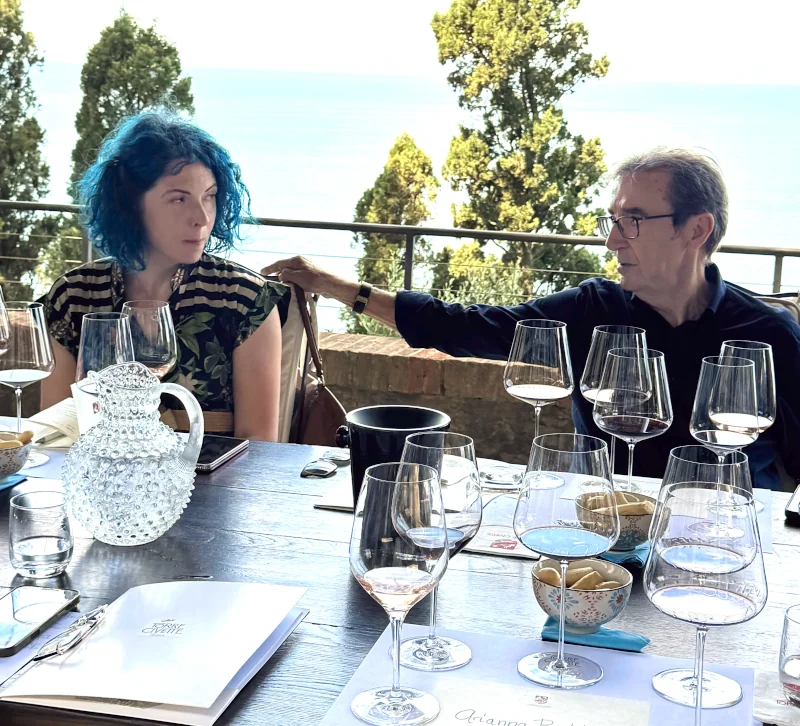 Those were the words that came out of me on June 15, during the press tour at Torre Civette. I was sitting beside Riccardo Cotarella, a glass of Cabernet Franc in my hands, while the Maremma stretched around us, breathing slowly beneath that luminous stillness only the Tuscan coast knows in the suspended hours of late morning.
We were talking about wine—or so it seemed. In truth, we were talking about something far deeper: people; the relationship we have with wine today; and how that ancient, instinctive act of sharing a bottle around a table has gradually slipped away.
Riccardo Cotarella reflected on this with both clarity and melancholy. Wine, he said, had once been the heart of conviviality, family stories, and shared memory. It was at that moment that an almost painful realization surfaced within me: the blame is ours too.
I said it almost without thinking, simply following a thought that had been growing inside me throughout our conversation.
Ours—oenologists, sommeliers, critics, journalists, wine communicators—who have too often taken something born of the earth, of time, and of humanity, and wrapped it in technical jargon, scores, rankings, and ego. We have turned wine into a language that, instead of bringing people closer, too often pushes them away.
Yet even as I spoke, I realized that wasn’t quite the whole point. I told him that perhaps the problem isn’t technical language itself. Precision has value. Expertise has value. Sensory analysis has value. The problem begins the moment we forget who is standing in front of us.
Using the same language with everyone—whether in a trade magazine, a masterclass for enthusiasts, on social media, or around a dinner table—is perhaps one of the greatest mistakes in contemporary wine communication. Communicating is not about demonstrating how much we know; it is about building a bridge, and every bridge must be built differently depending on who is meant to cross it.
That is why, even when writing about technique, what I continue to seek is not complexity for its own sake, but the point where analysis still remains in the service of emotion.
And I admit, I am still learning. When I finished speaking, silence settled between us for a moment.Riccardo placed a hand on my shoulder and told me those were among the most sincere words he had ever heard about wine.More than the conversation that followed, that simple gesture made me realize I had touched something profound.
I will not easily forget that moment, because in many ways it became the key that allowed me to truly understand what was in my glass.
That Cabernet Franc was not merely revealing an aromatic profile or a tannic structure. It was telling me the story of a place, a project, and a vision.
And it was precisely there that I truly began to read Torre Civette.
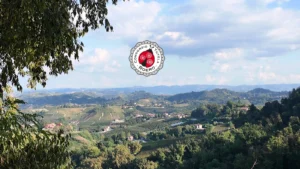
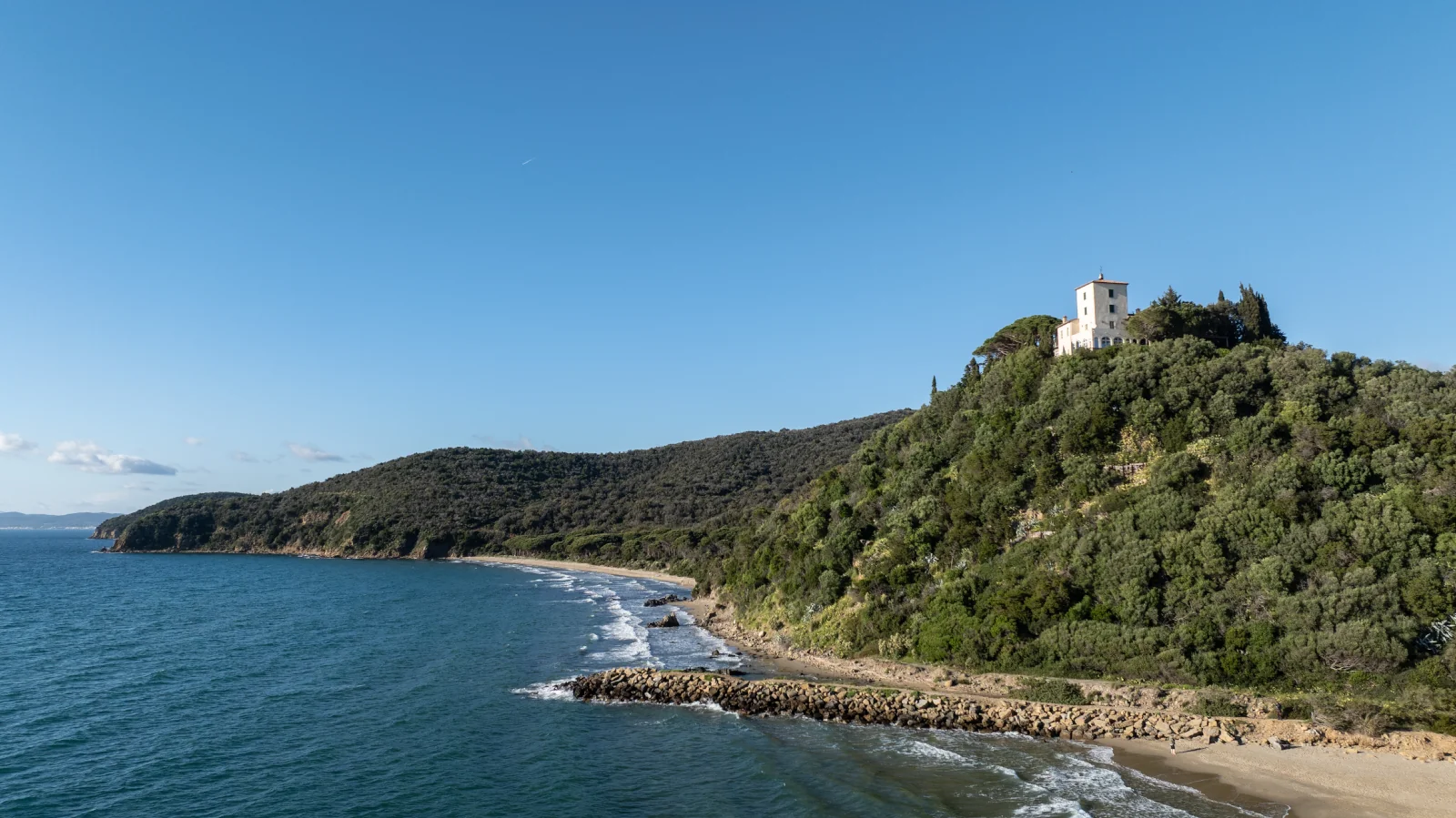
In the heart of the Maremma, near Scarlino, within the protected landscape of the Bandite di Scarlino, Torre Civette does not impose itself upon the land; it becomes part of it. Today, that may well be its rarest quality.
Here, the Tyrrhenian Sea is not simply a backdrop. It is an active presence. It breathes alongside the vineyards, moves through the wind, settles gently on the grape skins, and shapes the identity of the wines—just as sea salt does not merely brush the air but becomes part of its language.
The Mistral crosses the rows with almost ritual regularity. Mediterranean scrub surrounds the vineyards with fragrant notes of holm oak, strawberry tree, maritime pine, bay laurel, and myrtle. The sun ripens generously, while the sea tempers every excess.
It is a land of contrasts that never collide: strength and grace, warmth and freshness, austerity and light.
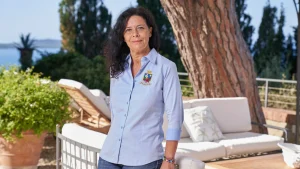
Here one begins to understand the ambition shared by Arianna, CEO of the estate, together with vineyard manager Marco Tolfa and consultant Riccardo Cotarella.
Because this is, in every sense, a bold undertaking.
The vineyards were planted in 2017. The first commercial vintage was released in 2020. Eleven hectares, only a few metres from the sea, planted with Cabernet Franc, Cabernet Sauvignon, Syrah, and Merlot.
Young vineyards—very young—and yet already remarkably articulate. That, more than anything else, impressed me. Torre Civette is not trying to prove it has arrived. Instead, it is courageously revealing a project still in the making. And there is something uniquely beautiful about witnessing a voice as it discovers its own tone.
The tasting itself became the clearest expression of that journey.
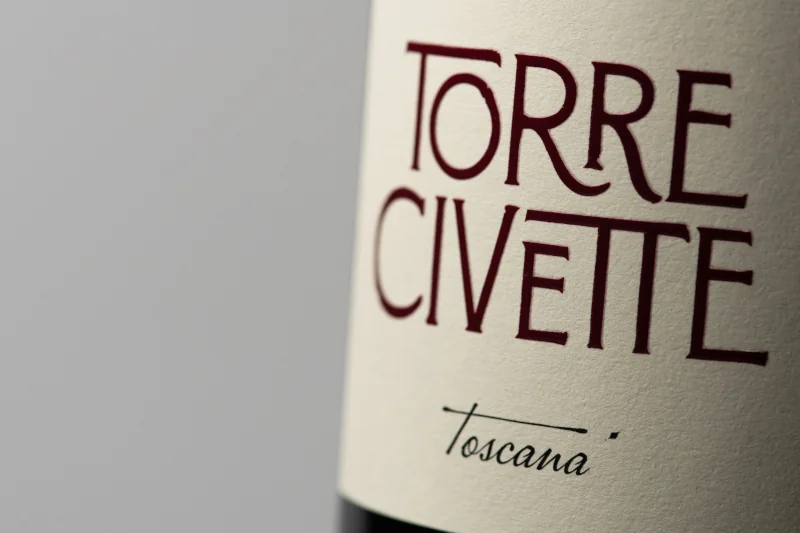
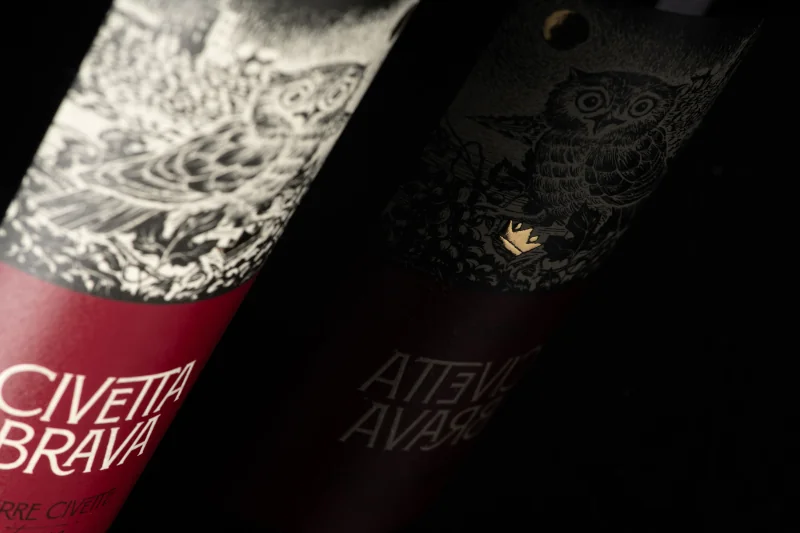
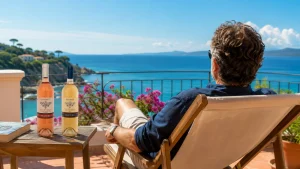
The opening wine, Civetta in Rosa 2025, immediately makes one thing clear: even the rosé here refuses superficiality.
Made entirely from Syrah, vinified through direct pressing and aged on fine lees, it shows a luminous, vibrant pink hue. Wild strawberry and sour cherry emerge on the nose alongside delicate floral notes and a distinctly Mediterranean character that opens toward a grapefruit-driven finish.
On the palate, acidity takes centre stage with remarkable precision. The maritime salinity builds depth, while the saline finish extends the wine with echoes of citrus and fresh fruit.
This is a rosé that speaks the language of the sea without sacrificing structure.
With Civetta Brava 2022, the conversation changes.
The Syrah–Cabernet Sauvignon blend enters with greater volume and density. Its deep ruby colour anticipates an enveloping bouquet where cassis and blackberry form the fruit core, while Cabernet Sauvignon contributes layers of bay leaf, juniper, and Mediterranean scrub.
The palate surprises through contrast. If the nose welcomes, the mouth structures. Syrah leaves its mark through warmth and vigorous tannins, yet never overwhelms the mid-palate, which remains elegant, composed, and juicy. The finish unfolds on ripe fruit, leaving behind a sense of restrained energy. Then comes the wine that more than any other embodies Torre Civette’s vision: the estate’s pure Cabernet Franc.
Here the tasting becomes something beyond sensory analysis.
The vertical tasting of the 2020, 2021, and 2022 vintages tells not only the story of three harvests, but almost three stages in the life of the same voice.
Torre Civette 2022 immediately reveals the face of youth.
Its dense ruby colour with crimson reflections opens onto an elegant, restrained bouquet. The fruit is ripe and precise, recalling cherry before yielding to the wine’s deeper identity: bay leaf, pine resin, liquorice, and profound balsamic freshness. There is finesse, but above all there is direction.
On the palate, the wine’s youth is unmistakable. The tannins are still energetic, vibrant, eager. Yet the core is already refined and orderly, supported by a citrus freshness reminiscent of bitter orange, accompanying the gradual integration of the tannins.
This is not a wine looking for shortcuts. It asks for time.
The 2021 tells a different story. It reflects a more complex, austere vintage, almost more severe in the way it reveals itself. Ruby shifts toward garnet, while the aromatic profile moves decisively toward balsamic and herbal notes of bay leaf, aromatic herbs, and mulberry.
The palate is taut and more vertical, with tannins that today appear less settled and a gently bitter finish created by the interplay between tannin and salinity.
Yet stopping there would be a mistake.
Technically speaking, the tannins show no green character. They are simply young, still finding their balance. And it is precisely here that its ageing potential becomes evident.
To me, this will be one of the most fascinating vintages to revisit over time, because once tannin polymerisation is complete, it promises remarkable elegance and depth.
Finally comes the 2020, the estate’s first commercial release and perhaps the vintage that most clearly reveals the direction of the project.
Its deep ruby colour and impressive concentration immediately suggest richness, but it is on the nose that the wine truly captivates. Here Cabernet Franc speaks with striking precision. Its balsamic opening is refined and never overpowering, with bay leaf and juniper leading the way. Dark fruit follows with beautifully sculpted notes of cassis, blueberry, and blackberry. On the palate, the tannic weave is fine, fruit-driven, and perfectly centred.
A vibrant citrus acidity recalling orange works in complete harmony with tannin and salinity, creating texture, depth, and momentum. The wine is full-bodied and substantial, yet always perfectly balanced. And it is precisely that balance that gives it elegance.
Perhaps this is where Torre Civette surprised me most.
Not in an obsessive pursuit of immediate perfection—the kind today’s market often demands and that truly authentic wine rarely offers—but in its courage to reveal itself exactly as it is: a young, living project in constant evolution, with all the beauty and vulnerability of something that is still becoming.
There is something profoundly compelling in observing young vineyards and tasting wines that are still searching for their own voice. It means witnessing a story while it is still being written. It means sensing potential before completion, recognising direction before destination.
That is Torre Civette’s greatest strength today. It has understood that time is not an obstacle to overcome, but its most precious ally. I leave this corner of the Maremma carrying a feeling that is difficult to explain—and precisely for that reason, unmistakably genuine.
The feeling of having witnessed not an arrival, but a beginning. If these landscapes teach us anything, it is that nature is never in a hurry, and yet it accomplishes everything. Between the Tyrrhenian Sea and these still-young vineyards, Torre Civette is doing far more than producing wine.
Harvest after harvest, it is learning to translate the voice of the Maremma into emotion. And listening to it, I came away with one clear conviction: the best is still to come.