Inside “Miradas”, a journey into the agricultural and symbolic heart of Barbagia
Locoe is not just a place: it is an emotional geography, a natural archive in which the memory of Orgosolo has settled over centuries. This is where the story told by Nicola Corria, Vice President of Cantine di Orgosolo, begins, guiding us through the encounter dedicated to Granatza within the framework of the “Miradas” project, an initiative conceived to connect art, territory and agricultural production. In this context, Granatza becomes far more than a grape variety: it is an identity fragment that survives thanks to the care of local winegrowers and the very structure of the landscape.
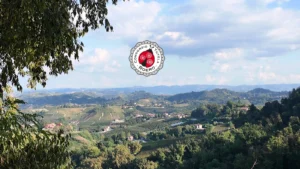
The Locoe valley has always been a vital agricultural centre. Traditionally devoted to vineyards, olive groves and fruit trees, and in the past also to wheat, it is a land celebrated in the literary works of Grazia Deledda and Salvatore Satta, where vineyards and olive groves become narrative elements, almost characters in their own right. Here, agriculture has never been a purely economic activity, but a shared language and a system of values. As Nicola recalls, every family in Orgosolo traditionally owned its own vineyard for self-consumption. A widespread and quiet culture that today is finding new forms through realities such as Cantine di Orgosolo and Orgosa, able to open up to international markets while preserving authenticity.
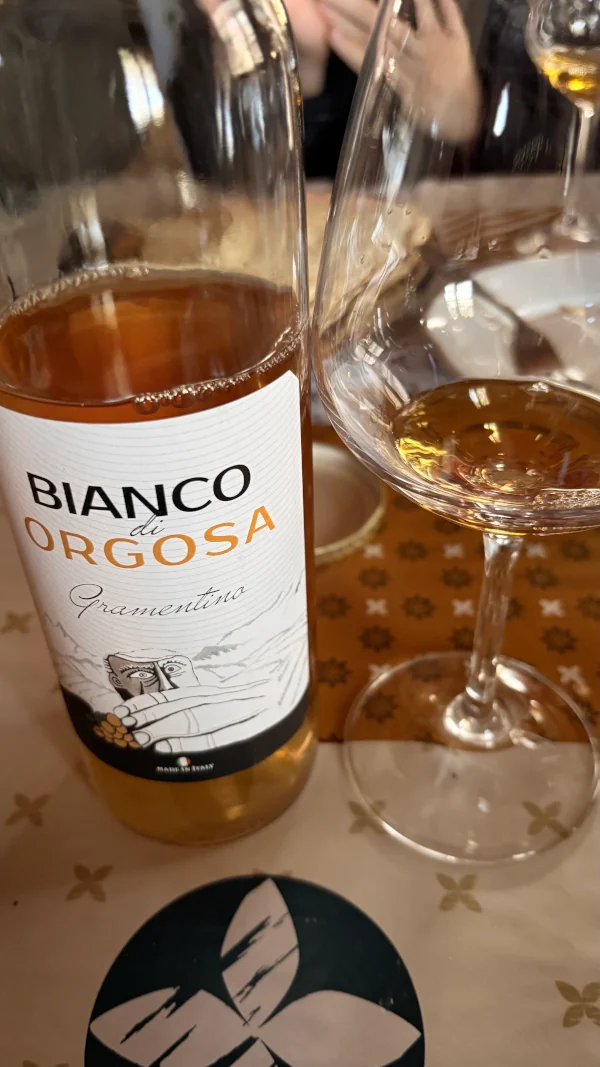
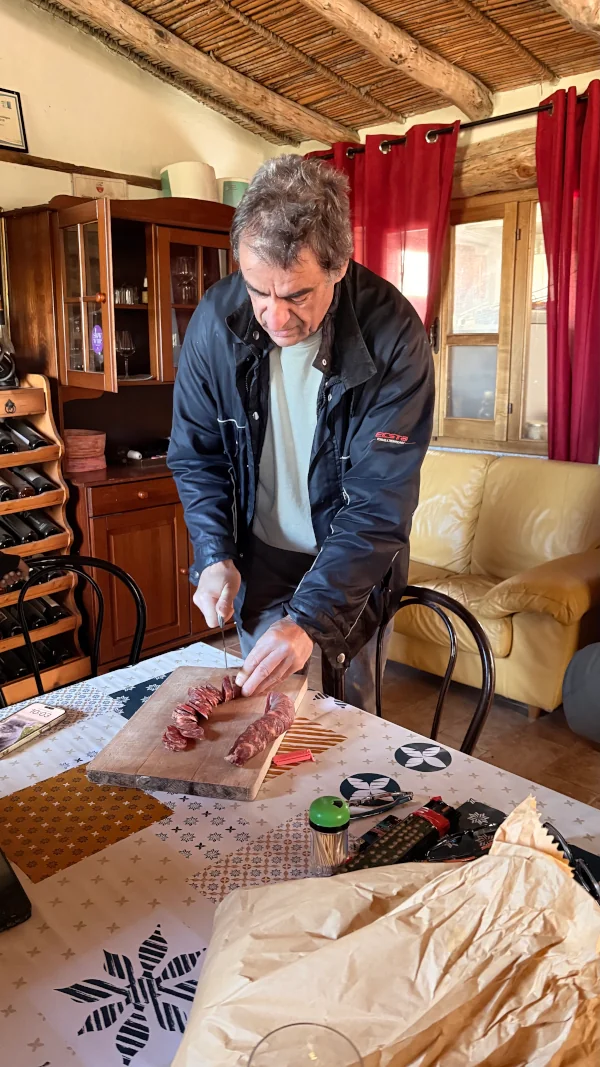
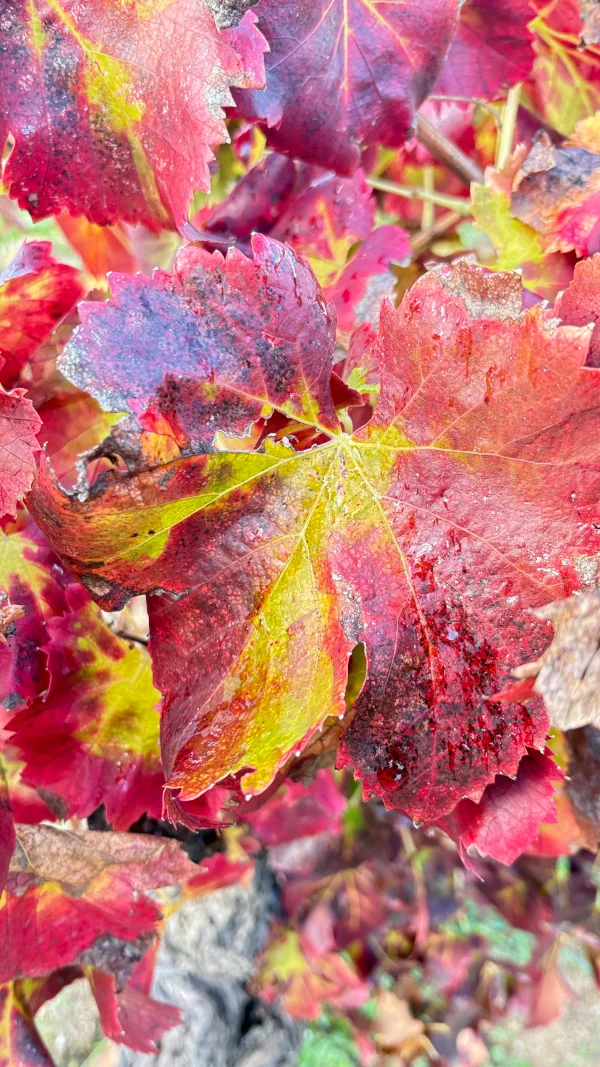
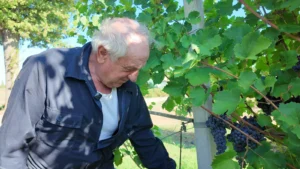
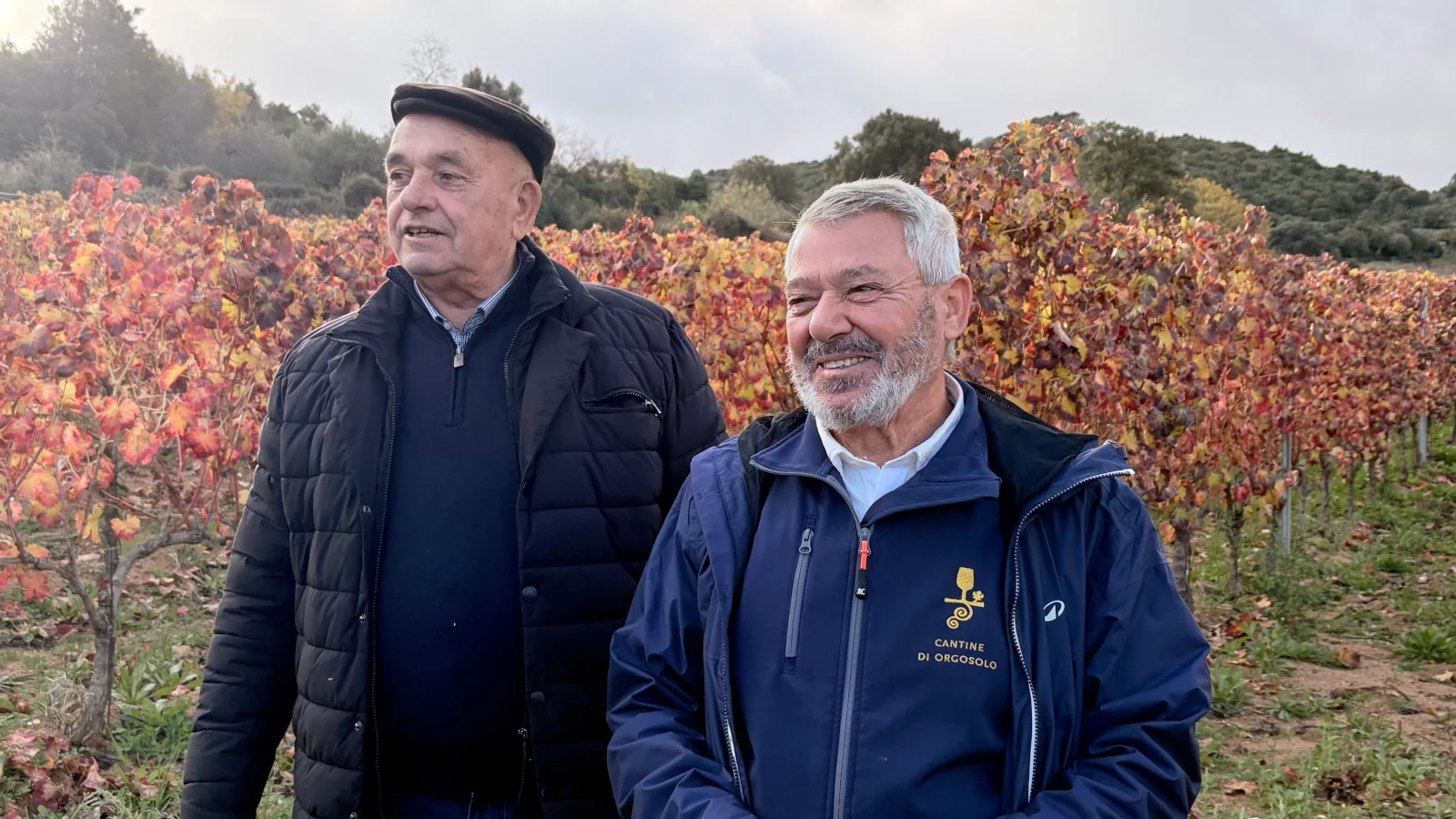
At the centre of Orgosolo’s viticultural landscape stands Cannonau, the emblematic grape of Sardinia: robust, Mediterranean, capable of expressing depth and warmth. Yet it is alongside Cannonau, almost camouflaged among its rows, that Granatza lives. An ancient white grape, little known to the wider public and perhaps for this very reason even more precious. Nicola points out the vines: four Granatza plants aligned among the red-hued expanse of Cannonau. In the vineyard before us there are 2,500 vines in total, of which only 300 are Granatza. A numerical minority, but one of immense value in terms of biodiversity and genetic heritage.
What makes Granatza particularly distinctive is its placement. Historically, there are no specialised, single-variety vineyards dedicated to it. Instead, Granatza is scattered, interwoven, dispersed within Cannonau plots. “It’s like this everywhere,” Nicola explains. “Granatza vines are inserted in a disorderly way within Cannonau vineyards.” As a result, harvest time becomes an almost artisanal act: each vine must be identified individually, recognised by sight, distinguished by shape, vigour and growth habit. This is knowledge that cannot be learned from books, but is inherited over generations. A form of “oral viticulture”, transmitted through gestures and experience rather than technical schemes.
This seemingly chaotic structure actually reveals a different kind of order: that of subsistence viticulture, layered over time, in which the goal was not varietal purity but vineyard resilience and diversification. Granatza grew where it was needed, where the land allowed it, where families considered it an essential part of their wine. This explains not only its irregular distribution, but also its deep-rooted identity: it is a grape that belongs to the community before it belongs to oenology.
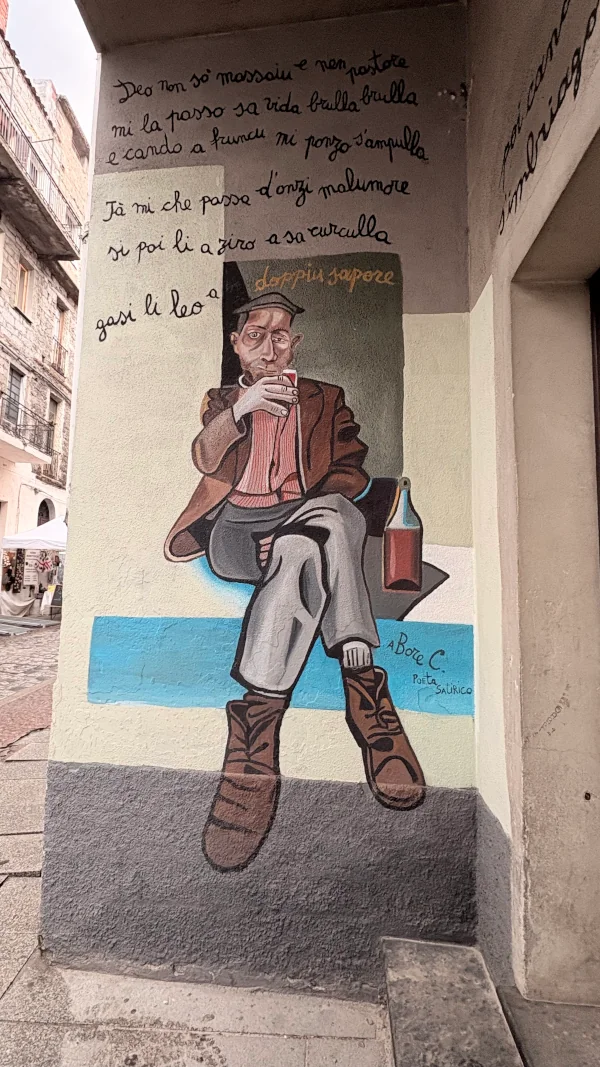
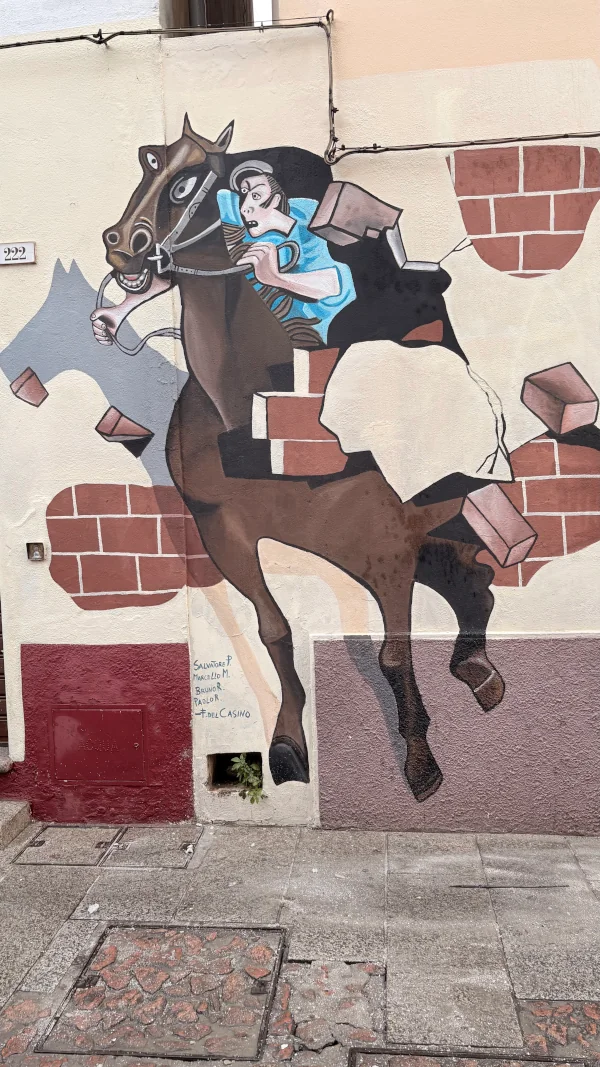
The “Miradas” project embraces precisely this perspective: observing the territory through new eyes, placing landscape, culture and production in dialogue. In this journey, Orgosolo emerges as a complete narrative: the murals that tell stories of civil memory, the Supramonte defining the natural horizon, and the vineyards weaving together labour and tradition. Within this mosaic, Granatza stands as a symbol of memory clinging to the land, a grape variety that escapes trends to affirm a profound sense of belonging.

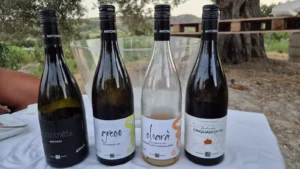
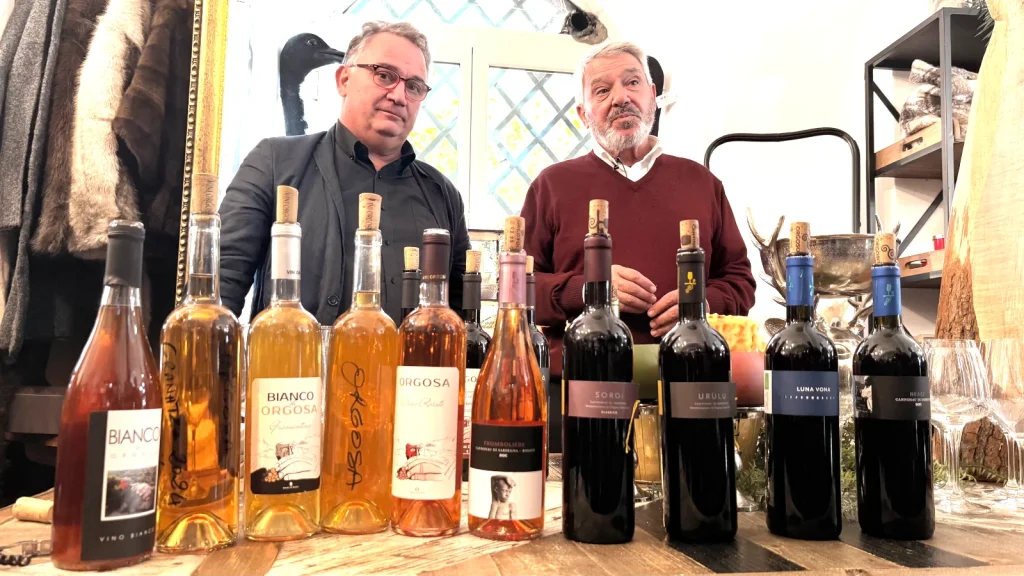
Tasting a Granatza wine means stepping into this interwoven story. It is a wine that carries the imprint of the slopes of Locoe, of the Mediterranean scrub, and of Orgosolo’s rural soul. It expresses a distinct oenological voice, capable of standing alongside Cannonau not as an alternative, but as a complementary expression of identity. For this reason, as Nicola emphasises, anyone wishing to truly understand Orgosolo must come to terms with Granatza: not a secondary grape, but a key to reading the territory.
At a time when global viticulture is questioning authenticity, biodiversity and cultural rootedness, the story of Granatza becomes emblematic. It survives almost hidden, and precisely for this reason today emerges as one of the most genuine testimonies of Barbagia. An invitation to listen to territories not only through what is immediately visible, but also through what remains on the margins: often, it is in these shadowed spaces that the truest essence is preserved.