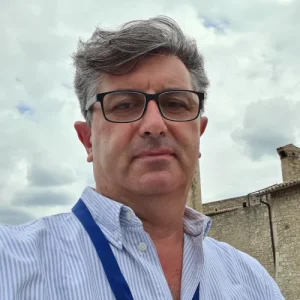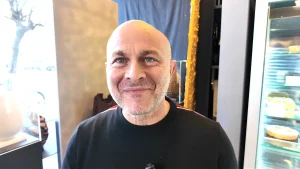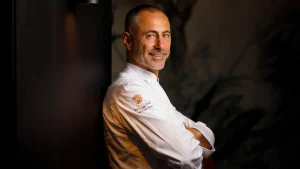
From the voices of Marco Oreggia and Laura Marinelli comes the story of a guide in constant evolution.
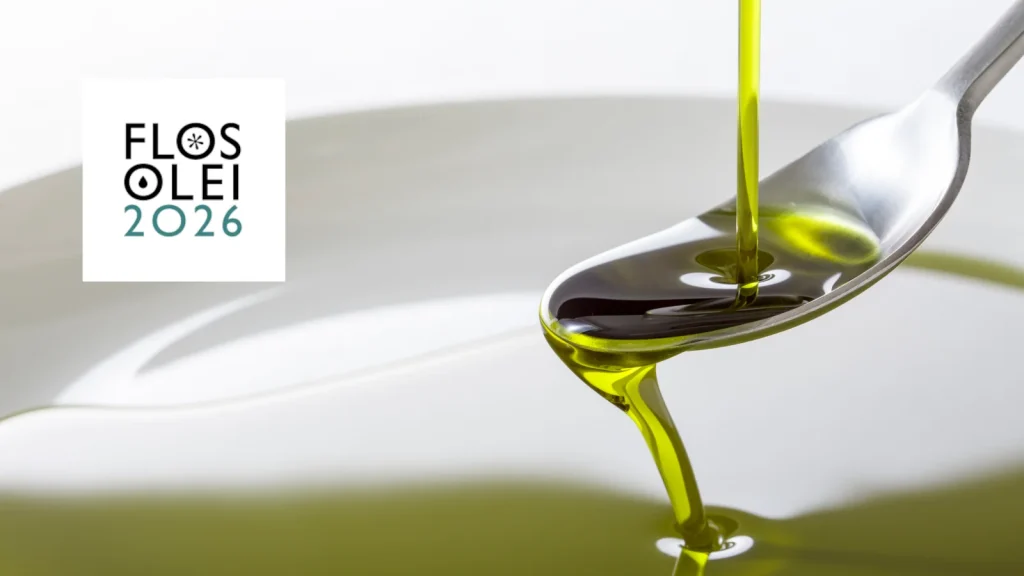
Flos Olei returns to Rome, reaffirming its role as an international observatory on extra virgin olive oil. The 2026 edition unfolds as a global journey encompassing 57 countries, 500 producers, 92 territorial maps and more than 760 selected oils. Numbers that confirm the guide, created by Marco Oreggia and Laura Marinelli, as the most authoritative map of high-quality olive growing worldwide.
“Each year we include new territorial realities,” Marco explains. “For 2026 we complete the Spanish section with the addition of the Canary Islands, the fifteenth Spanish region included in the guide.” It’s not only a geographical expansion, but also the introduction of new producers: a mosaic of excellence that shows how high-quality olive oil has become a global phenomenon, capable of expressing biodiversity, agricultural cultures and different approaches to extra virgin production.
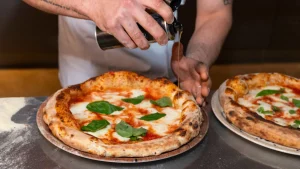
Alongside its technical and production-focused content, Flos Olei emphasizes the importance of conscious consumption. “Olive oil isn’t just a cooking fat; it’s a true ingredient in its own right,” Laura explains. Light, medium or intense fruitiness: the game of pairing begins right here. A light fruitiness enhances delicate dishes, a medium one supports more structured preparations, while an intense fruitiness is perfect for rich and flavourful creations.
Olive oil thus becomes an extremely versatile element, capable of surprising even in unusual combinations, such as fine pastry: “We’re now seeing it used even in gelato. But first comes knowledge—then creativity.”
When it comes to average consumer habits, however, there is still a long way to go. “There’s a lot of work to do,” Marco notes. “On supermarket shelves we often find standardized products with low sensory and nutraceutical value. The label says ‘extra virgin,’ but the content doesn’t always live up to it.” His advice is to seek out authentic producers, discover territories and use tools like the guide to navigate real quality. Lau highlights the importance of education: “Only if you know how to choose, you can choose—whether in a supermarket, at a fair or directly from a producer. Culture is the first step.”
The topic of younger generations opens a broader reflection. “There are young people—and then there are young people,” Laura says. “I became interested in olive oil when I began cooking for myself: I wanted to know how to choose, I wanted quality. It’s a path that stems from a desire for independence, care and hospitality.” Olive oil, she reminds us, is at the heart of the Mediterranean diet, part of the cultural triad of bread–oil–wine: “Once you fall in love with quality, there’s no turning back from olive oil.”
Looking ahead, Marco announces deeper research into emerging countries and increasingly rigorous work on data: “Telling the story of this sector requires precision, especially in a complex moment like this.” Alongside the guide, national and international tours will return, with the goal of building a stable bridge between producers, restaurateurs, buyers, the press and consumers.
In this way, Flos Olei continues its mission: not just a collection of excellence, but a cultural project that connects those who produce and those who choose, those who communicate and those who cook. An invitation to view extra virgin olive oil not as a simple detail, but as an ingredient of identity—capable of telling the story of a territory as powerfully as a great wine.