A difficult year, yet one filled with creative energy. This is how Piero Mastroberardino, President of the Istituto Grandi Marchi, describes the current moment for Italian wine — a time of transition that, despite economic challenges and shifting markets, offers fertile ground for renewing languages, models, and visions.
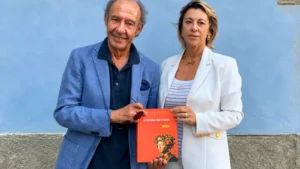
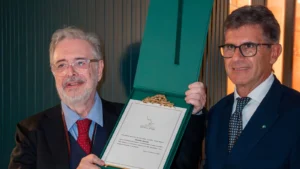
The occasion to explore these themes was the Istituto Grandi Marchi Award Ceremony held in Rome, where the international prize was presented to Japanese journalist Isao Miyajima, one of the most authoritative voices in promoting Italian wine and gastronomy. Beyond the celebration itself, the event became an opportunity to reflect on the future of the industry and on the cultural role that wine continues to play in representing Italy’s identity around the world.
In his remarks, Mastroberardino emphasized that the strength of Italian wine lies in its ability to evolve without betraying its roots: “The member wineries of the Institute have always been ahead of their time while remaining faithful to their family and territorial heritage. Innovation is a continuous process that allows us to preserve our identity more deeply.”
For over twenty years, the Istituto Grandi Marchi has stood as a unique model in the international wine scene: eighteen iconic Italian families — from Antinori to Donnafugata, from Tasca d’Almerita to Mastroberardino — united to promote worldwide the quality and culture of Italian fine wine. It is a project founded on the idea of enhancing Made in Italy as a living ecosystem of people, lands, and shared values, rather than a simple collection of prestigious labels.
In a global context marked by rapid change, the Institute reaffirms its commitment to honoring tradition while engaging new generations, sustainability, and emerging markets. “Every choice must take into account a world that is changing quickly,” Mastroberardino noted. “From production style to communication language and international strategy, awareness and openness are essential.”
The future, he added, also depends on the new generations, whom he sees as key interlocutors: “Young people bring curiosity, sensitivity, and new storytelling codes. It is up to them to protect and reinterpret wine as a cultural and social expression of Made in Italy.”
With this vision, the Istituto Grandi Marchi continues to promote Italian wine as an ambassador of authenticity, culture, and style, capable of speaking to the world while maintaining its distinctive voice. And if 2025 promises to be a challenging year, it is precisely in such challenges that — as Mastroberardino reminds us — “wine finds its truest strength: the ability to unite, to tell stories, and to inspire.”