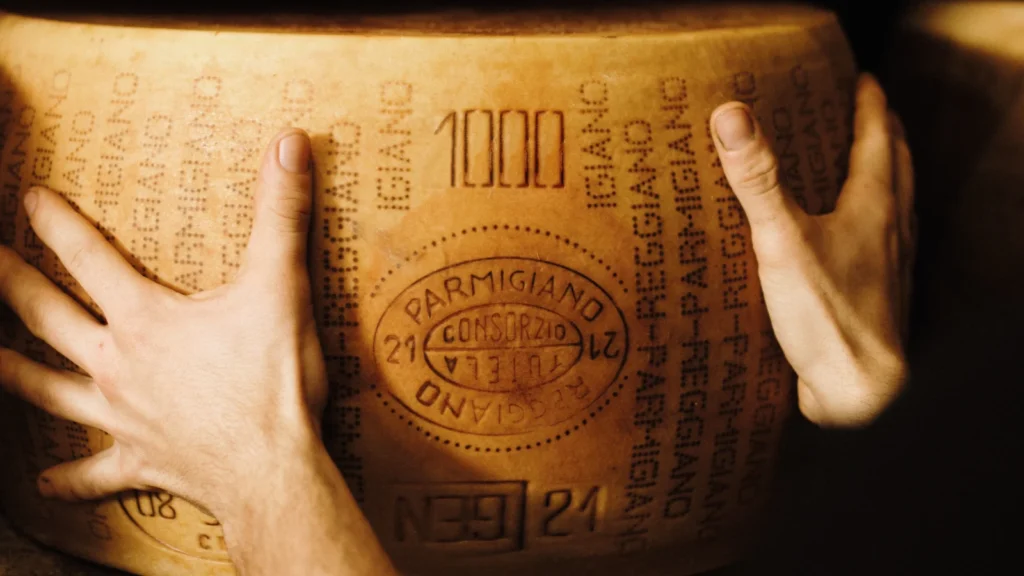
From the end of October, the Consortium will bring its first-level tasting course to the Italian capital for the first time. Five theory-and-practice lessons and a day in the production area will offer participants a closer look at dairies, ageing and the entire supply chain.
Tasting it is not enough. To truly understand Parmigiano Reggiano, you need to learn how to read its differences, understand how it evolves, recognise what happens during ageing and, above all, look inside a supply chain that goes far beyond the product that eventually reaches the table.
This is the idea behind the new project announced by the Parmigiano Reggiano Consortium: from the end of October, for the first time, courses for aspiring tasters will also be held in Rome.
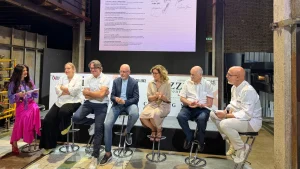
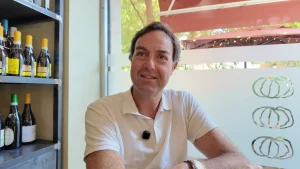
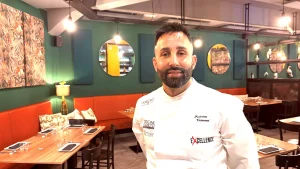
The initiative was presented during Vinòforum by Alessandro Stocchi of the Parmigiano Reggiano Consortium.
“We are deeply committed to communicating and sharing the culture of our product and our supply chain in a structured and well-established way,” he explains.
The first-level course will consist of five theory-and-practice lessons, together with a full day spent directly in the production area. This is likely to be the most interesting part of the programme, as it takes the experience beyond the tasting room and into the places where Parmigiano Reggiano is actually made and matured.
Participants will be guests of the Consortium and will visit a dairy and an ageing warehouse, gaining a closer understanding of the different stages of the production process.
It is an approach that aims to turn tasting into a tool for knowledge. Not simply deciding whether a Parmigiano Reggiano is enjoyable or not, but learning how to observe, compare and interpret the characteristics of the cheese.
The word “culture” returns several times in Stocchi’s account. Because behind such a well-known denomination there is sometimes a paradox: everyone knows the name Parmigiano Reggiano, many people eat it regularly, but far fewer fully understand its characteristics, differences and production methods.
Bringing a structured course to Rome therefore means trying to bridge that gap.
The announcement came during the Consortium’s first participation in Vinòforum, an experience Stocchi describes positively not only because of the number of visitors they met.
“We found a particularly large audience, but beyond the numbers, what was most interesting was the quality,” he says. “People proved to be very interested, attentive and receptive, genuinely eager to discover the characteristics that distinguish our product.”
It is also a sign of how the relationship between the public and Italy’s great traditional products is changing. The fame of a brand or denomination no longer seems to be enough: there is growing curiosity about what lies behind it, about differences, places of production and the people who make up the supply chain.
From this perspective, the Rome course can be seen as something more than a simple educational initiative. It is an attempt to create more informed consumers and, at the same time, new ambassadors for a production culture.
Because learning how to taste inevitably also means learning how to ask questions.
perhaps it is precisely from those questions that a true understanding begins of a product we are used to seeing on our tables almost every day.