Gennaro Convertini of the Enoteca Regionale Calabrese tells Vinòforum about a Calabria choosing to present itself through its territories, consortia and a viticultural biodiversity that is still only partly explored. The challenge is clear: to turn wine into a gateway to a broader experience.
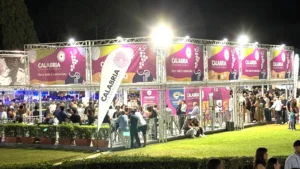
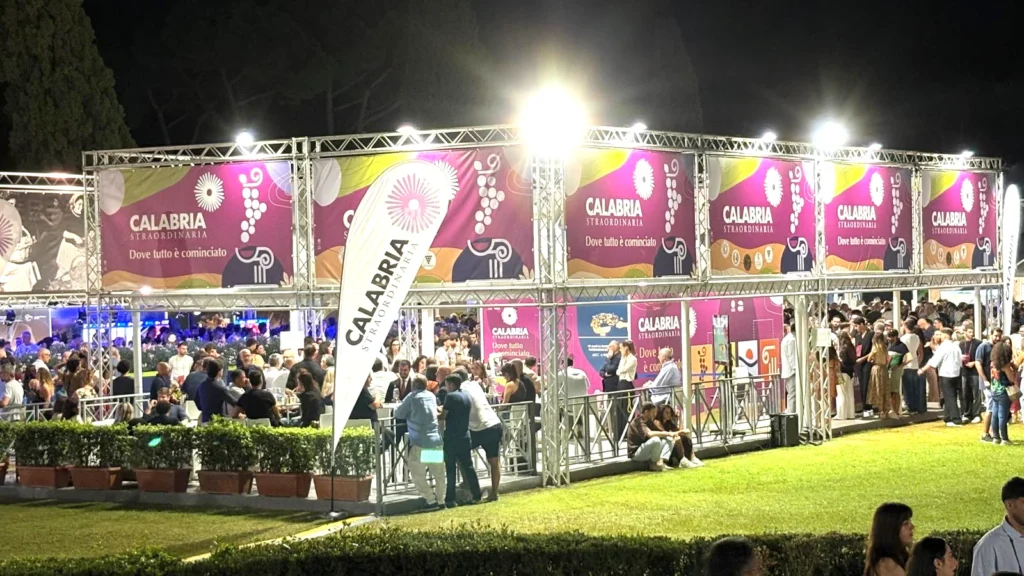
At Vinòforum, Calabria chose not to present itself through individual wineries, but through its territories. It was a deliberate decision, as Gennaro Convertini of the Enoteca Regionale Calabrese explains, starting from the role played by the consortia.
“This year we decided to bring the consortia here because they represent the territories and the denominations. Through their stories, we want to show the extraordinary biodiversity Calabria possesses and which probably still remains little known.”
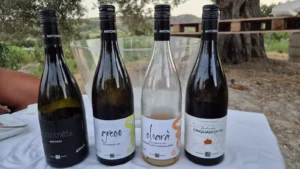
Cirò, Terre di Cosenza, Terre di Reggio, Greco di Bianco and Bivongi DOC thus become different pieces of a mosaic that reveals a wine region far more complex than it is usually perceived to be. And when the conversation turns to biodiversity, Convertini immediately mentions one of the grape varieties he considers most representative: Mantonico.
“It has one of the oldest genetic profiles in the world,” he says, stressing how research into native grape varieties is revealing the role some Calabrian cultivars have played in the history of the vine. In his view, Mantonico becomes almost a symbol of a heritage whose roots reach much further back than modern viticulture.
“Our biodiversity comes from an extremely ancient history, going back even further than Magna Graecia. Before that there was Oenotria, with its wild vines, which later encountered domesticated vines coming from Greece. From that meeting came many of the grape varieties we are still discovering today.”
And this research is not confined to the past. Convertini describes work that is still ongoing in Calabrian vineyards, searching for varieties with unique DNA that can be entered into official registers. A kind of widespread genetic bank that could also prove highly valuable when looking to the future of viticulture.
“With climate change, the biodiversity we possess could become a resource not only for Calabria, but for Italian viticulture as a whole.”
And it is precisely with the word “future” that the conversation moves from wine to tourism. Because, according to Convertini, it is no longer enough to send bottles out into the world and expect them to tell the story of the territory on their own. “Wine has always been an ambassador, but perhaps the bottle has partly lost that function. Today’s consumer wants to go to the places themselves, visit them and have experiences.”
This is where events and promotional opportunities need to move beyond simply presenting wines and instead become an invitation for people to discover Calabria directly. Not only the sea, therefore, but also the mountains, the Sila, Aspromonte, Pollino and those inland areas that feature far less prominently in the region’s traditional tourism image. The decisive shift, however, concerns wine tourism.
Convertini no longer sees it as a secondary activity attached to wine production. “Wine tourism has become something complex. It is no longer aimed only at enthusiasts who want to taste wine and visit a winery. The audience has broadened, and wineries need to organise themselves with genuine strategic units dedicated to hospitality.”
It is a profound change. A winery is no longer simply the place where wine is produced. It can become a meeting point for artisans, artists, gastronomy, landscape and other local sectors. In other words, opening the doors and pouring a few glasses is no longer enough. An experience has to be built.
On the subject of infrastructure, often cited as one of the main limitations of Italian wine tourism, Convertini offers a different perspective. “This is still a form of slow tourism. Difficulty in reaching a place is not always and necessarily a disadvantage. The real challenge is to become attractive.” Infrastructure remains important, but it requires time. In the meantime, according to Convertini, Calabria is already showing encouraging signs, with growth in international tourism and increasing interest in mountain and inland areas.
The real step forward lies elsewhere: building a system. Convertini estimates that at least around forty Calabrian wineries are already ready to offer high-quality hospitality. The next step is to connect them with one another and with the other resources of the territory.
“We need to create territorial products, connect them with other operators and build an integrated system. People who choose wine tourism want to experience a place in its entirety, and they need to find enough things to do to stay for at least a weekend.”
This is probably where Calabria’s real challenge lies. The heritage is already there: grape varieties, denominations, landscapes, sea, mountains, gastronomy and a biodiversity that continues to reveal new surprises. Now all of this needs to be transformed into storytelling, experience and connection.
Because wine can still be a great ambassador.
But to truly fulfil that role, it has to succeed in bringing people to the place where it is made.