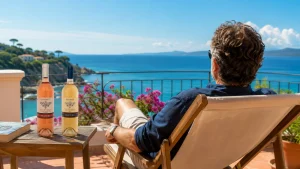
Roussillon is a rather unusual land. I say unusual because when people think of France, they usually think of Paris, Burgundy, Bordeaux, the Loire, or Provence — but rarely of this southern corner of the country, which is nevertheless capable of offering some wonderful surprises.
Personally, I love the south of France. When I was younger, I passed through it countless times during my many road trips to Spain. More recently I have spent time between the Côte d’Azur and Provence, but only in recent years have I had the chance to get to know Roussillon and its wines a little better.
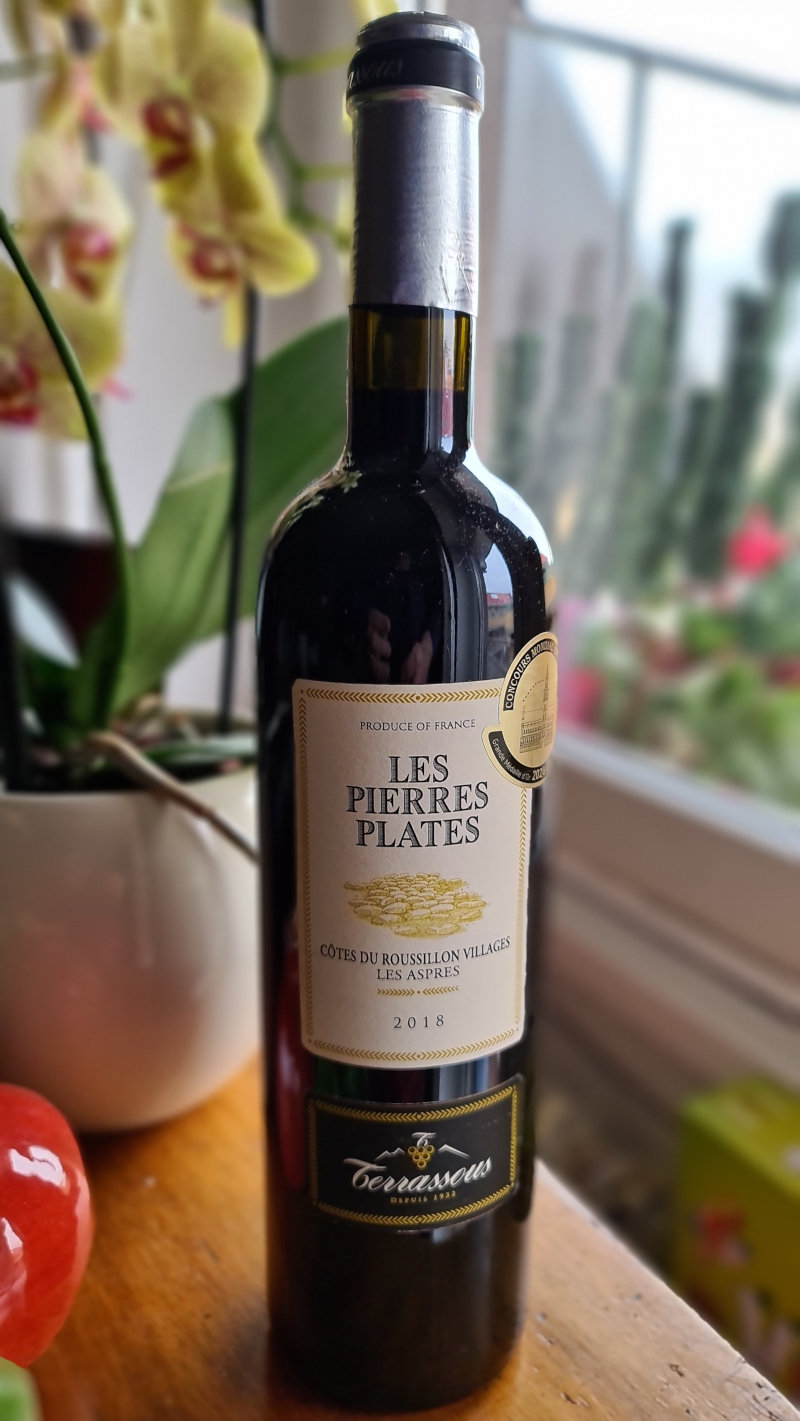
Maurizio Valeriani, editor of Vinodabere.it — essentially my trusted “wine pusher” — handed me a bottle of Les Pierres Plates Rouge 2018 and said: “Would you try it and let me know what you think?”
Of course I said yes. But as we say where I come from, “a wine should never be drunk alone.” So I gladly gave in to the temptation to share this bottle with a group of sommelier friends.
The basic idea was to throw them off balance — and I succeeded completely. No one — I mean no one — was able to identify where it came from. Even the bottle, unusually tall and carefully covered with a thick layer of foil, did little to help reveal its origin.

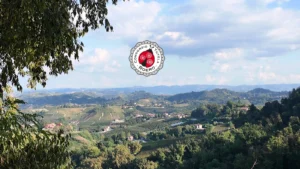
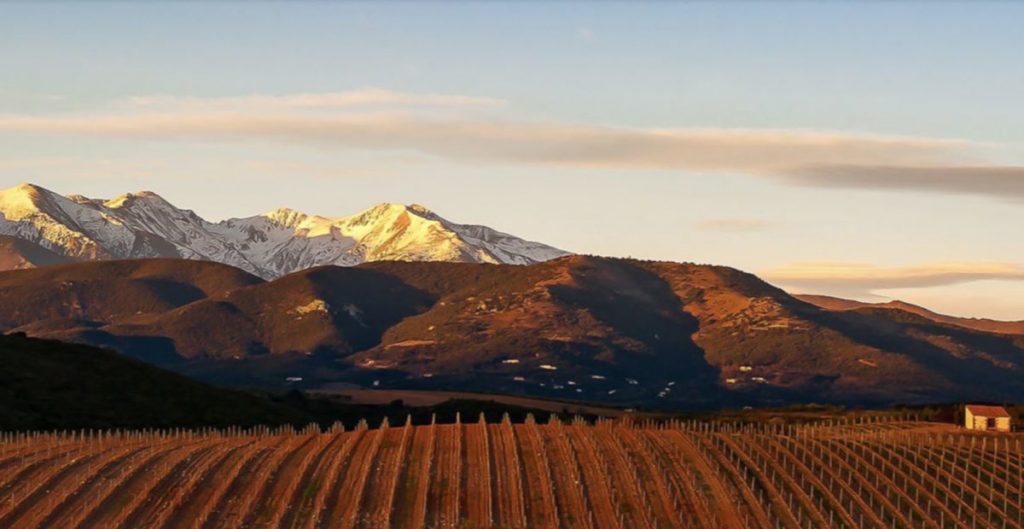
We are in France, near Perpignan, south of the Eastern Pyrenees and just a step away from Spain, in an area known as Les Aspres, where both French and Catalan are spoken. In fact, the name of the region comes from the Catalan word aspres, meaning “arid.” It is a geologically diverse area, not far from the sea, hilly and backed by mountains — an ideal terroir for the wines of Vignoble Terrassous.
Les Pierres Plates Rouge 2018 is a blend of Syrah, Grenache and Mourvèdre, three grape varieties that I have encountered often in this part of the world. I must admit I have a soft spot for Mourvèdre, a grape that won me over very easily thanks to its ability to combine power and elegance.
There is plenty of dark berry fruit on the nose, along with the clear trace of oak aging. The wine is smooth, with well-balanced tannins and, as a result, very enjoyable to drink.
Among the friends who shared this bottle with me was Claudia Meo, who was struck first by its deep red color with violet reflections, but above all by an engaging nose of red fruits and a hint of licorice root. Claudia notes the predominance of red fruit and a touch of vanilla, describing a wine with a rounded structure and elegant tannins. She finds it perfect with the aged cheeses we had on the board, but imagines it pairing equally well with red meats and spiced dishes.
Barbara Nocco, on the other hand, finds aromas reminiscent of tomato pulp and fresh tomato water on the nose, followed by herbal notes and a freshness that carries through on the palate.
It is a wine that impressed us, suggesting the potential to evolve nicely over the next few years and develop greater complexity. But if what you are looking for is freshness and vibrant red fruit, then now is definitely the moment to open a bottle.
This is the second wine we have tasted among those that have earned a Gold Medal at the Concours Mondial de Bruxelles. In fact, Les Pierres Plates 2018 received a Grand Gold Medal. If this is the standard, then we are certainly ready to taste more!
We are also ready to discover the surprises that the 2021 edition of the Concours Mondial de Bruxelles will bring. The event will take place in Luxembourg, with registrations open until March 18, 2021 (and until February 18 for the Rosé Selection).