On Sunday, February 15, at Carpineto’s Montepulciano estate, the Open Day was not merely a preview tasting, but an immersive experience capable of conveying the most authentic essence of a territory and its evolution.
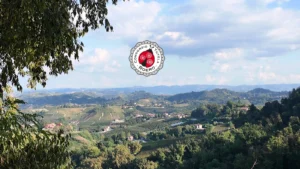
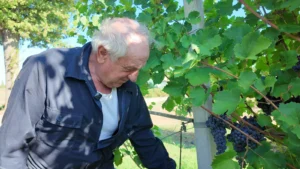
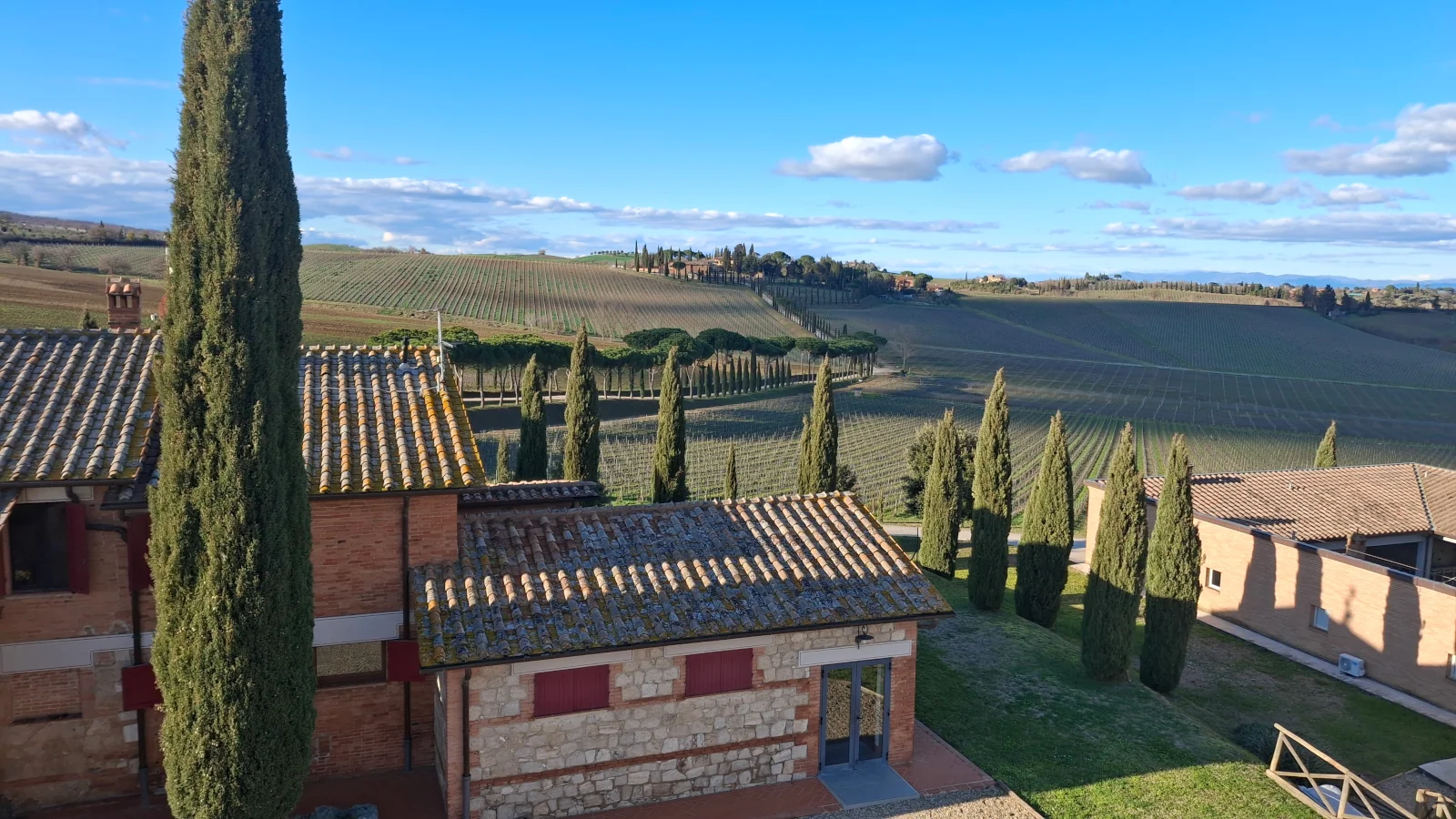
Arriving at Carpineto means crossing a landscape that gradually prepares you for the encounter with wine: the lake in front of the estate, the vineyards embracing it, the rarefied silence of the hills of Montepulciano. It is an entrance that seems to suspend time and guide the gaze toward what truly matters: the land, the light, the sense of proportion.
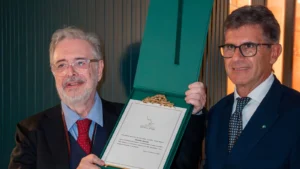
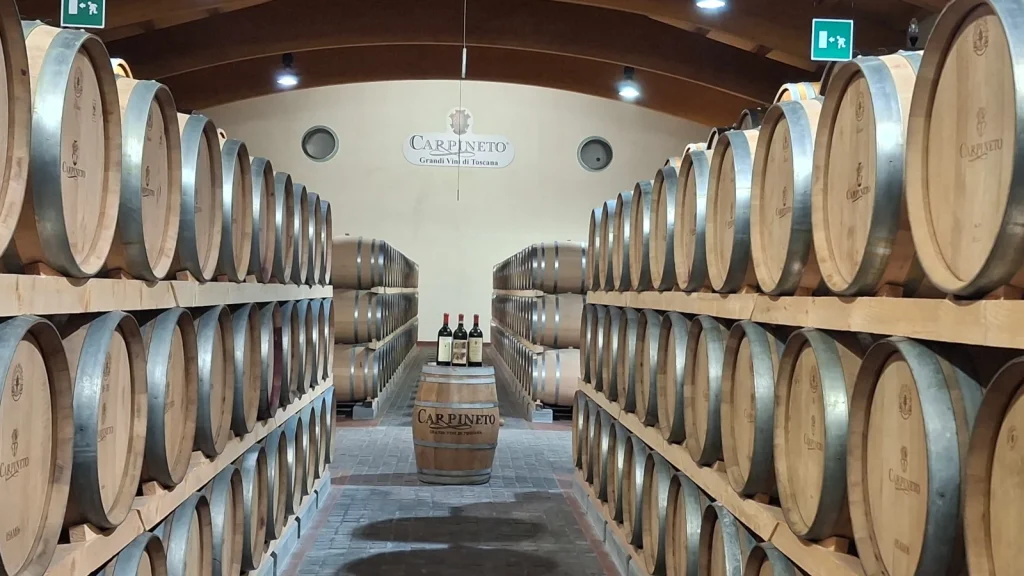
The Carpineto winery was founded in 1967 through the intuition of Giovanni Carlo Sacchet and Antonio Mario Zaccheo, two friends united by a clear and ambitious vision. From Chianti Classico to their arrival in Montepulciano in 1997, their story intertwines with that of two families who believed in Tuscany long before it became universally recognized as a global wine icon.
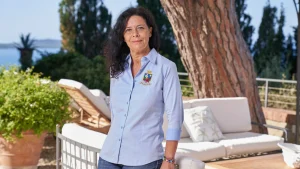
Today, with Caterina Sacchet – winemaker – Elisabetta Sacchet, Francesca Zaccheo and Antonio Michael Zaccheo, generational continuity is not merely inheritance, but conscious responsibility: innovating without betraying tradition, experimenting without losing identity, and maintaining high quality standards with concrete attention to environmental sustainability.
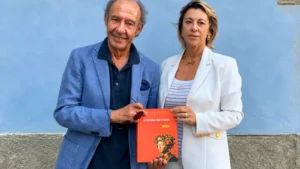
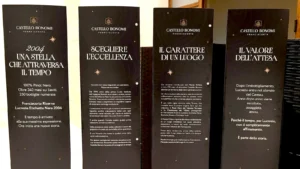
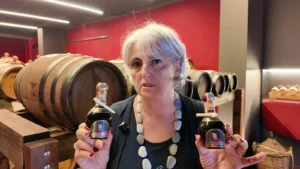
Before the official start of the event, the meeting with Laura Ruggeri and Caterina Sacchet leads into the winery’s historical museum. It is not simply an exhibition space, but an emotional archive: machines, tools and objects that tell the story of agricultural work and the deep bond with the territory. Caterina guides the visit with the natural ease of someone who preserves memory and vision at the same time. The story of the past becomes a key to interpreting the present: every bottle represents a point of balance between accumulated experience and a constant tension toward the future.
The Open Day brings together several wineries from the area, each offering its own interpretation of Vino Nobile di Montepulciano. The comparison proves stimulating and never redundant: the common denominator is the territory, yet the stylistic interpretations reveal distinct personalities.
In the glass, Carpineto’s Nobile presents a material, deep profile of immediate authority. The aromatic impact is intense and layered: the fruit expression leans toward darker tones, with ripe forest berries, blackcurrant and blackberry clearly emerging, gradually followed by spicy hints of vanilla and clove. Subtle balsamic nuances appear alongside a faint earthy trace that coherently recalls its origin.
On the palate, the entry is broad and enveloping, supported by a juicy component that weaves together fruit and vegetal references in a dynamic balance. The tannic structure is dense and compact yet well integrated into the wine’s body: it accompanies the progression without stiffening it, giving depth and rhythm. The well-calibrated freshness sustains the wine’s weight and prolongs its persistence, avoiding any sensation of heaviness.
The result is an interpretation that privileges depth and concentration while maintaining balance and harmony: a Nobile with character, solid and strongly identifiable, capable of combining expressive intensity with stylistic coherence.
The tasting continues with Bindella – Tenuta Vallocaia, where elegance confirms itself as the winery’s distinctive hallmark. The palate is slender and driven by a vibrant acidity that gives rhythm and verticality; the tannin, central and finely chiseled, accompanies the wine with restraint. The fruit remains precise and clean, without excess, in a balance that privileges finesse and harmony.
Unexpectedly, Bindella 2016 and I Quadri 2015 also appear in the glass, offering tangible proof of longevity. The 2016 still shows vibrant freshness and elegant balsamic notes, with ripe yet intact fruit. I Quadri 2015 instead moves along deeper tones: blackberry, plum and quinine intertwine with dense balsamic notes and hints of licorice root and incense. The palate is full and enveloping, with well-defined tannins supported by lively acidity. The finish is long, balsamic and refined. An intense and vertical interpretation of Bindella’s ability to withstand time while maintaining elegance and identity.
Canneto opens in the glass with notes of sour cherry accompanied by balsamic hints of incense and bay leaf. The palate entry is lively, supported by a dynamic momentum that balances its structure. The substance is significant, the fruit generous, and the balsamic component continues through the tasting progression. The presence of wood is perceptible but integrated within a framework that suggests an interesting aging potential. A Nobile with character, privileging depth and structure over immediacy.
Le Bèrne is currently experiencing a phase of renewal embodied by the energy of Federico Fastelli. Recently graduated in Enology and Viticulture, after training experiences abroad, he has chosen to return home to work alongside his uncle Andrea in the cellar and become an active part of the family project. In the glass, this translates into a Nobile with a clear and distinctive aromatic profile: sour cherry and morello cherry in the foreground, followed by black pepper, bay leaf and delicate hints of undergrowth. The palate is agile and dynamic, supported by lively freshness that accompanies the development of the wine and unfolds into a long, coherent finish with persistent fruity echoes. The intensity is well measured and the tannic texture precise yet never intrusive. Crunchiness and depth coexist in balance, outlining a wine that captivates with its expressive authenticity and its ability to unite stylistic innovation with territorial roots
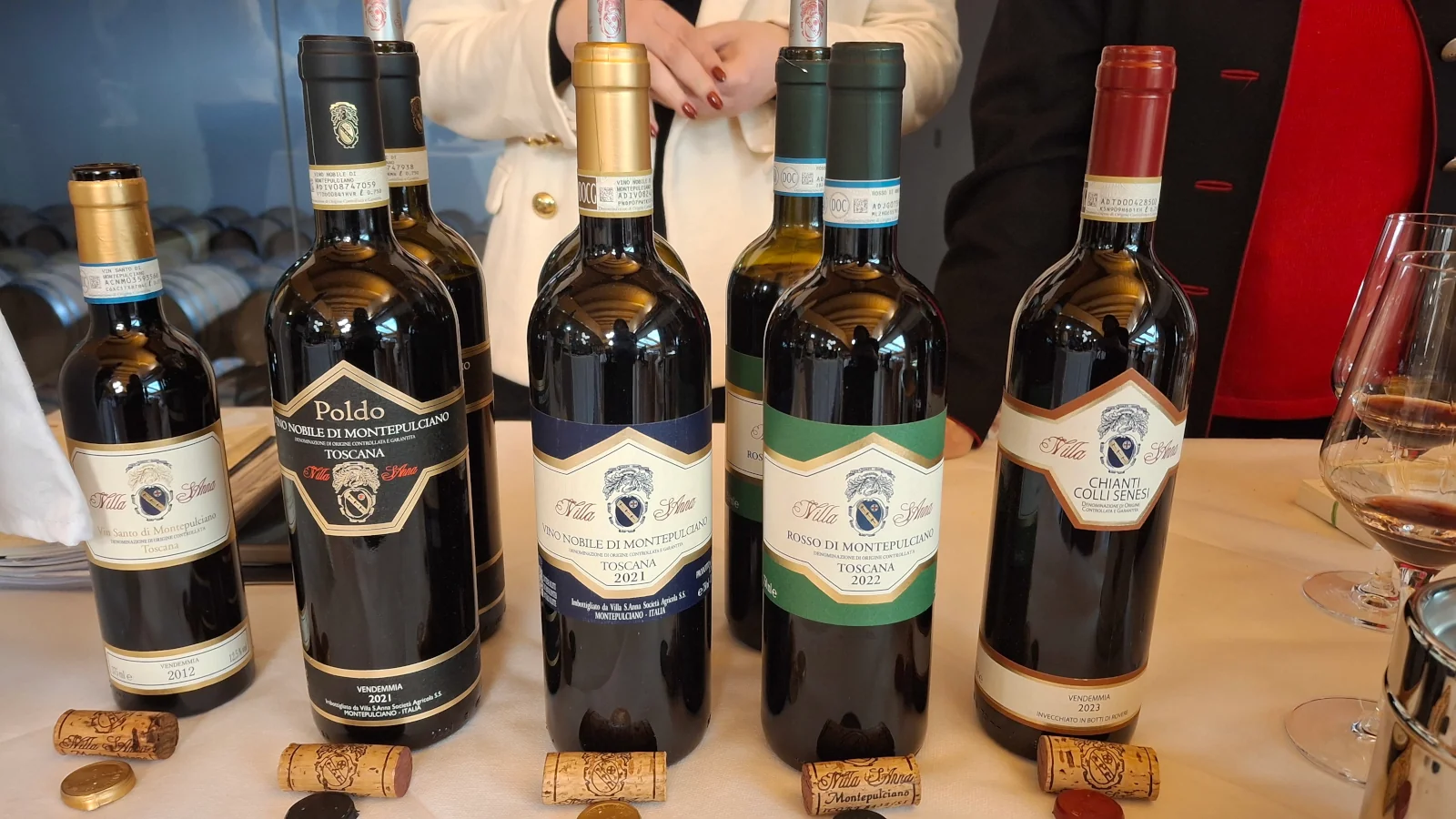
Villa S. Anna, a female-led winery, offers an interpretation of Nobile focused on finesse and aromatic precision. The bouquet opens with elegant notes of rose and violet, guiding the nose with grace and continuity, intertwined with delicate hints of small red fruits and light spicy nuances. The floral thread coherently accompanies the palate as well, where the tannin appears defined, silky and never invasive. The well-balanced acidity gives momentum and sustains a harmonious progression that leads to a savory, clean finish clearly rooted in its territory. An interpretation whose distinctive signature lies in balance and restraint.
Palazzo Vecchio proposes a Nobile with a centered and coherent profile, capable of combining aromatic intensity with gustatory precision. The nose opens with strawberry jam and small forest berries, in a fragrant yet mature register, accompanied by rhubarb, juniper and star anise. A light note of wild mint discreetly crosses the bouquet, adding a balsamic breath that brings verticality and definition to the whole. The palate confirms the aromatic expectations: fresh, linear and pleasantly flowing. The tannic texture is well calibrated—present but not intrusive—and accompanies a harmonious progression driven by acidity. Balsamic and minty sensations return on the finish, amplifying the perception of cleanliness and naturally inviting another sip. The result is a version of Nobile capable of expressing territorial identity with clarity and restraint.
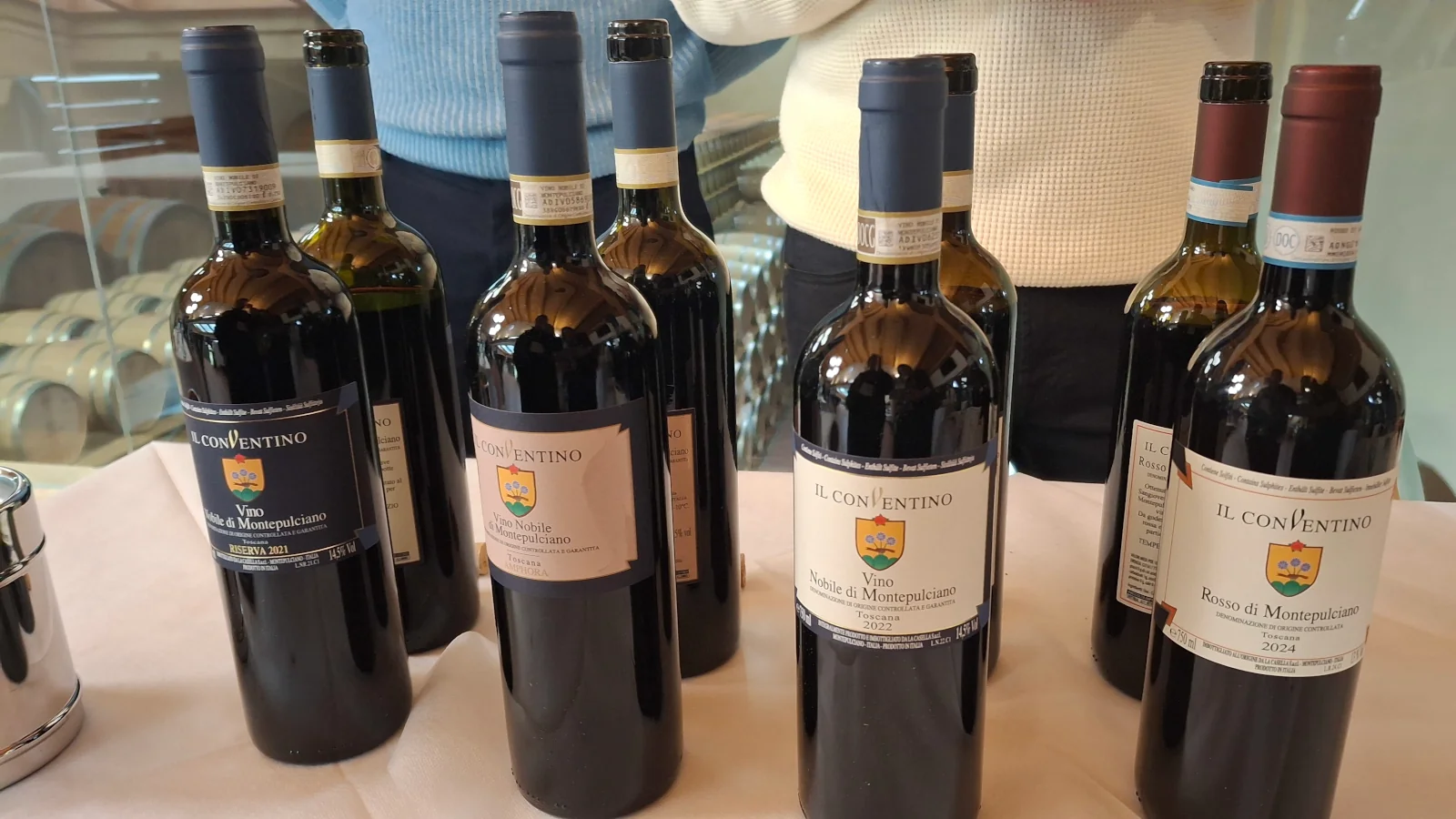
Il Conventino follows a trajectory of greater structure and expressive density. The palate is full and enveloping, with substantial substance that unfolds decisively yet without rigidity. The freshness, clearly present, does not merely lighten the impact but actively drives the drinking experience, engaging in dialogue with the structure. The tannic texture, compact but orderly, thus finds a precise line of progression. The result is a contemporary vision of Vino Nobile di Montepulciano in which power and drinkability meet in a credible and well-constructed balance.
Guidotti interprets Nobile through a declaredly traditional vision, without concessions to fashion or stylistic seduction. The tannic structure appears incisive, central and fine-grained, though still evolving in terms of polymerization: a structure that today expresses energy and tension, where freshness finds a decisive counterpart, almost a counterpoint. It is a conscious and strongly identity-driven choice. The palate does not seek accommodating softness or immediate accessibility; rather, it claims coherence with its terroir and a rigorous interpretation of Montepulciano’s Sangiovese. A wine that does not aim for universal consensus but instead pursues expressive authenticity, allowing the character of its place of origin to emerge with sincerity.
Poderi Sangineto I e II embodies a fleshy and deeply juicy soul of Montepulciano, faithful to a vision that privileges substance and expressiveness. The aromatic profile moves along mature and enveloping tones, with pulpy red fruit in evidence, hints of sour cherry and light spicy nuances that enrich the picture without weighing it down. On the palate, the wine is rich and strongly characterized, with a central, well-defined tannin that structures the sip and guides its progression. The texture is compact yet not rigid, supported by freshness that maintains balance and direction. The gustatory progression develops coherently, sip after sip, in a crescendo of intensity that never loses control. The result is a generous and identity-driven Nobile, capable of combining expressive strength with structural solidity in an authentically territorial key.
The convivial moment of lunch, organized by the Carpineto team, reinforces the spirit of the initiative.
A buffet built around the gastronomic excellences of the territory, shared tables among producers, journalists and enthusiasts: wine returns to being a common language, an opportunity for dialogue and exchange.
Before leaving the estate, Caterina Sacchet’s invitation to climb the small tower of the property offers yet another perspective. From above, the estate’s 184 hectares – 115 of which are vineyards – unfold in an orderly mosaic of vines, woods and meadows.
In that panorama, the deeper meaning of the project becomes clear: the ability of a winery to grow into an international brand without losing its family dimension. Generations succeed one another, languages and techniques evolve, yet the thread linking past and future remains intact.
The February 15 Open Day at Carpineto was not simply part of the preview events, but an opportunity to understand how Montepulciano continues to evolve through different – sometimes contrasting – interpretations, yet always deeply rooted in identity. And the reader, ideally seated at those tables with a glass in hand, can perceive not only aromas and flavors, but the living narrative of a territory that never stops questioning itself and growing.