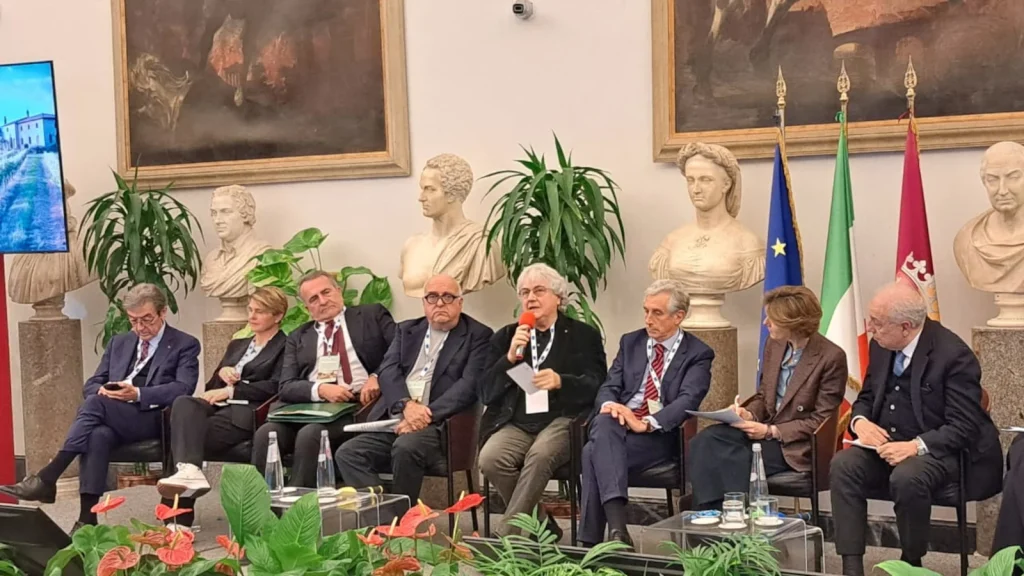
On February 17, the Protomoteca Hall at the Capitoline Hill in Rome hosted the 2025 edition of The General States of Wine, an event that brought together experts and industry professionals to address the economic and strategic challenges reshaping the wine sector.
Key Topics of the Debate
One of the most pressing issues discussed was the decline in wine consumption, both nationally and internationally. Frescobaldi highlighted how the slowdown in key markets—such as the United States and Germany—makes it essential to diversify export strategies:
“Our sector is facing a challenging period: 60% of exports are concentrated in just five countries, and in 2024, sales of Italian wine in the U.S. fell by another 4.4%, confirming the negative trend from the previous year.”
In this context, the implementation of the Mercosur agreement and the strengthening of promotional policies in emerging markets were identified as crucial elements for the sector’s recovery.
Wine and Health: The BECA Report Debate
Once again, the BECA report raised concerns about wine consumption in relation to public health. This document, which questions some pillars of the Mediterranean diet—including wine—was criticized by Frescobaldi:
“Too often, the wine sector is the target of attacks from within the European Union itself. The European Commission’s BECA plan is a clear example of this, despite having already been rejected by the European Parliament.”
Member of the European Parliament Herbert Dorfmann emphasized the importance of distinguishing between moderate consumption and abuse, arguing that high taxes are not always an effective deterrent against excessive alcohol consumption. Minister Lollobrigida expressed a similar opinion, underscoring the difference between wine and alcohol in a general sense and stating that responsible consumption can be part of a balanced lifestyle.
Wine, Identity, and Tourism
Beyond its economic impact, wine plays a crucial role in enhancing Europe’s cultural heritage. Frescobaldi cited the example of Montalcino, where wine tourism has driven widespread economic growth and strengthened the region’s appeal.
New Labeling Regulations
Since January 1, 2024, all wine bottles sold in the European Union must include detailed information on ingredients and nutritional values. While this measure promotes greater transparency for consumers, discussions highlighted the need to prevent it from becoming a source of fragmentation in the European single market. Dorfmann stressed the importance of balancing national regulations with EU-wide policies.
Looking Ahead
In the coming days, Commissioner Hansen will present a strategic document that could mark a turning point for the sector. Member of the European Parliament Paolo De Castro reiterated the need for a reform of the Common Agricultural Policy (CAP) to provide greater support for farmers. Additionally, the working group’s proposals will be formalized by March with the adoption of the Common Market Organization (CMO) package, outlining new prospects for European viticulture.
The event concluded with a panel discussion on wine tourism, the promotion of Italian tourist destinations, and heritage tourism, with initiatives also aimed at revitalizing depopulated areas. It was a moment of dialogue among different perspectives, with a shared awareness that wine is, in fact, a driving force behind the development of local tourism.