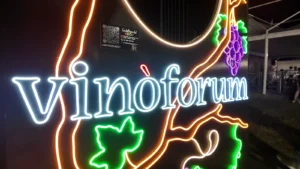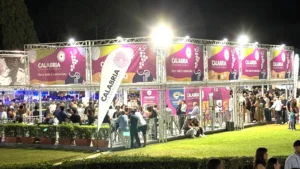
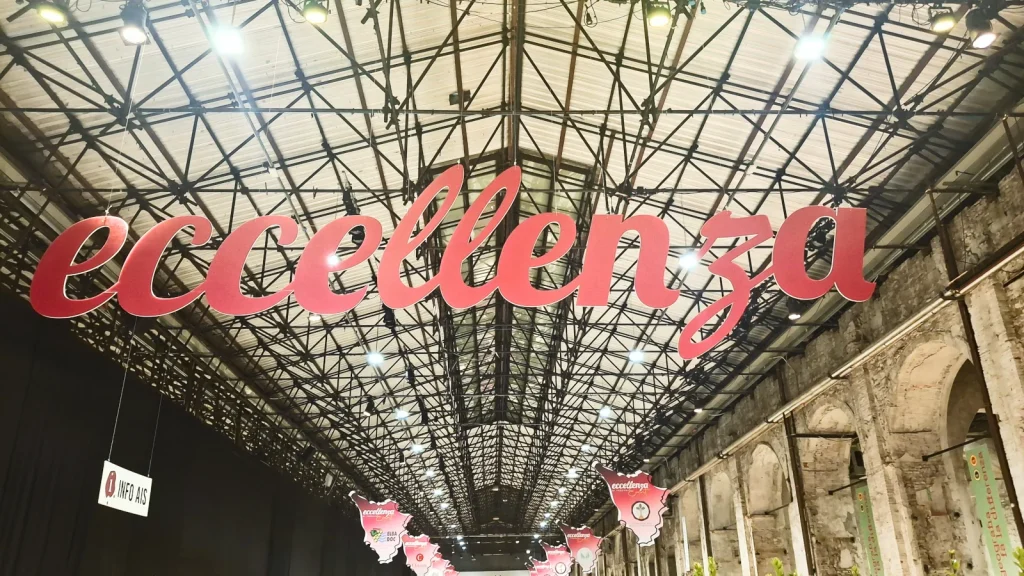
At the Stazione Leopolda, on March 7–8, Eccellenza di Toscana once again took center stage with the authority of events that no longer need to prove anything, yet continue to grow because they know how to renew their narrative. The 24th edition placed Tuscan wine back at the center as an agricultural, cultural, identity-driven, and economic phenomenon, doing so through the formula that AIS Toscana has made recognizable over the years: a grand tasting, certainly, but above all a meeting place for territories, production languages, diverse sensibilities, and visions of the future.
At the Leopolda, wine did not remain still in the glass: it moved through the words of producers, the questions of enthusiasts, the trajectories of sommeliers, the curiosity of those seeking confirmation, and the surprise of those chasing discovery. Over a thousand labels available for tasting, more than 150 producers, guided paths, educational sessions, masterclasses, in-depth analyses, and spaces dedicated not only to wine but also to beer, spirits, olive oil, tea, and chocolate. A broad, articulated structure—never dispersive—capable of conveying the complexity of Tuscan agri-food without distorting the heart of the event. And that heart, once again, beat strongly.
The feeling upon entering was that of a Tuscany fully aware of its strength, yet not folded in on itself. A Tuscany that knows it can rely on historic denominations and iconic territories, but chooses to question itself, refine its language, and open up to dialogue. In this sense, Eccellenza di Toscana continues to be a necessary event: not merely a showcase of labels, but a platform for interpreting the present of regional wine.
My first stop could only be Trento DOC—by now an essential presence at every thoughtfully experienced edition, almost an opening ritual capable of tuning both palate and gaze before entering the heart of Tuscany. Not a deviation from the fair’s narrative, but a counterpoint of method, precision, and style: a mountain cameo that, among the Leopolda stands, brings to the stage the classicism of extended lees aging, the purity of gesture, and the value of restraint. Amid the richness of Tuscan denominations, this initial passage feels like a threshold: a moment of sensory calibration, made of perlage, depth, and verticality, before immersing oneself in the broad and multifaceted landscape of the event.
The Maso Martis Trentodoc Dosaggio Zero Riserva Millesimato confirmed itself as an absolute must. In the glass it appears as a pale, luminous straw yellow, crossed by a fine and persistent perlage, continuous, almost chiseled. The aromatic profile is clean, with notable depth, built on an intensity that never shouts: fine yeast, fresh almond, lightly toasted hazelnut, and a subtle yet incisive mineral trace supporting the entire structure. On the palate, it is a wine of momentum and substance: the attack is dry and sharp, salinity runs through the center, acidity is vibrant and perfectly integrated, while the finish stretches out with measured softness that never detracts from its rigorous nature. There is body, there is determination, but above all there is harmony.
Also noteworthy is the Methius Trentodoc Brut Riserva 2019 by Dorigati, which moves along a broader, more enveloping register. Even in color—a straw yellow with golden reflections—one senses a more generous approach. The nose is intense and complex, with notes of ripe fruit, light spices, bread crust, and a creamy nuance that enhances without weighing down. The sip is enveloping, with a present yet never aggressive mousse, developing in balance between freshness, fullness, and length, delivering a sense of aristocratic composure.
Equally fascinating is the Mach Nuar Trento DOC from Fondazione Edmund Mach, a bottle that carries not only the value of the wine but also the cultural weight of one of Italy’s most important institutions for agricultural and enological education and research. A high-altitude Pinot Noir in purity that fully expresses its context in the glass. The color is a bright straw with greenish reflections, the perlage fine and persistent. The nose reveals clear floral notes—linden—delicate citrus hints, then white pepper, a touch of vanilla, and a finely integrated spiced nuance. On the palate it is vertical, immediately savory, supported by a calibrated creaminess derived from long lees aging and measured wood use. A wine of energy and precision, never forced.
The Letrari Quore Brut Riserva instead embodies a more rounded, expansive idea of gustatory completeness, yet no less elegant. Its color leans toward brilliant gold, with dense and persistent bubbles. The nose opens on bread crust, vanilla tones, ripe apple, dried fruit, then citrus and honey nuances. On the palate it is full, creamy, almost buttery in texture, yet always supported by a fresh current that prevents any heaviness. The structure is solid, the finish long and rhythmic, with a fine dialogue between fruit maturity and acid drive. A wine of strong gratification and notable complexity, yet always in balance.
Closing the sequence is Abate Nero Domini Nero Millesimato, which brings the focus back to verticality and finesse. Bright straw yellow, extremely fine perlage, it opens on precise red berry fruit, with mountain herb notes and a clear mineral backbone. The palate is driven by salinity and freshness, almost tactile, then extends progressively, delivering an elegant fruity persistence on the finish. A wine that plays on the finesse of detail rather than the breadth of volume.
Read in sequence, these tastings offer a clear interpretative key to contemporary Trento DOC: not a single model, but a coherent stylistic system moving between two well-defined poles. On one side, verticality, tension, and expressive precision of zero dosage and sharper interpretations (Maso Martis, Abate Nero, Mach); on the other, breadth, creaminess, and gustatory depth of more evolved, structured reserves (Methius, Letrari).
What binds them together is a shared signature: the ability to work with time—on lees, in aging, in the construction of the sip—without ever losing readability. And it is precisely this clarity, this purity of expression, that makes Trento DOC a perfect opening: because before it surprises, it orders. Before it moves, it calibrates.
And so, when leaving this first stand to enter the heart of Tuscany, one does so with an already aligned palate, with a gained sense of measure, with a clear idea of balance. A beginning that is not just an introduction, but a true focusing of the narrative.
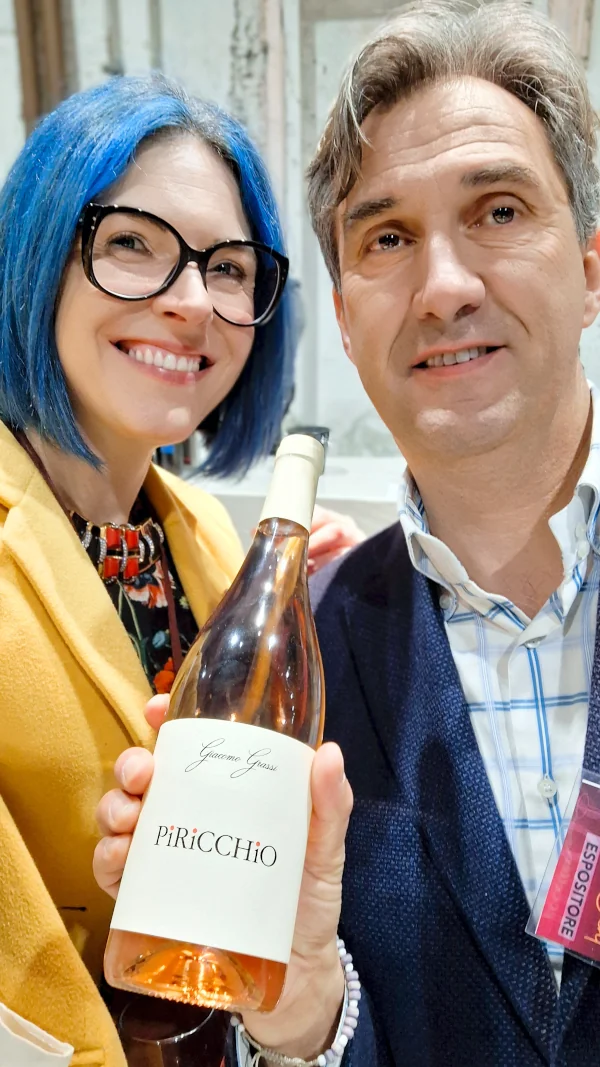 After this opening, I entered the heart of Tuscany. Among the noteworthy novelties was undoubtedly Piricchio 2025 by Giacomo Grassi, an IGT Toscana Rosato from pure Canaiolo. In the glass it shows a pale pink, Provençal only in color, as the content speaks with a distinctly Tuscan accent. On the nose it is immediately recognizable: crunchy cherry, wild strawberry, a balsamic touch of verbena leaf, then aromatic herbs, thyme, and a hint of wild incense that elongates the profile. On the palate, fruit-driven acidity takes the lead, sculpting a juicy, vibrant, harmonious sip, with returning notes of cherry and pink grapefruit peel. Salinity accompanies the progression and extends the memory. An elegant rosé, yet not tamed: it has drive, salt, character, and above all does not renounce its territorial identity to chase external models.
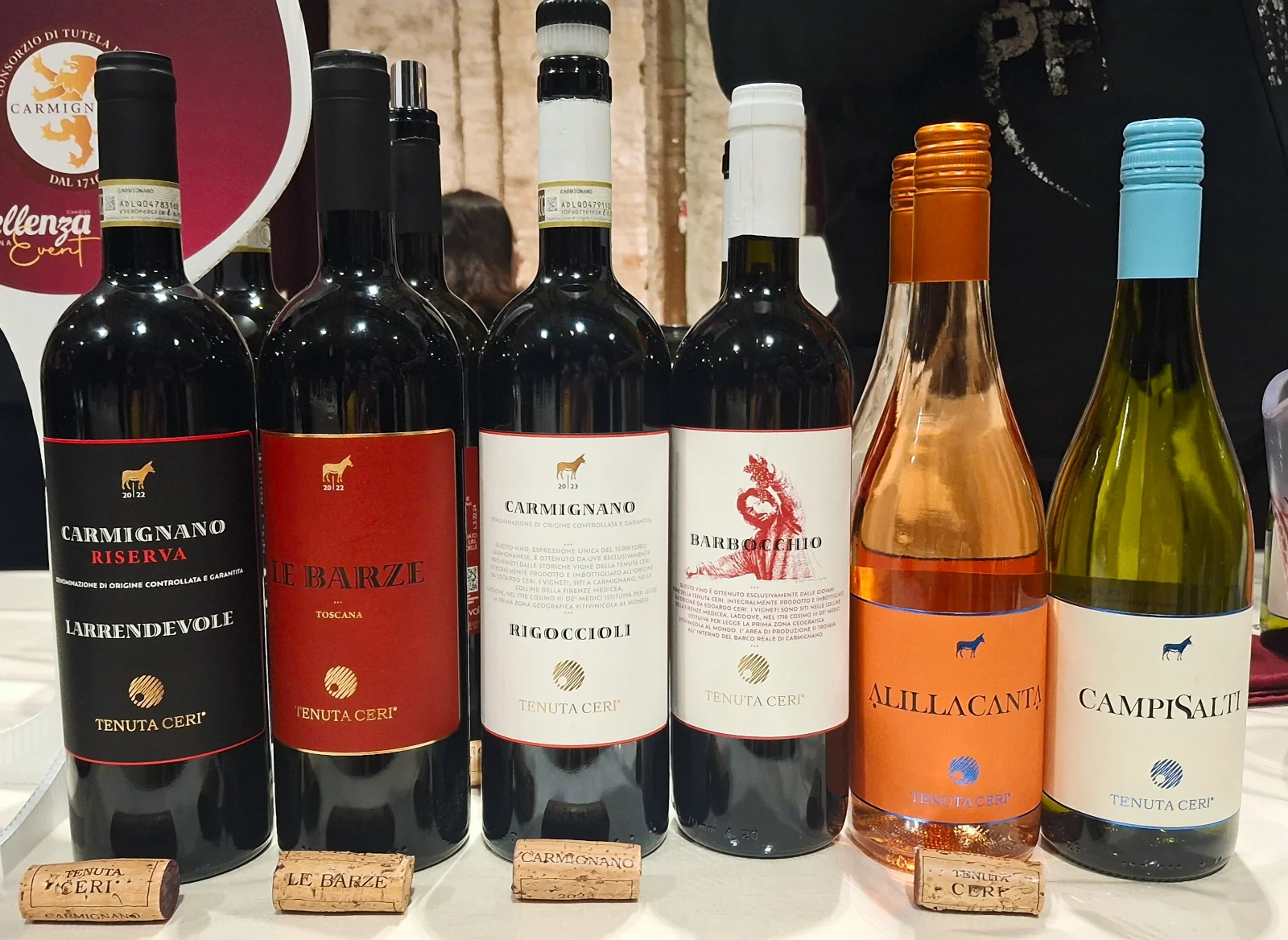
Among the great territorial confirmations is Tenuta Ceri of Carmignano. Those familiar with Edoardo’s work know that his wines carry a human trait that becomes stylistic: sincerity, clarity, rejection of the superfluous, fidelity to the territory, but also precision and recognizability. The wines tell of a clean, identity-driven Carmignano, where Sangiovese and international varieties find not only technical but cultural balance. Cabernet Sauvignon here is not an accessory presence, nor a historical concession to justify: it is part of the landscape, a second homeland, a fully integrated adopted language. Yet Edoardo’s hand always restores it with a refined measure, almost French in spirit, without losing the light of the territory.
In both rosé and Carmignano (including Riserva), fruit remains central—precise, clean—supported by a fine, central tannic texture, never coarse, never excessive. And in Balze, where Cabernet Sauvignon takes precedence over Sangiovese, the quality of management becomes even more evident. Here Cabernet is tamed without being altered: no heavy vegetal notes, no pyrazinic excess, but a masterful texture built on mulberry, cassis, undergrowth, with a subtle balsamic touch brushing against nettle leaf in its freshest, most elegant form. Wines that do not ask to be over-explained, but simply to be listened to as they unfold in the glass.
Also very interesting was the encounter with Vannucci Droandi and his Gralima, expression of the Lacrima Nera del Valdarno, registered in the Ministry’s official register in 2018 precisely under the name Gralima to avoid confusion with other varieties. In the glass, it is not a wine seeking to please: deep ruby color, almost material, with evident polyphenolic content translating into a still-young tannic structure, short on the polymeric plane, yet supported by acidity that promises integration over time. The fruit is present but still partially restrained by the matter. A wine that demands patience, just like the Pugnitello and Foglia Tonda that Roberto continues to produce with consistency and vision.
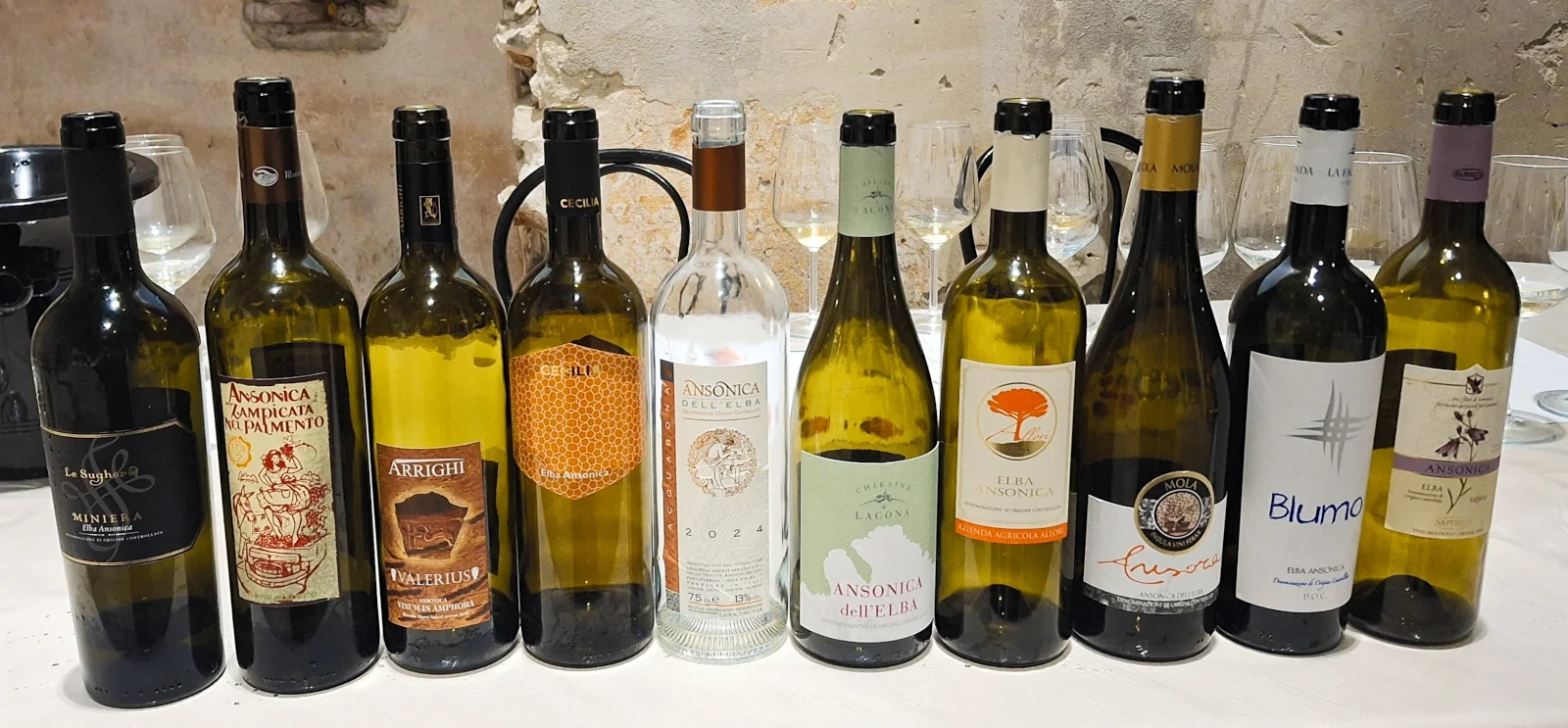
One of the most interesting and culturally successful moments of the entire event was the masterclass dedicated to Elba DOC and Ansonica, a true convergence point between territorial depth and narrative sensitivity. Here, Eccellenza di Toscana showed its best face: not just an exhibition of labels, but an opportunity to pause, focus, and listen to a denomination as a whole.
The masterclass was made even more significant by the presence of Antonio Arrighi, President of the Elba Wine Consortium and AIS Elba delegate, and by the guidance of Cristiano Cini, President of AIS Toscana, who led the session with clarity, balance, and genuine interpretative ability.
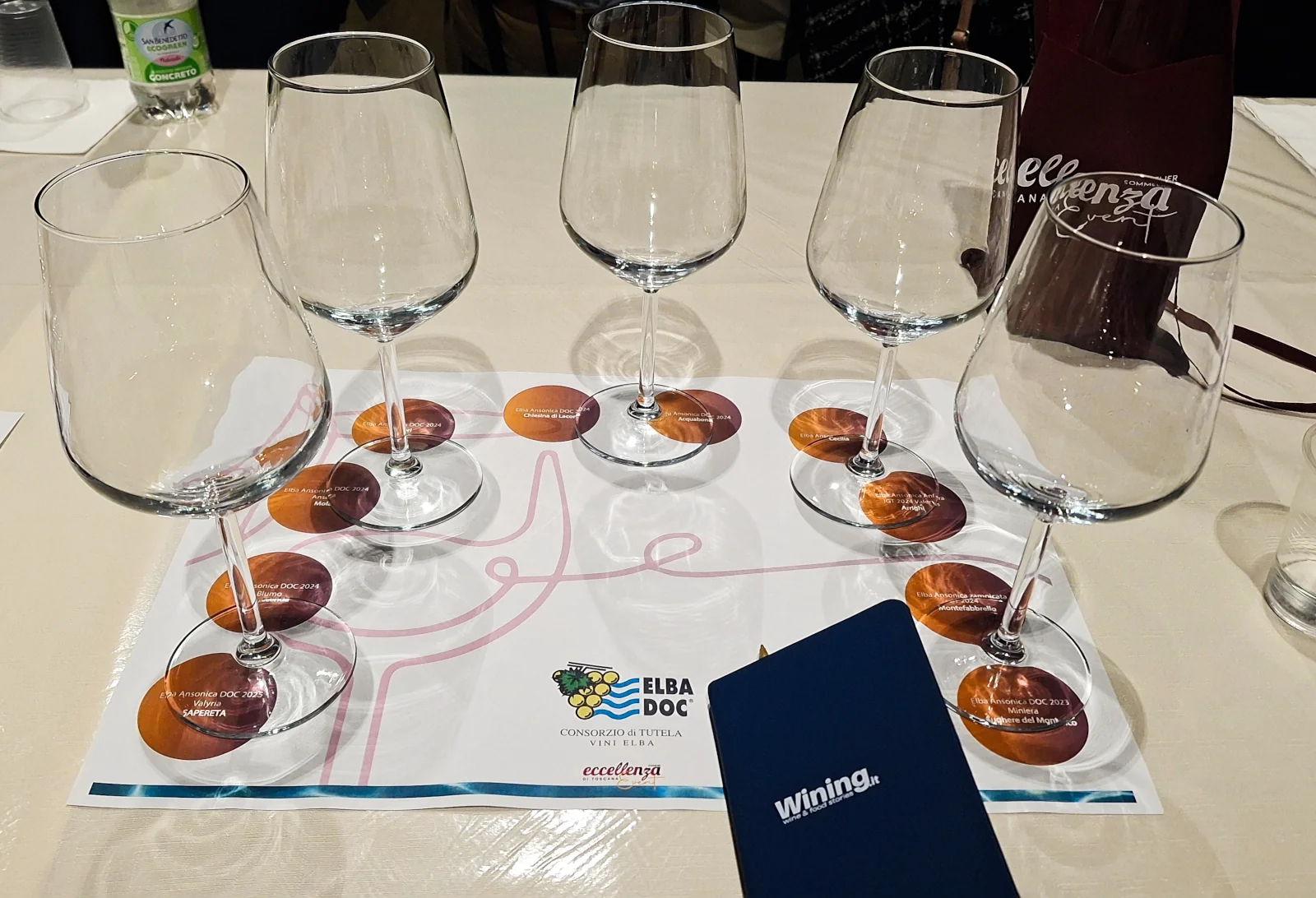
Ansonica is a grape variety of Sicilian origin, known on its native island as Inzolia, which has spread to Elba, Giglio (where it is called Ansonico), and along the Tuscan coast. A vigorous vine with late ripening (late September/early October), it has thick skins rich in pectin and polyphenols, capable of generating in the wine a precise tactile sensation of grip, with a mid-palate that is often more textural than simply voluminous. It is a variety that thrives in warm climates and is less suited to humid conditions (which make it susceptible to powdery and downy mildew). On Elba, it has found an ecosystem of sea, wind, stone, salt, and light that allows it to express its true identity. The masterclass succeeded in showing not just one face of this grape, but an entire expressive spectrum.
Valyria Elba Ansonica DOC by Sapereta, still in barrel sample, appears as a slightly hazy straw yellow, a sign of its evolving nature. The nose opens with jasmine, acacia flowers, then lime. On the palate, the characteristic varietal grip of Ansonica clearly emerges—a central पकड़ driven by the grape’s phenolic richness—accompanied by citrusy acidity and a light bitter note on the finish which, together with salinity, makes the sip vibrant and promising.
With Blumo 2024 from La Faccenda, made from 85% Ansonica and 15% native varieties, the picture changes: the straw yellow with golden reflections introduces a softer, more enveloping profile. On the nose, honey, yellow rose, yellow-fleshed fruit, helichrysum, mimosa, and broom emerge. The palate moves more in breadth than in drive, playing on fullness, balance, and roundness. The acidity is present but finds a worthy counterpart in the body of the wine, undoubtedly supported by lees work that adds substance to the sip.
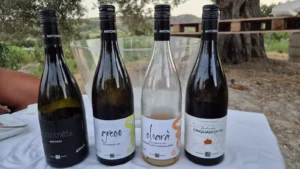
Ansora 2024 from Azienda Agricola Mola, made from Ansonica with Procanico and Malvasia, without maceration and using selected yeasts, expresses another face of the territory. Pale, vibrant gold in color, the nose opens with salinity and a maritime memory, followed by Mediterranean herbs, helichrysum, wild incense, and anise seeds. On the palate, acidity sets the pace, supporting a textural, broad mid-palate that closes on saline notes with returns of lime. Territorial and maritime, without shortcuts.
Allori Elba Ansonica DOC 2024, from the Lacona area, presents itself with a pale straw color and a balsamic nose of calamint, Mediterranean scrub, lemon thyme, helichrysum, white flowers, and lime. The palate develops with tension, citrus-driven acidity giving momentum to the progression; then come salt, grip, and a warm finish lightened by freshness. A subtle, focused wine with fine coherence.
La Chiesina di Lacona Elba Ansonica DOC 2024, from a young estate that only began bottling in 2019 (after a long history of selling grapes), shows a more complex profile. The color is straw with golden reflections; the nose opens with hay, grey tea, shea butter, and medicinal herbs. On the palate, the wine is rich and savory, with a warm, saline finish crossed by an herbal bitterness of orange, thyme, helichrysum, and rosemary. A wine of substance and character.
Acquabona Elba Ansonica DOC 2024, from vineyards in Schiopparello just one kilometer from the sea, perhaps most directly expresses the relationship between grape and environment. Pale gold in color, the nose opens with calamint, then wet stone, powder, shell, salinity, white peach, and apple. On the palate, it is balanced and enveloping: acidity, driven by pink grapefruit, sits at the center and cuts through a certain creaminess of the sip, derived from its saline component. A very well-composed wine, with excellent clarity.
Cecilia Elba Ansonica DOC stands out for its aromatic precision and cleanliness. Straw yellow with greenish reflections, it opens with lemon thyme, wild incense, helichrysum, then calamint and marine notes. A very focused nose, also the result of temperature control to limit oxidative tendencies typical of the variety. On the palate, acidity dominates, bringing dynamism and tension, while the finish broadens into softness and salinity.
With Arrighi Valerius 2024 Elba Ansonica Anfora IGT, just bottled and the result of long experience with amphora vinification—this year for the first time using cocciopesto—the narrative shifts to a more experimental yet still coherent level. Pale gold in color, the nose evokes powder and thyme. The palate gains volume and richness thanks to the cocciopesto, with a broad, pasty, almost creamy finish amplified by salinity. Here Antonio Arrighi clearly demonstrates how innovation and territory are not opposing forces, but can become part of the same story when research remains faithful to its origins.
Then comes Zampicata 2024 from Montefabbrello, and the tasting changes pace. Even the name evokes a collective celebration, an ancient gesture: grapes crushed by foot in the palmento, shared and participatory. No selected yeasts, no temperature control, aging in wood and filtration before bottling. An orange Ansonica that appears in the glass with an intense, striking amber color. On the nose: mandarin peel, heather honey, helichrysum, broom, camphor, tea leaves, chamomile infusion. On the palate, the tannic grip becomes evident, acidity integrates a substantial structure, and the saline finish lengthens the sip. A bold, gastronomic, full-bodied wine that embraces its character.
Finally, Le Sughere Montefico Miniera Elba Ansonica DOC 2024, from the eastern side of the island in the municipality of Rio Marina, from soils rich in iron, minerals, and skeletal structure, in a form of terrace viticulture that carries all the traits of heroism. Straw yellow with golden reflections, the nose opens with herbal hints of olive, then anise emerges, closing on the balsamic memory of calamint. The palate opens soft, then salt, lime-driven acidity, floral echoes, and a final, slightly astringent grip come into play, rebalancing the initial softness.