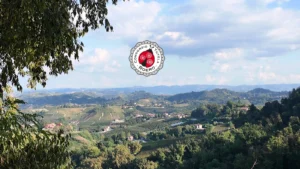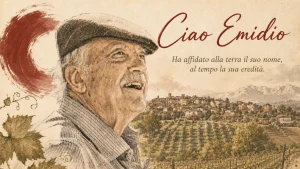
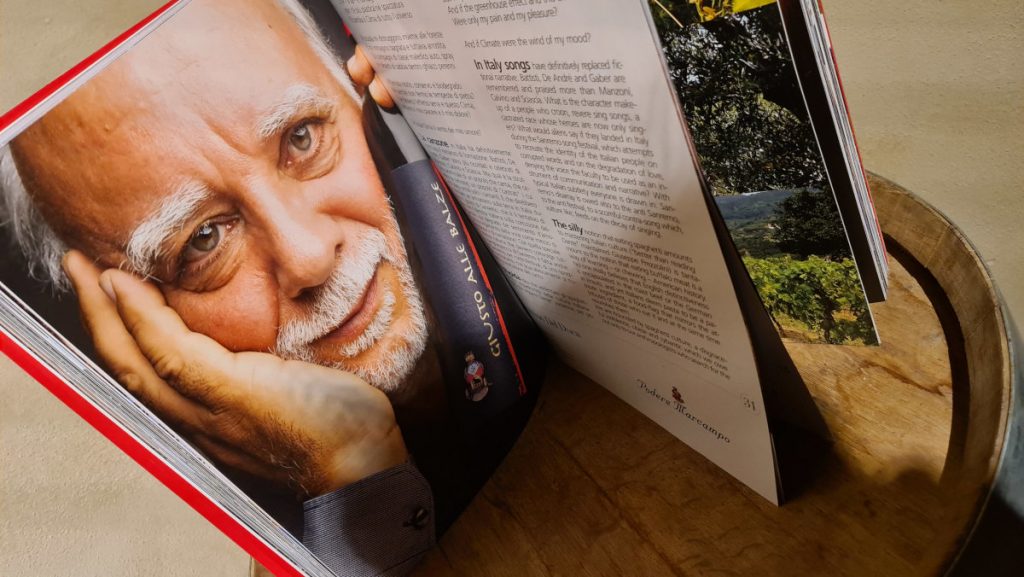
Yes, it’s a somewhat unusual title, but to feel at home at Podere Marcampo it takes no more than five minutes. We are just a short distance from Volterra, in a territory that until today I had never had the chance to explore. A special landscape made of wide horizons, clay gullies, and breathtaking sunsets. Right in the middle of all this beauty lies Podere Marcampo—or rather the result of a bet, perhaps even a dream, by Genuino Del Duca.
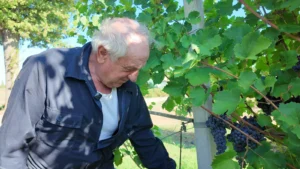
Genuino has an intimate relationship with his land. It is difficult to pull him away from his tractor just as it is hard to bring him away from his vineyards. He frees himself at the last moment—“only when he really must”—and it is only then, speaking with him, that you truly understand how deep his love for his work runs and how much he has managed to pass that love on to his entire family.
It is a story that begins a long time ago. First a Carabinieri officer, then, once discharged from service, he began a new path that initially led him into the restaurant world, eventually culminating in a deep passion for everything related to good food and good wine. Wine—the final piece of the puzzle—entered the picture in 2003, with the purchase of an 18th-century farmhouse in need of complete restoration.
Today that farmhouse is Podere Marcampo. Located in the heart of the Balze and Calanchi Natural Park, in a landscape that inspires relaxation but also a strong desire to talk about wine. Although the wine tradition of Volterra dates back to Etruscan times, the marine origins of this territory—rich in minerals, fossils, and clay—initially suggested a challenging environment for viticulture. But with the help of agronomist Stefano Bartolomei, and by starting with Merlot, Podere Marcampo was able to launch the long-desired winemaking project.
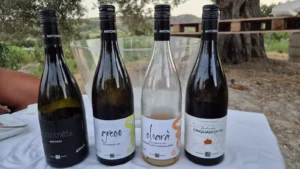
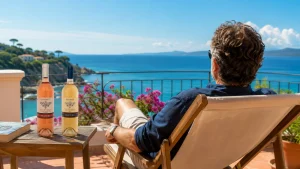
Today Podere Marcampo produces five high-quality IGT wines: Terrablu, Genuino, Marcampo, Severus, and Giusto alle Balze, along with a selection of grappas obtained from Sangiovese and Merlot pomace. The grape varieties cultivated on the estate include Vermentino, Sangiovese, Merlot, Pugnitello, and Ciliegiolo.
We are welcomed with their Vermentino Terrablu 2019 and 2020, with its citrus notes, vibrant acidity, and distinctive character. The day ends with a mini vertical tasting of their Severus IGT Toscana, a pure Sangiovese. Three vintages—2012, 2015, and 2016—reveal a Sangiovese that is fresh and mineral, elegant in its tannins and pleasantly persistent.
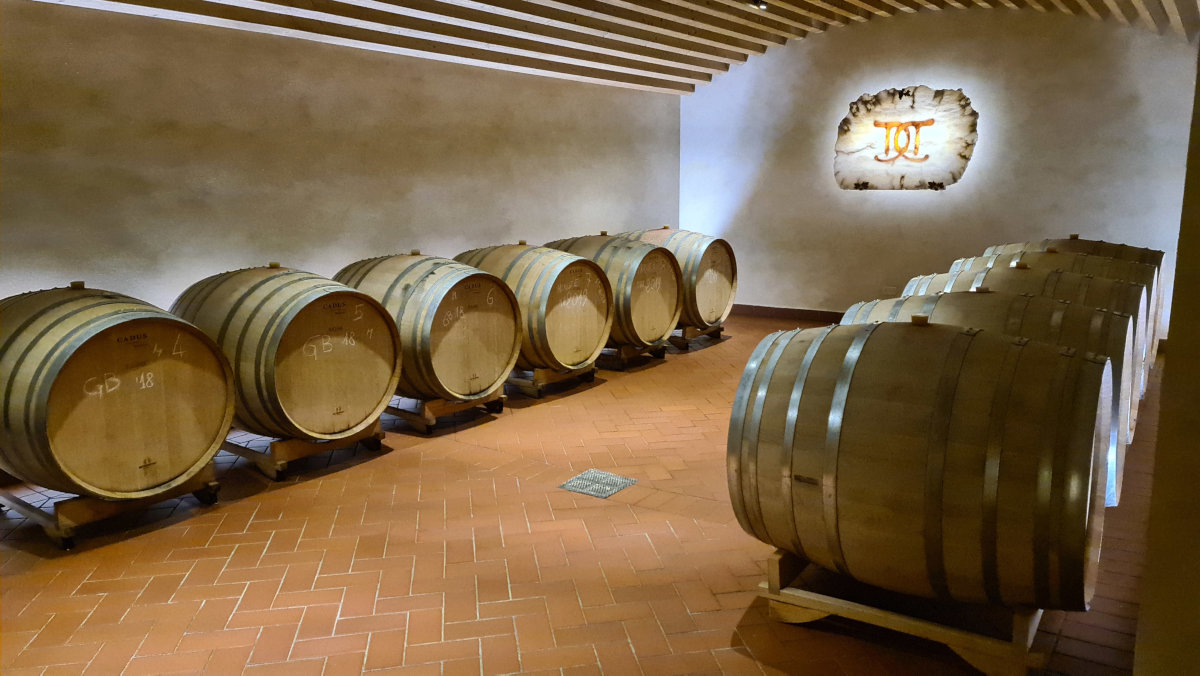
The second day, of course—after nourishing our eyes by opening one of the windows of their agriturismo—begins with a visit to the new Podere Marcampo winery. A completely renewed cellar designed by architect Marco Giampellegrini as a perfect union between materials and territory.
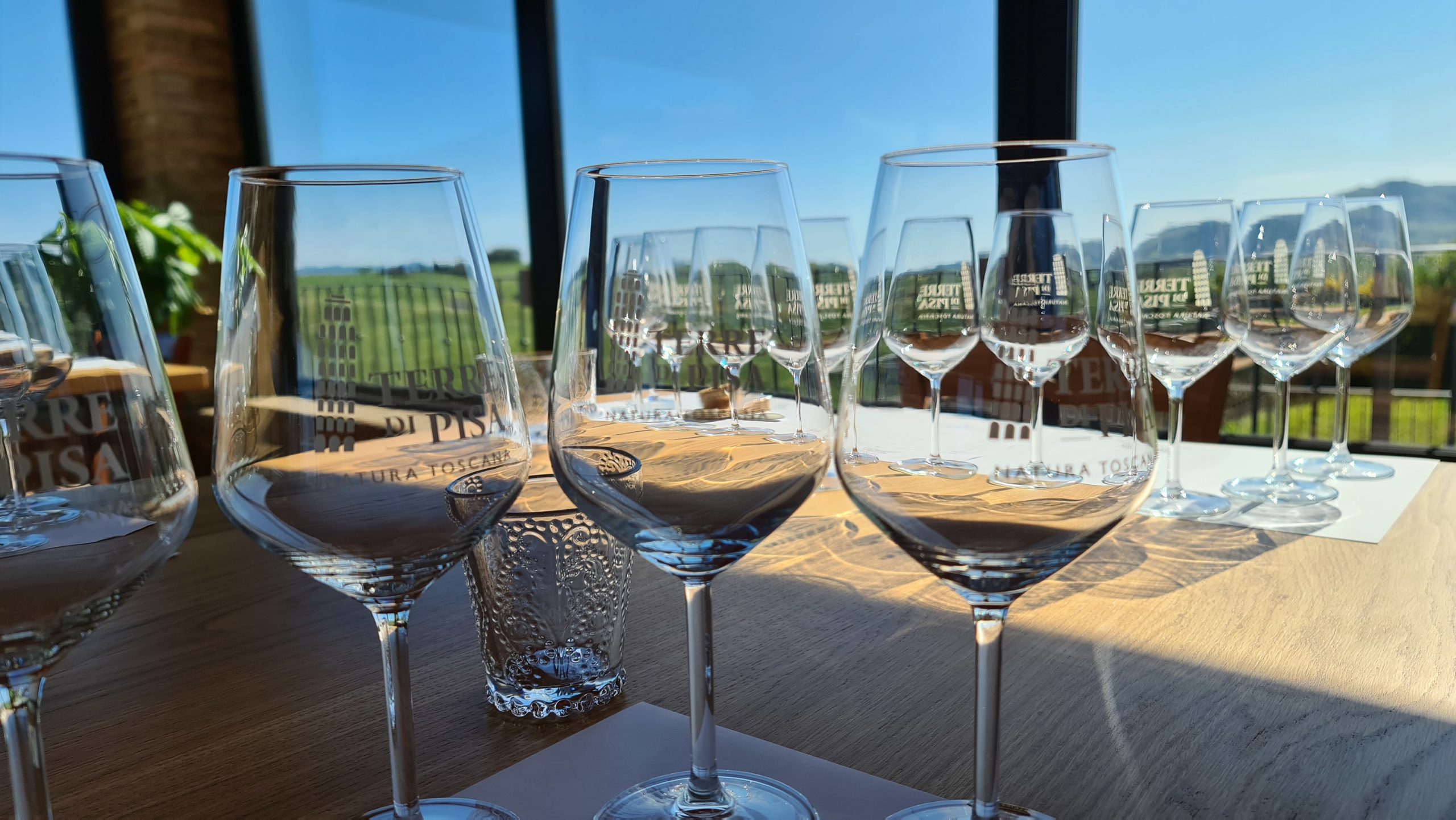
But it is once we return to the surface that a vertical tasting of “Giusto alle Balze” awaits us—the wine of the beginning, the symbol of the bet, the evolution, and the present of Podere Marcampo. I must admit that it is difficult to maintain concentration in this tasting room. Each of the cardinal directions opens onto a vast window and a breathtaking panorama that leaves you with no escape. But that’s fine. I lower my head and devote myself to the wine…
2006
The first “born” of the Giusto alle Balze series. An initial bet that still stands the test of time very well. Only stainless steel was used in this first year, classified as a table wine. A youngster.
2007
From 2007 onward, the use of oak begins, which in this vintage appears with a light spiciness. Dark fruit, good balance, and a non-invasive tannin that ensures a pleasant liveliness on the palate.
2008
Complexity increases, with notes of coffee and licorice. A decidedly seductive wine, accompanied by a lively acidity. An interesting thread connecting it with the 2007 vintage.
2010
The 2010 vintage is characterized by riper fruit, almost plum-like. Great balance built on generous fruit, persistence on entry to the palate, and an elegant tannin.
2011
Initially a bit closed, then it opens up revealing a lovely spiciness, with clove standing out in particular. Very pleasant drinkability and gentle tannins. It fades slightly on the finish, but the overall impression remains positive.
2012
A lively and immediate wine presenting a clear and pleasant balsamic note. Juicy and highly drinkable—one of those wines that could easily satisfy everyone at the table.
2013
The oak changes, and you can feel it. Balsamic, pleasant, and with a strong personality. Good acidity and a tannin with character. The finish is not extremely long.
2014
Personally, I perceive a dominant geranium note and a tannin that is not particularly elegant. Probably a wine somewhat penalized by a vintage that was not among the best.
2015
A broad wine in which some herbaceous notes return, along with a hint of geranium—though less invasive than in 2014. Delicate tannin, nice acidity, and good persistence.
2016
This vintage presents herbaceous notes and a light, elegant spiciness. Beautiful complexity, with a clean and inviting entry on the palate. Refined tannin and good persistence.
2017
The youngest wine of the vertical tasting, yet already showing elegance and balance. The tannins are still youthful and the finish a bit short, but this youngster clearly has a promising future.
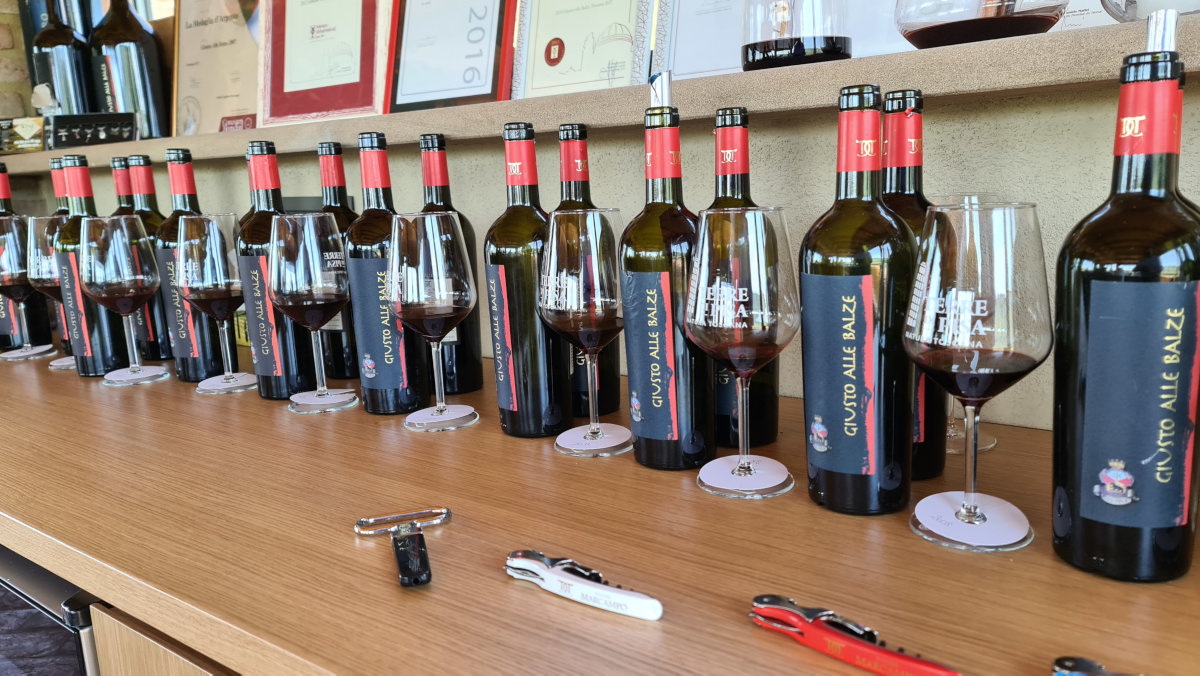
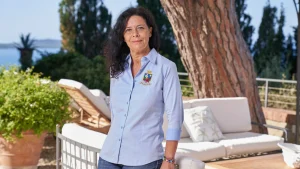
Of course, a 2006–2017 vertical tasting inevitably sparks endless reflections and comparisons—both with Claudia Del Duca and Genuino, with the winemaker Enrico Bortolini, and with Claudia Marinelli, the architect behind this wonderful press tour.
But food is waiting for us. Our “meal alarm clock” has gone off, and the Del Duca family welcomes us to their Enoteca Del Duca in the center of Volterra. A farewell like this always leaves a slight sense of nostalgia. I had to return to Rome soon, but I must admit that I would have happily stayed here much longer.
Outstanding food, a lovely atmosphere, and genuine kindness—the kind of combination that will certainly make me want to come back.