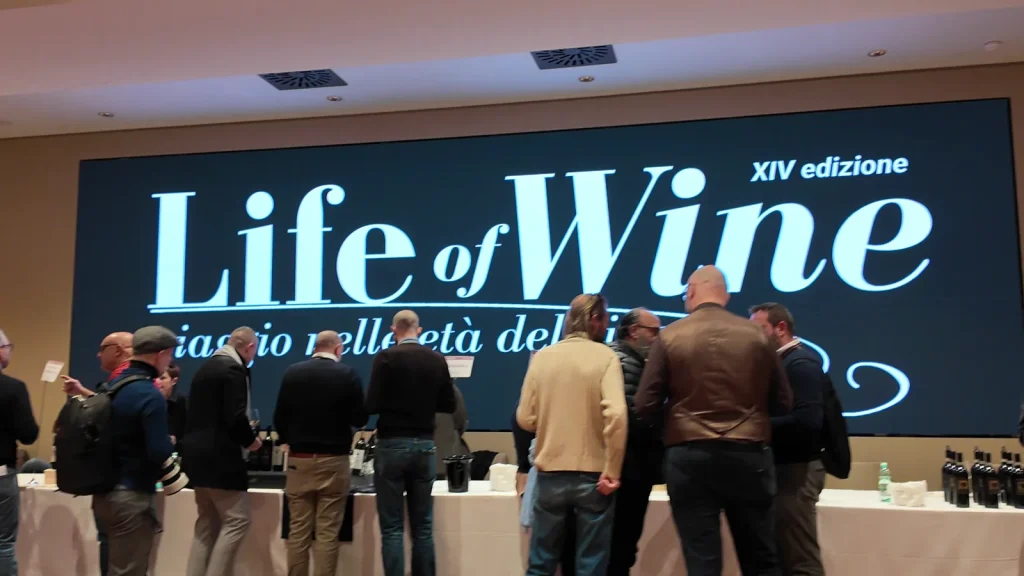
Fourteen editions and counting. Or better: feeling them all, one by one, through the vintages that reveal what time can do to wine. Life of Wine returns to Rome and once again proves its uniqueness: a format that doesn’t focus on today’s wine, but on yesterday’s wine to understand tomorrow’s. A tasting event that has evolved into a true observatory on the ageing potential of Italian wines.
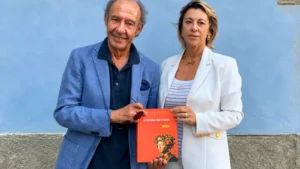
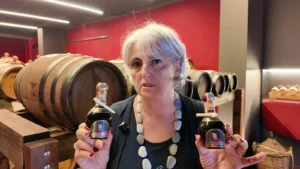
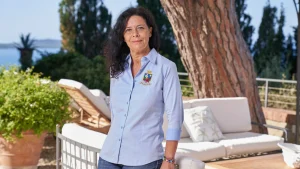
Roberta Perna, creator of the event together with Maurizio Valeriani, smiles as she explains how this may be the official 14th edition, but in reality it’s the “fifteenth year” of its existence: “Life of Wine started as a biennial event back in 2010. We’ve grown a lot since then, and today we have a solid core group of wineries that never left us.” Many of them are from Tuscany—a detail that reveals not only the loyalty of producers, but also the ability of certain regions to preserve old vintages. “At the beginning, some wineries joined because they simply had a few old bottles lying around. Then, over time, they realized that many of their wines aged beautifully. Not only Brunello, which is known for longevity, but also many other denominations that are now giving great satisfaction.”
Alongside returning wineries, there’s no shortage of new entries: “This year,” Roberta notes, “we’re almost at a 50–50 split between long-standing participants and newcomers. The first name that comes to mind is Venissa, because I have it in my glass right now: a truly fascinating wine I hadn’t tasted in years. We also have several new producers from Montalcino and from the Maremma.” A mosaic of territories that showcases an Italy rich with curiosity, vitality, and a growing awareness of the value of time.
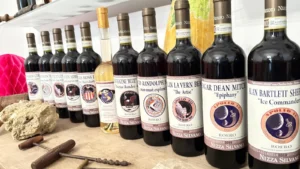
Maurizio Valeriani, critic and journalist, highlights how the vintages presented are central to the identity of the event: “I’ve seen producers pouring wines from 2001. It’s part of Life of Wine’s tradition to bring older vintages. Of course, today fewer bottles are kept aside compared to the past because the wine market has changed, but the topic of ageing remains deeply fascinating. And this is the only event in Italy fully dedicated to it.” The public seems to agree: professionals, sommeliers, journalists, and wine lovers filled the rooms from early morning, despite a cold Roman Sunday at the end of November.
Tasting older wines also reveals another theme: the evolution of winemaking styles. “In the 1990s,” Valeriani explains, “styles were often very different, with a more pronounced use of oak in some cases. Today, producers tend to aim for drinkability and elegance, but without giving up structure in important denominations. That’s essential—removing too much risks emptying the wine of its identity. The challenge is maintaining body and character while achieving harmony.”
And what about the territories? Are some more inclined to participate in an event like this? “Naturally, Tuscany is very present,” Maurizio says, “because it has a large archive of old vintages. Emerging regions don’t yet have that historical depth, so they tend to bring younger wines. It’s not a limit—it simply reflects their growth phase.”
Between emotional vertical tastings, comparisons across decades and stylistic evolutions, Life of Wine continues to be an unmissable event for anyone who wants to understand what truly creates longevity in wine.
The interview ends with a look ahead. “See you at the 15th edition,” say Perna and Valeriani together. And it really feels like the best is yet to come.