
Every Roman summer has its own color. And for 14 editions now, that color has been pink. With Bererosa 2025, Francesco D’Agostino and the team at Cucina & Vini return to celebrate — and let people taste — the world of Italian rosé wines, this time in the enchanting setting of Villa Appia Antica.
But what is rosé wine today? According to Francesco, it’s a wine that is finally finding its own identity — less generic, more rooted in the territory. “Vineyards are now being planned specifically to produce rosé,” he explains, “and that’s a major step forward, because it gives dignity to a category that for too long was considered secondary.”
One of the most interesting recent trends is that, for the first time, sparkling and semi-sparkling rosés have surpassed still ones. “It’s a telling sign,” says Francesco, “because it shows a greater connection with younger audiences, who prefer fresh, easy-to-drink wines — but that doesn’t mean they’re trivial.” In short, sparkling rosé seems to appeal more to the 25-to-30-year-olds than structured reds or complex whites.
The big challenge that still remains is seasonality. In Italy, rosé is still seen as a summer wine, while elsewhere — as Francesco recalls from a winter dinner in Paris — it’s already accepted as a year-round gastronomic companion. “Maybe it will take another twenty years, but the message is clear: even at Christmas, you can toast with rosé.”
Aesthetics matter, but what’s inside is what counts.
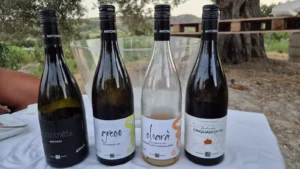
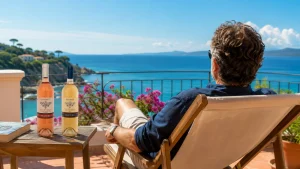
It’s impossible to talk about rosé without mentioning its color. “It’s the color of joy — of course it attracts people. But we need to be careful not to overdo the aesthetics. Transparent bottles are fashionable, but they can damage the wine. Better to protect the product than to chase marketing trends at all costs.” That said, what’s inside the bottle — whether clear or dark — has improved tremendously in recent years.
An event that has become a benchmark.
Bererosa has become a landmark event. Over the years, it has served as a magnifying glass for how rosé is evolving, how consumer taste is changing, and how there’s growing interest in a wine that’s light — but not lightweight. And this year’s turnout — “a full house,” as the organizer proudly notes — confirms the growing popularity of this category.
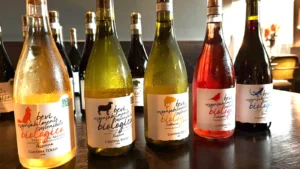
Finally, a reflection on color: in Italy, the spectrum of rosés is vast, from pale pink to deep cherry. Unlike France, which has opted for a nearly uniform shade as a marketing strategy, Italy reflects the diversity of its grapes. “There’s no sense in forcing a grape to achieve a trendy color,” says Francesco. “It’s better to respect the territory and offer a wine that’s authentic — even in gastronomic terms.”
Because a darker rosé can pair beautifully with fish stew or a summer eggplant parmigiana, while a paler one is perfect with raw seafood or more delicate dishes. In the end, the color of rosé might just be the key to understanding all of Italian wine: rich, varied, and deeply connected to its land.