Technique, territory, long ageing, mixology and sustainability. Thirty years after founding his distillery, Roberto Castagner is still pursuing the same idea: freeing grappa from the image of a spirit tied to the past and giving it a contemporary, international dimension.
“I always fall in love with the one I still have to make.”
Perhaps this is the best place to start in order to understand Roberto Castagner. More than with a bottle, a label or an anniversary. Because after thirty years of distilling, his relationship with grappa still seems to be that of someone who sees every product as a starting point, never an endpoint.
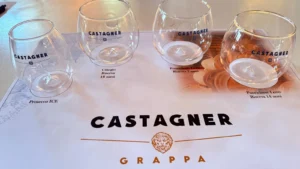
In 2026, Distilleria Castagner celebrates thirty years since its foundation in 1996 in Visnà di Vazzola, in the Treviso area between Venice and the Dolomites, in a territory deeply connected to the vine. Today the company employs around fifty people, exports to forty countries and produces a significant share of Italy’s grappa.
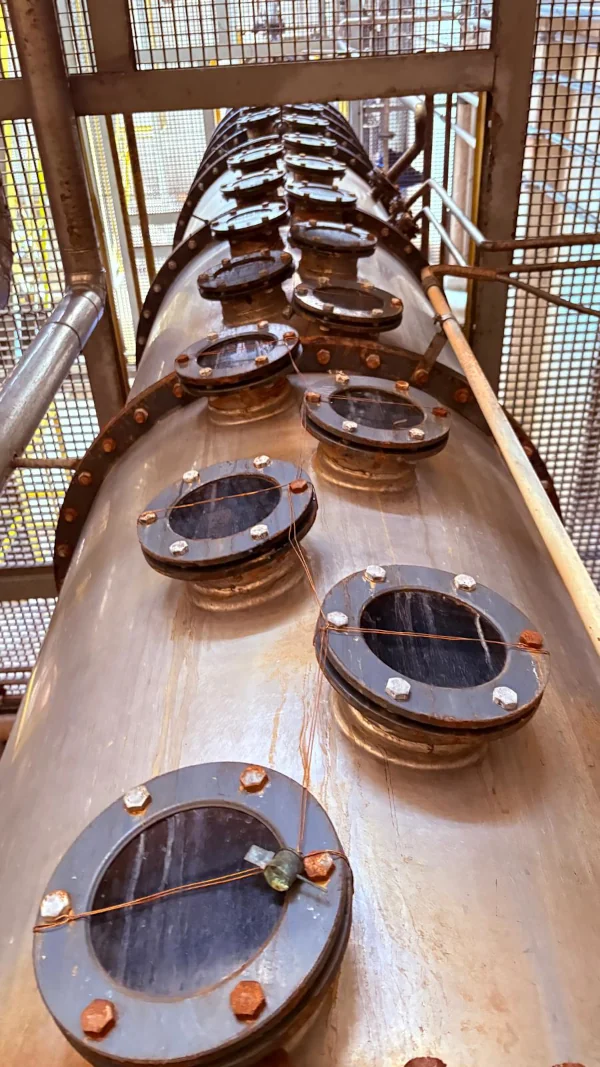 But Castagner’s story begins long before the numbers. “When I entered this world, I tried to understand what grappa was missing,” he says. “I am a technician, so I started from the scientific foundations: changing the fermentation of the pomace, changing the distillation process, trying to produce something that did not yet exist.”
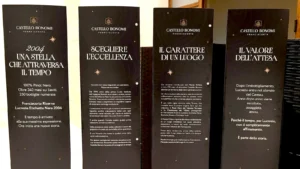
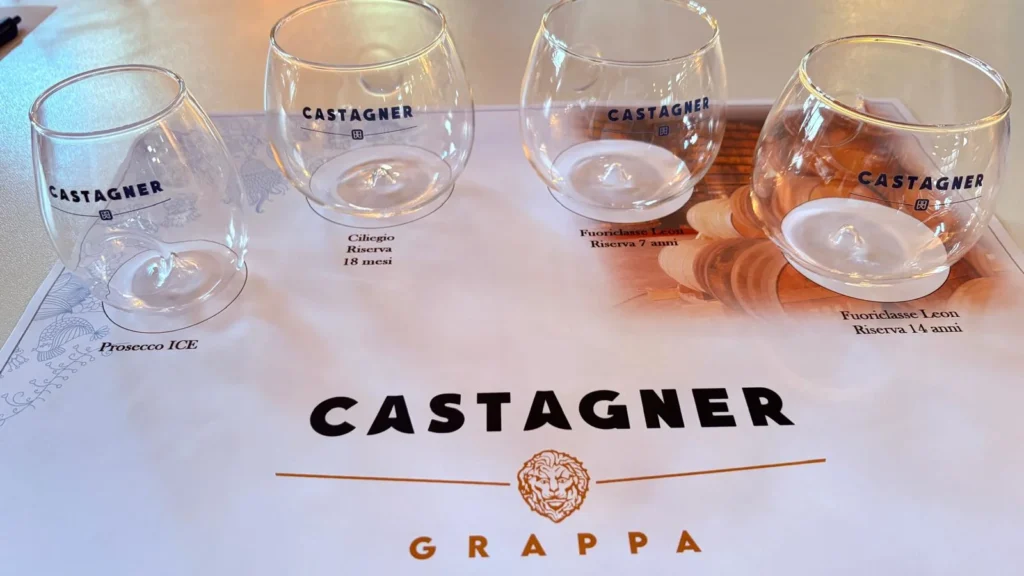
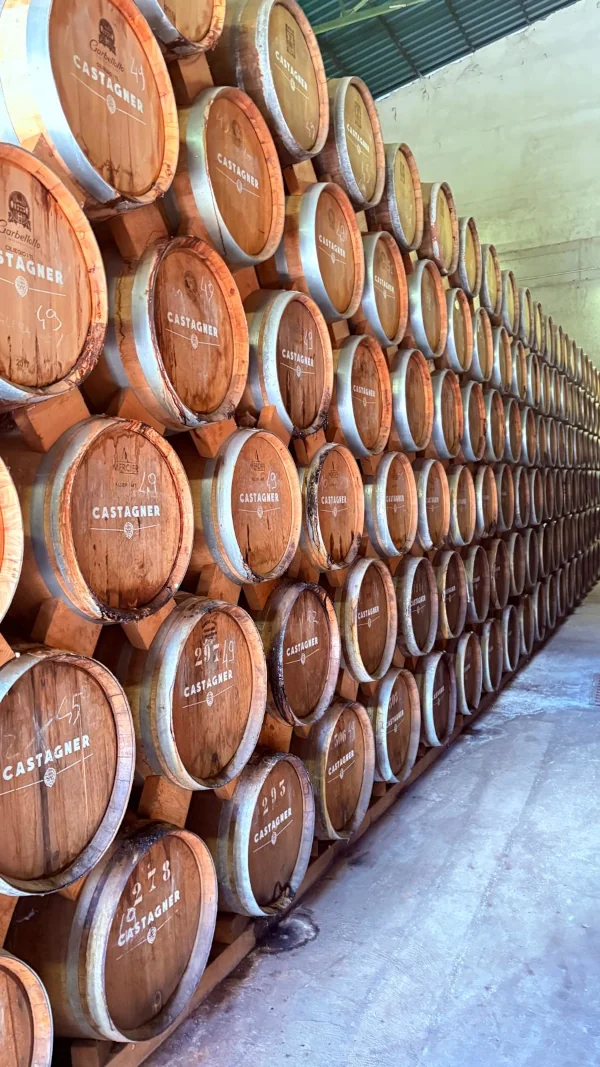
The objective was clear: an elegant, delicate, aromatic grappa, above all capable of developing over time. When, at the end of the 1990s, he began setting aside the first barriques, the Italian market was still dominated almost entirely by white grappa. Today that decision has resulted in a barrel cellar housing around 2,500 barriques, with ageing periods of up to thirty years.
This is where one of the ideas Castagner returns to most often comes into play: elevating grappa. “I tried to make it more like Cognac: a noble product, something to drink with attention and admiration, respecting the territory and understanding that grappa is a great expression of Made in Italy that should be exported around the world.”
The comparison with Cognac, whisky or rum has less to do with production style than with cultural positioning. Over the years, other spirits have succeeded in building a strong, contemporary international identity. According to Castagner, what grappa lacks most is a shared strategy.
“What we are missing are the grappa producers themselves. The grappa families need to agree on a common strategy. We have so many qualities that we still do not know how to communicate properly: traceability, tradition, the value of the master distiller, the care we put into our products.”
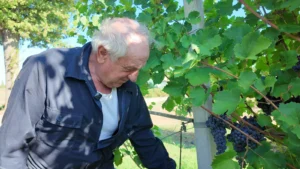
 The word “traceability” comes up several times. For Castagner, grappa is first and foremost a product of the vine, and therefore of a territory that cannot simply be moved elsewhere. “It is a zero-kilometre product. The farmer grows the grapes, the wine is made, the pomace arrives, we produce the grappa, and perhaps thirty years later we drink that very same grappa.”
The distillery’s supply chain begins with the immediate processing of the pomace after pressing and continues through systems developed to control fermentation and preservation, separate seeds and stems, and work exclusively with the skins before distillation. Grappas intended for ageing can then remain in cherry or oak barriques for periods exceeding thirty years.
But if long ageing is one route towards enhancing the value of grappa, it is not the only one. There is also a generational issue that Castagner considers crucial. How do you bring a spirit so deeply rooted in tradition to a new audience?
“I believe strongly in mixology”, he replies. “Until now, grappa has not entered that world strongly enough. A well-distilled grappa can be an ingredient for cocktails. Italian bartenders need to rediscover it.”
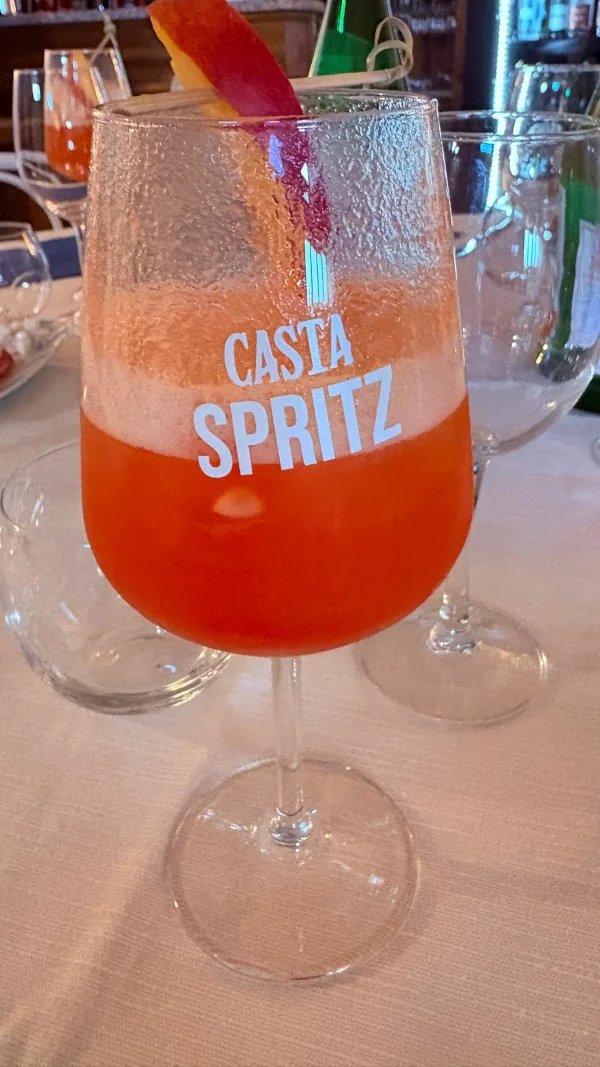
The company has been working in this direction for several years: in 2018 it launched Casta, a grappa designed specifically for mixology, followed over time by Gin Vitae, Bitter, Vermouth and, more recently, low- and no-alcohol products.
For Castagner, however, things do not necessarily need to become complicated. “You can serve grappa chilled, you can drink it with tonic, make a Grappa Tonic. The ideas are there, the products are there.”
It is an interesting shift because it challenges one of the most persistent stereotypes surrounding grappa: the small glass consumed at the end of a meal, almost always within a fixed ritual. Castagner’s perspective is different: preserve the identity of the product while multiplying the occasions on which it can be enjoyed.
At the same time, another transformation is taking place, less visible to the consumer but probably just as significant: the distillery as a circular-economy system. Grappa is already born from the recovery of a raw material, grape pomace, but in Visnà di Vazzola the process continues far beyond distillation. The skins can become biofuel or material for animal feed; grape seeds can be used by the pharmaceutical and cosmetics industries or for the production of grapeseed oil.
“There is something incredible in grapes”, Castagner says. “First we make wine, then grappa, then we discover that grape seeds contain substances that can even be used in pharmaceuticals. The distillery becomes a place where everything the grape can offer is used as efficiently as possible.”
On the energy side, in recent years the company has significantly reduced its consumption of methane and electricity from conventional sources, investing in solar energy and in the recovery of energy from production by-products.
On one side, a grappa that Castagner describes as “part of our history” and even “a seasoning for life”. On the other, continuous research into technology, ageing, mixology, new consumption habits and sustainability. And perhaps this is precisely where his project becomes most interesting. It is not so much about modernising grappa by erasing its past, but about bringing out what that past already contains and what has often not been communicated enough.
 Meanwhile, the market is changing too. Consumption of traditional grappa continues to struggle, particularly in the white category, while barrel-aged and long-aged grappas show greater resilience. Interest is also growing among consumers between the ages of 30 and 50, who are more attentive to quality and to the story behind the product.
Castagner seems to see in these signals an opening for the future. “What surprises me most is when I see young people appreciating what our parents and grandparents appreciated: a quality grappa.”
And perhaps the most important generational transition has already taken place within the family itself.
“I am happy that my children and grandchildren have decided that this can be a profession for them too.” The second generation has already been involved in the company for some time, and the family continues to play a direct role in managing the distillery.
In the end, Roberto Castagner’s grappa revolution seems to revolve around a paradox. To become contemporary, grappa does not need to stop being what it is.
It simply needs to learn how to tell its story better.
Pomace, vineyards, the master distiller, time, wood, technical expertise and a supply chain that cannot be relocated are, in Castagner’s view, already enough to build an international identity. “If Cognac sells 160 million bottles and grappa sells 25 million, then anyone who drinks grappa is very lucky indeed.”
It is a joke, of course.
But it is also a very Castagner way of saying that the real challenge today is not to invent a new Italian spirit.
It is to make the world understand the one we already have.