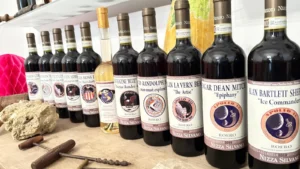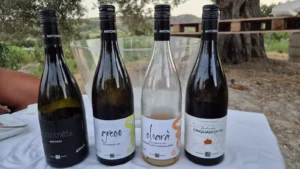
Yes, by now my way of tasting wine is “blind.” For those less familiar, blind tasting means pouring a wine into the glass without knowing what you’re drinking—so the bottle is completely covered beforehand.
I believe this is the only way to judge a wine properly, but above all, to truly enjoy it. Because knowing in advance what you’re drinking inevitably creates bias. Would you really be able to judge negatively what’s in your glass if you had just seen a famous, prestigious bottle being opened? I don’t think so. Just as I don’t think you’d be able to avoid finding the typical varietal notes of a grape you already know is in your glass.
Drinking without knowing first is better. It forces you to rely more on your nose and your senses. It sharpens your tools. It encourages you to exchange first impressions with those tasting alongside you. It fosters sharing—and helps you discover things you might not have noticed just moments before.
Blind tasting is more rigorous, because it allows you to judge a wine objectively, regardless of its reputation. But what I really want to convey here is that this approach nurtures the pleasure of discovery, along with that enjoyable sense of “challenge” (let’s call it friendly competition) in trying to figure out where the wine comes from, which grape it is, or whether the vintage was warmer or cooler. A small, healthy competition that—for me, at least—is synonymous with learning.
Yes, learning. Because traveling and being guided through a path of discovery and research inevitably builds lasting knowledge. After spending time around wine, I can confirm what I was told from the very beginning: no diploma can replace experience. The real school—the one that truly helps you grow—is tasting, tasting, tasting. And since I’m used to thinking with my own head rather than following others, I can say with conviction that blind tasting perfectly matches my way of being.
Of course, in the end, I do take a look at the technical sheet—but only for confirmation.
And more than that, if I’m in a group assigning scores, I also like not to “adjust” my rating just to align with the average. If it happens, I prefer to go against the current to understand what might be off and why my perception differs from the others. Sure, this might raise questions about respect for what I’m drinking and for the producer—but fortunately, such cases are rare. So I consider it an “occasional drift” that I’d like to keep allowing myself, while also being ready to acknowledge when I’m wrong. But again—“wrong,” not “aligned.”
So, even if you’re just starting out, I’d suggest giving this approach a try.
Then share your impressions, verify, and go deeper.
You’ll see—it’s a whole different experience 🙂