I have not yet developed that ability to give a wine its “name and surname” at the very first sip.
Perhaps that is why, when I drink — alone or in company and not during a technical tasting — I tend to let my senses run free, looking for unusual details but above all for emotions, the kind that truly leave a mark.
It doesn’t happen often. Or rather, it is rare that a pleasant sensation strikes you so deeply that it generates real enthusiasm. But when it does happen, well, I feel the urge to express it.
I should make an important premise. For me, wine is not a business. I don’t know whether it will become one someday, but for now it isn’t. That means I can talk about a wine exactly the way I want to: with respect for everyone, but also with the freedom to express my judgment and — when appropriate — my enthusiasm.
I recently drank this wine twice.
The first time at lunch, the second time blind, during the tasting sessions for the Basilicata Wine Guide together with my friends from vinodabere.it.
I didn’t realize it was the same wine.
What I did recognize, however, was the same feeling of enthusiasm.
“Huston, we have a problem…” — and what a beautiful problem it is.
But what exactly is in the glass?
And above all, who decided to make me so happy during this scorching Roman summer?
And again: what menu could I prepare to truly enjoy this wine — as we would say in Rome, to spizzarmelo properly?
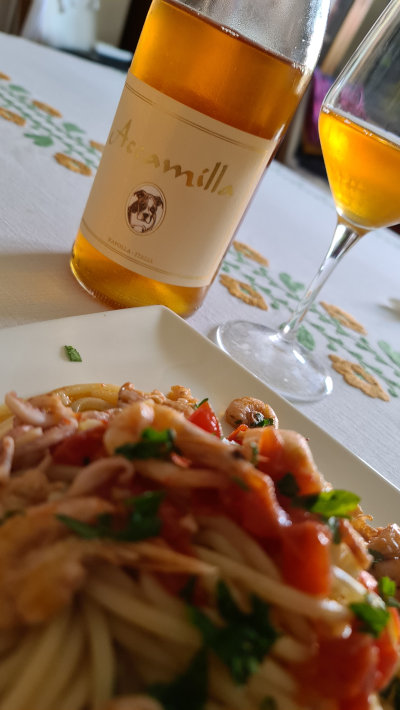
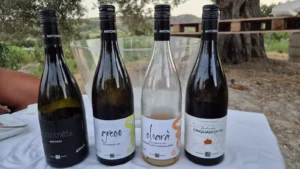
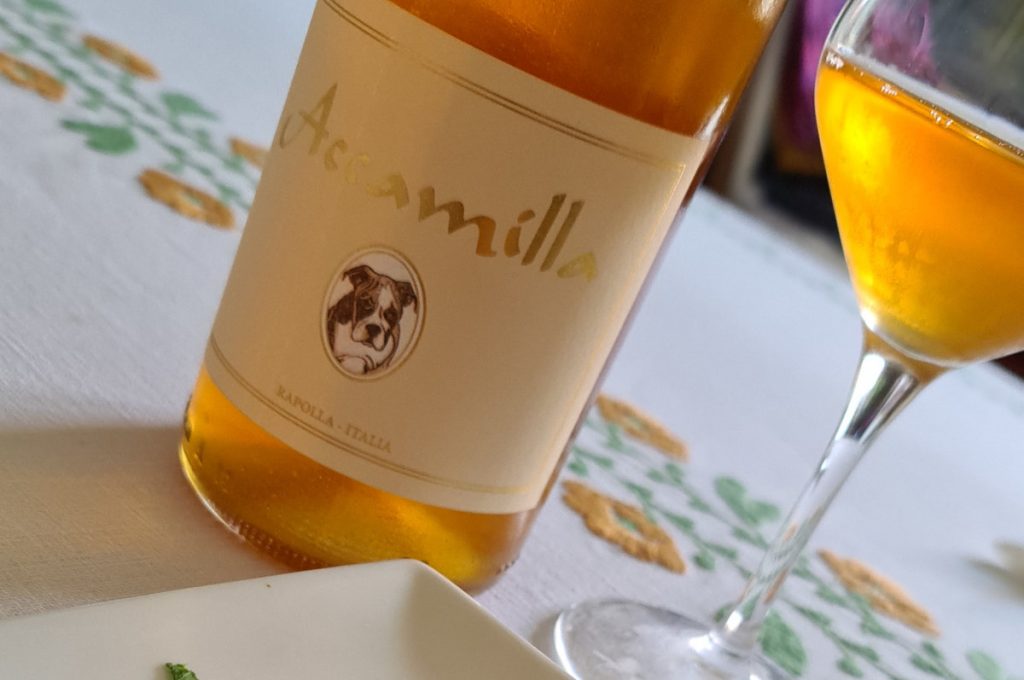
I’m talking about Accamilla, one of the wines from Camerlengo.
Camerlengo = Antonio Cascarano = a true force of nature.
To spend some time with Antonio you need time, appetite and a good memory, because he will tell you a thousand stories. Exactly — a real flood of energy and words.
Accamilla is dedicated to his Bulldog.