The Mercato dei Vini dei Vignaioli Indipendenti FIVI is one of those dates you mark in your calendar the way you do with important birthdays. From 15 to 17 November, BolognaFiere hosted the 14th edition of what is now, by the numbers, the great annual celebration of Italian winemakers: 1,000 producers from every region, three European delegations, 28 independent olive growers, over 8,000 wines to taste, and an entire city ready to embrace this vibrant community of wine people. It’s an event that is not just a fair, but a meeting point between those who make wine and those who love it, between those who tell its story and those discovering it for the first time.
And at the end of the event, the numbers speak clearly: more than 28,000 visitors, sold-out masterclasses, and a widespread feeling that wine—when artisanal, territorial, and human—truly becomes a shared language.
My day begins early—earlier than expected: the Prato–Bologna railway line is still closed, so the adventure starts by bus. There’s something almost school-trip-like about setting off this way, with a backpack and the feeling of “going on an excursion,” except that instead of sandwiches there will be wine glasses, and instead of teachers there will be winemakers. Arriving at Bologna station, I run into three sommeliers—they’re three veterinarian friends with a great passion for wine. A couple of jokes, a few laughs, and it’s immediately clear we’re all heading in the same direction: FIVI. We decide to join forces and the day instantly takes on a different flavour. Tasting together means something different: comparison, play, shared intuitions, memories intertwining. Wine is, above all, sharing. Trolley in hand, as FIVI tradition dictates, we begin moving through the endless corridors of the pavilions: I take them to meet a few of “my” favourite winemakers, they introduce me to theirs. What follows is a journey made of stories, people, emotions and good wine. This is the most beautiful side of wine, the one that makes me fall in love with it again every time.
The first stop is Ca’ du Ferrà, in Bonassola, on the Riviera di Levante. Nomen omen: the name, in dialect, means “House of the Blacksmith,” and evokes a rugged, authentic place made of vineyards reclaimed from abandonment and nature to be protected. Here, about twenty-five years ago, an adventure began that today counts 5 hectares of vines, 30,000 bottles and one strong idea: putting the land back at the centre. Davide Zoppi, a jurist, and Giuseppe Luciano Aieta, an engineer with a finance master’s degree, left Milan in 2017 to settle permanently in Bonassola. They reclaim plots, renew while respecting, listen to the land. Because—as Seneca would say—a favourable wind matters only if you know where you want to go. And here, the route is very clear.
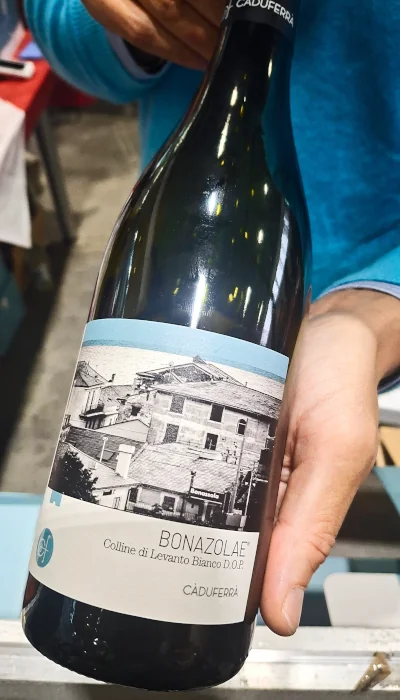
My first glass is Bonazolae – Colline di Levanto Bianco DOP, the traditional blend of Vermentino, Albarola and Bosco. In the glass, it presents a vibrant, luminous golden yellow, promising a certain richness. On the nose, the profile is fine and progressive: white and yellow flowers—jasmine, lily of the valley, broom—open the scene, followed by sage and helichrysum adding an elegant balsamic dimension. Then lime, a soft citrine citrus whisper, and a finish shifting toward an almost powdery, subtle, sophisticated minerality. On the palate it is full, broad, shaped by the aromatic nature of the grapes and the work on fine lees, but acidity intervenes—precise, sharp—to tighten the structure, to “cut through” the matter without ever being aggressive. The finish is saline, long, tasty, with citrus returns of lime: a gastronomic white, satisfying and playful at the same time, that makes you crave a second glass (and a fish dish—but that’s another story).
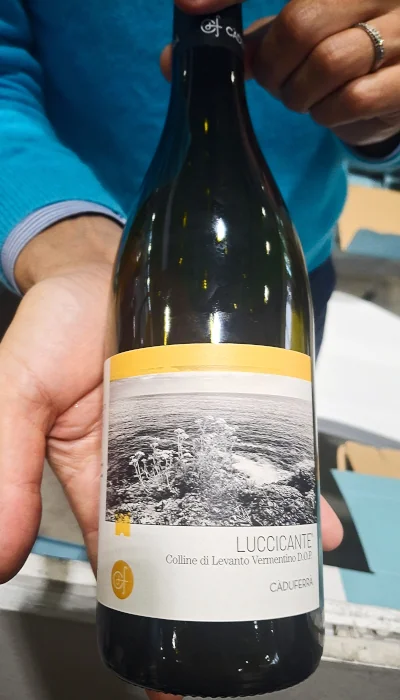
Then comes Luccicante – Colline di Levanto Vermentino DOP, a pure Vermentino that carries for me the sweet flavour of memory: its recent podium at the national competition in Liguria is just the latest confirmation of a strong bond with this grape, which has always tasted like “home” to me. In the glass, it shows a bright golden hue, consistent with lees ageing and grape ripeness. On the nose, Vermentino’s vegetal character appears in the spontaneous florality of wildflowers; then come notes of medicinal herbs and olive leaf that evoke both sapidity and Mediterranean scrub, followed by warmer tones of chamomile infusion, golden apple and yellow-fleshed fruit. A sweet citrus note, reminiscent of kumquat, refreshes the picture, which closes with a chalkier, almost tactile minerality. On the palate the wine is full, flavourful, but the citrus-driven acidic push makes it lively and agile, despite the 13% alcohol which remains perfectly integrated. The finish is long, savoury, with persistent citrus echoes: a Vermentino that truly illuminates, just as its name suggests.
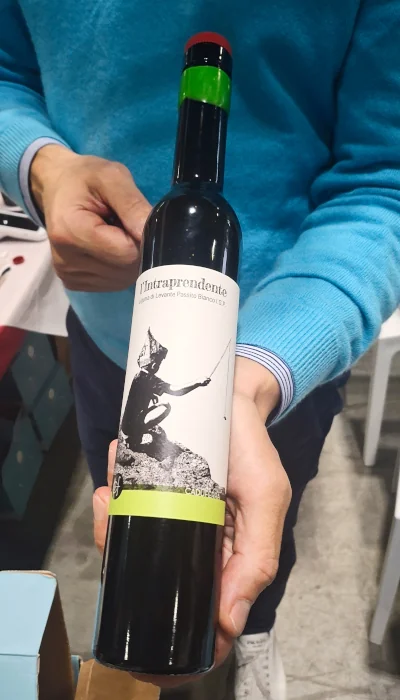
The real surprise, however, is L’Intraprendente – Liguria di Levante Passito Bianco IGP, a passito that expresses Liguria through its historic grapes—Bosco, Vermentino and Albarola—after at least three months of drying. In the glass it is a brilliant amber, dense but not heavy. The nose is broad and enveloping: acacia and orange blossom lead to sweet notes of candied orange peel, ginger and citron, honey and dried apricot, finishing with dried fruit. On the palate, the entry is soft, silky, almost velvety, with reminders of apricot juice and honey intertwined with a savoury streak that lengthens the sip. Acidity, vibrant and present, supports both the 14% alcohol and residual sugar, giving rhythm and dynamism to the wine, which remains surprisingly drinkable for the style. The finish is endless, with returns of dried fruit and sweet-savoury sensations that linger long in memory.
From Liguria we move ideally northwards, to Trentino, to visit a place whose name carries a story of family and territory: Distilleria Giovanni Poli in Santa Massenza, the symbolic village of grappa and a privileged home for Nosiola. Here, rather than distillates, I focus on Trentino’s native grape in two expressions: still and Vino Santo.
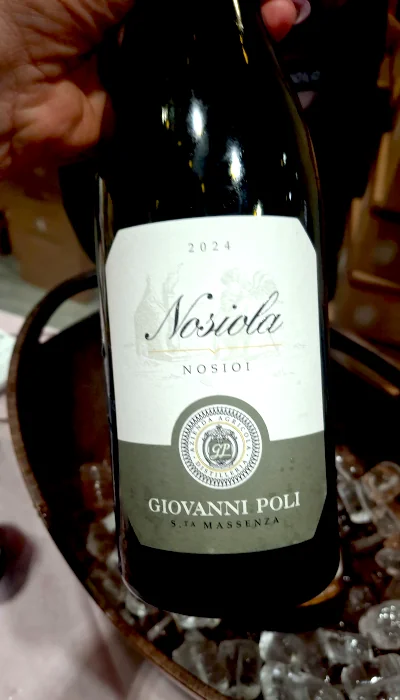
Nosioi 2024 – Vigneti delle Dolomiti IGT Nosiola appears in the glass as a bright, transparent straw yellow. On the nose, the texture is fine and well-designed: white flowers—honeysuckle, linden—open onto pear and golden apple fruitiness, then give way to a bouquet of medicinal herbs that speak of Trentino—its meadows and clean air. A subtle echo of dried fruit prepares the ground for the grape’s typical signature. On the palate the wine is fresh, slender, well-balanced: sapidity accompanies the sip and a clean finish of fresh almond and hazelnut—typical of Nosiola—seals a drink that is both simple and deeply identity-driven.
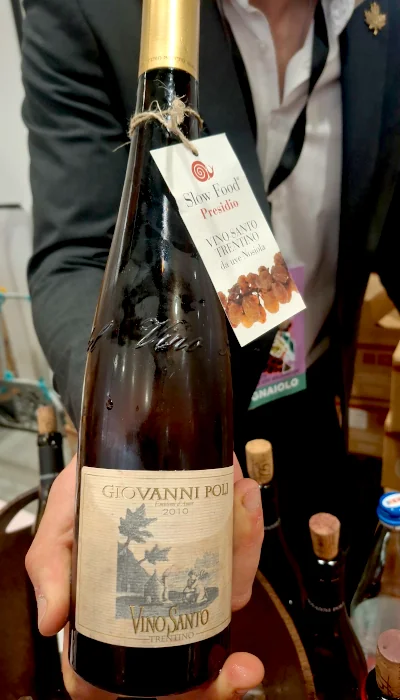
 With Vino Santo Trentino DOC 2010, Nosiola reaches its highest expression. After a very long drying on the aréle and years of ageing in old oak barrels, the glass lights up with a vibrant, brilliant amber. On the nose it is a small world: ripe apricot juice, fig and date, marron glacé, hints of anise, hazelnut, touches of candied fruit. On the palate it is concentrated but not opulent: the sweetness is enveloping, yet acidity acts as the ideal travelling companion, lightening and making the wine agile, elegant, almost dancing on the tongue. Hazelnut and dried fruit notes accompany a long, meditative finish that tells the story of both the grape and time.
Still in Trentino, I cannot skip a stop at a long-time friend: Tenuta Maso Corno. Around a centuries-old farmhouse, on the slopes of the Monti Lessini facing the Little Dolomites, the vineyards open like a fan on a natural terrace at 500 metres of altitude, suspended above the Ala stream and overlooking the Adige valley. Poor dolomitic-calcareous soils, foothill air, morning exposure: a place where the genius loci is strongly felt. Giulio Larcher has made this farmhouse his personal challenge, focusing on low yields, selected clones, and meticulous work in the vineyard and cellar to create wines of character and class.
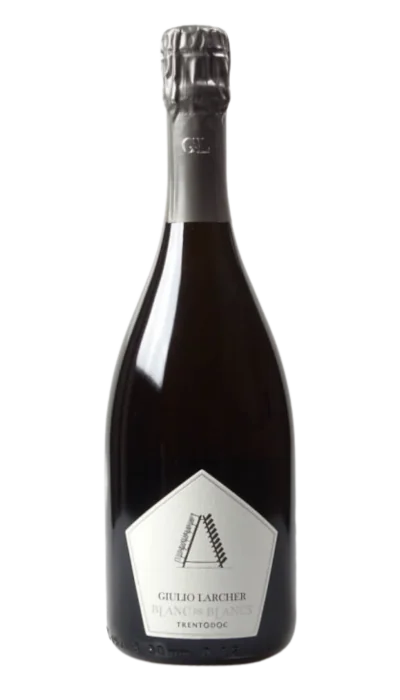
The symbolic wine—the one I want to recount—is Trento DOC Blanc de Blancs Pas Dosé “Giulio Larcher”, 100% Chardonnay aged on the lees for at least 60 months, with no dosage at disgorgement. In the glass it is luminous, bright, with extremely fine, continuous bubbles. On the nose it is complex and precise: citron and bergamot open the citrus scene, followed by warmer notes of delicate vanilla and dried fruit. On the palate it is creamy and full, as expected from a well-crafted Chardonnay sparkling wine, but acidity immediately enters the stage, bringing verticality to the sip. The bubbles are extremely fine, never aggressive; dolomitic sapidity extends the finish with returns of dried fruit and a delicate chalky touch. It is a Metodo Classico deeply rooted in its territory yet personal: Giulio’s hand, his idea of rigour and elegance, are fused into one exquisitely refined sparkling wine.
From the north I head south again, to the slopes of Vesuvius, to Casa Setaro, one of my favourite wineries in Campania. Here, a family has reinterpreted Lacryma Christi and the volcano’s grapes—Aglianico, Falanghina, Piedirosso—restoring dignity and brightness to native varieties, including the nearly extinct Caprettone. It all stems from Vincenzo’s intuition, carried on with determination by his son Massimo Setaro and his wife Maria Rosaria: a sustainable, identity-driven viticulture with the Vesuvio at heart and the future in sight.
The Vesuvio Caprettone DOC comes from ungrafted vines between 250 and 350 metres, in Bosco del Monaco and Tirone della Guardia, within the Vesuvius National Park. In the glass it shows a bright, luminous golden yellow. The nose is complex and ample: broom and acacia flowers, citrus hints of citron, balsamic whiffs of catmint. On the palate it is suave, enveloping: initial softness is quickly balanced by a precise acidic streak echoing the citron notes. Sapidity, powerful and volcanic, supports the wine and prolongs the finish with fruity and citrus echoes. It is a white wine with character, carrying in the glass the volcanic soul of Vesuvius without ever losing elegance.
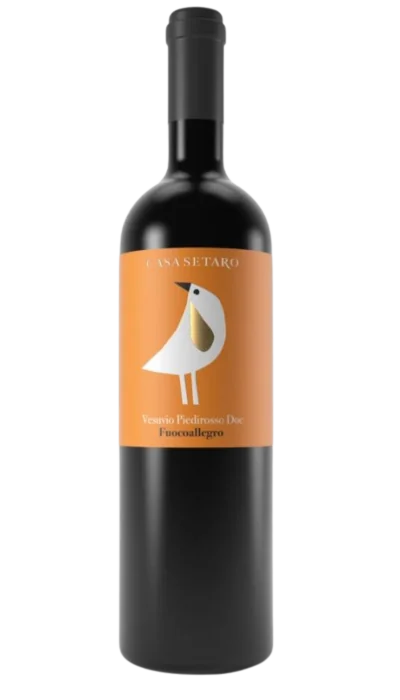 Then there is Fuocoallegro – Vesuvio Piedirosso DOC, the wine of the heart. Every time I find it in my glass, I feel as if I am coming home. In the glass it shows a vibrant ruby red, crossed by amaranth highlights that give it depth. The nose is surprisingly fresh and floral: cyclamen and geranium petals. Then the fruit becomes more intense, with rhubarb and durone cherry intertwining with shades of bourbon vanilla, while darker notes of soot and a subtle, recognisable iron-blood hint appear in the background—telling the story of the volcano. On the palate the wine is enveloping, rounded, concentrated around hints of rhubarb, blond tobacco and coffee. The tannin is extremely fine, silky, perfectly integrated, working in synergy with measured acidity that gives rhythm without stiffening the sip. The finish is savoury, clearly defined, with long smoky returns that seem to lead you back to the crater. It is a spontaneous, sincere Piedirosso, capable of stirring emotion without ever raising its voice.
We then move ideally to central Italy to close the journey with an Umbrian embrace: Cantina Cocco Montefalco. At the counter stands Ilaria, and when she speaks about Sagrantino and her land, her eyes shine: one of those moments when you immediately understand that here wine is a matter of life, family and roots. The story goes far back: her family has been cultivating these vineyards since 1650, but the Cocco winery was born in 2008 with the idea of preserving the identity of a hill resting on the Montefalco ridge, seeking balance between tradition and modern agronomic and cellar practices.
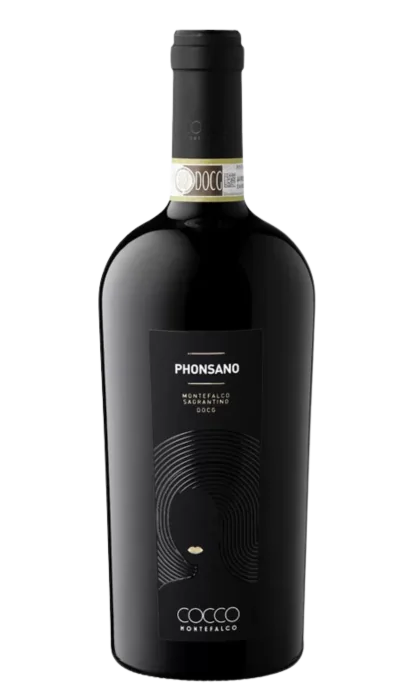
PHONSANO – Montefalco Sagrantino DOCG is a pure Sagrantino that presents itself in the glass with a deep ruby red and evident polyphenolic strength. On the nose it begins with an intense fruity imprint: cherry, currant, pomegranate, followed by fine spices—nutmeg, clove, Sichuan pepper—and a balsamic trail of bay leaf. On the palate it is substantial, structured, with firm yet finely woven tannins set on an energetic acidic backbone that directs the sip. The finish is savoury, long, with fruit and spice returns and a touch of cocoa accompanying the wine with almost endless persistence. It is a Sagrantino that does not deny its power, but channels it into elegance.
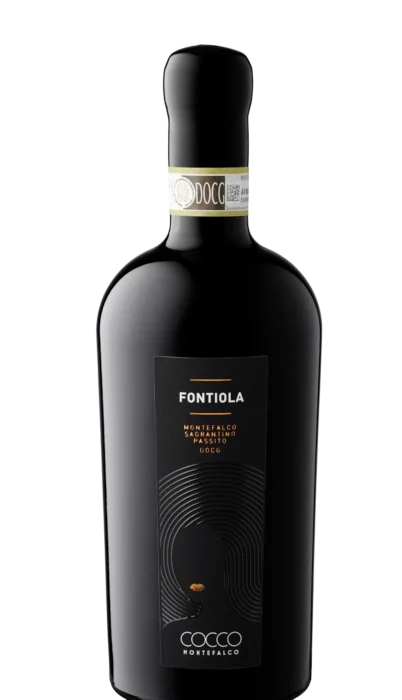
In the passito version, FONTIOLA – Montefalco Sagrantino DOCG Passito, Ilaria’s wine finds another, emotional form of expression. In the glass it is a dense, bright ruby. On the nose it opens with ethereal and sweet notes of cherries in spirit, sour cherry jam, mulberries, myrtle, cardamom, in an aromatic crescendo that captures you. On the palate it is velvety, enveloping: the residual sugar is important but perfectly balanced by freshness and by a still-present tannic texture that gives structure and reins in any excessive softness. The length of flavour is impressive, with sweet, fruity and spicy returns chasing each other for a long time. A complex, deep wine, yet disarmingly elegant.
When I leave the pavilions, the light has already changed. Outside it’s raining, the bags full of wine bottles have officially become too heavy to drag casually to the bus, and tiredness begins to set in. But it is a beautiful tiredness: in my mind are the smiles of the winemakers, the conversations with friends, the aromas of wines discovered and rediscovered, the names of bottles I know I’ll open slowly, at the right moment. Once again, FIVI has been a journey across Italy in a single day that flew by among old and new friends, wineries where I feel “at home,” and producers I cannot wait to visit. And as I hold the now-creased entry badge in my hands, I already know that if I could, I would relive this adventure immediately, all in one breath. And perhaps this is precisely the secret of the FIVI Market: it leaves you with a deep desire to return, to toast again, to listen to more stories in the next glass.