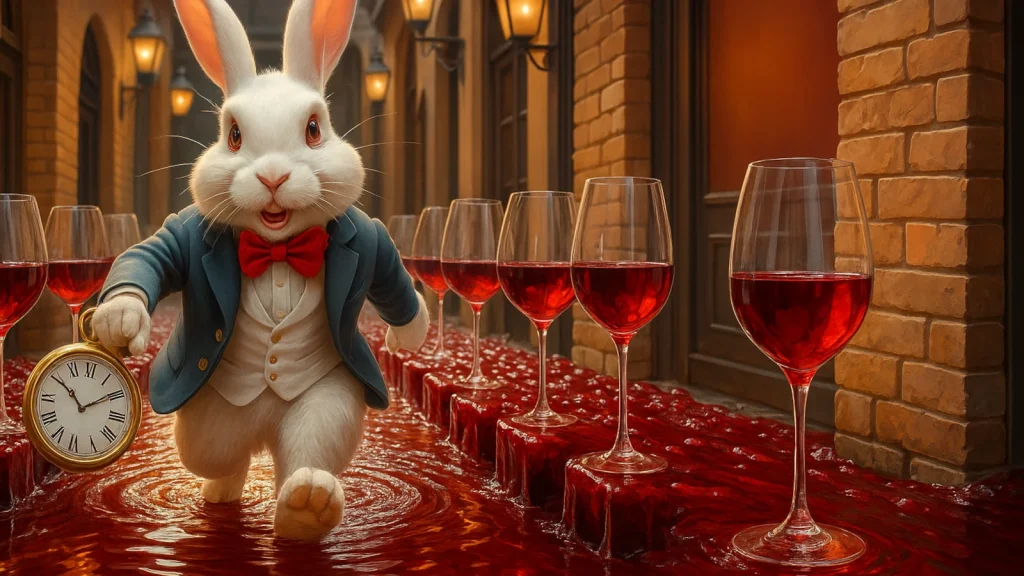
There was a time, not so long ago, when the first sign of a new, almost unconscious haste revealed itself in the form of TV zapping.
It was the late ’90s: you’d come home, turn on the television and, with the remote in hand, flip from one channel to another without ever stopping, without really choosing. It was entertainment, but also the first step toward a fragmented consumption of attention.
Today, more than thirty years later, that compulsive gesture has become smaller and portable: thumbs scroll across tiny screens, videos follow one another in an endless loop of reels, songs are skipped after three seconds if they don’t instantly hook us. We’ve become digital Bianconigli, always running, clock in hand, yet with no real idea where we’re going.
We live in an age where everything must immediately capture the little attention we have left. In a world of maximum cognitive stimulus, we all seem to suffer from a collective form of ADHD. We no longer wait, we no longer grant ourselves the luxury of slowness.
And I see it clearly in a world I know well: music. In eighteen years of working at a record label, I’ve witnessed the radical transformation of an art that, for centuries, had played with time and anticipation. Today, a track has to hit hard in the first three seconds, deliver a hook right away—otherwise it’s discarded before it’s even heard. The introduction, the crescendo, the suspense… luxuries we no longer allow ourselves.
An entire economy has even sprung up around this impatience of ours: professions specialized in chasing data, algorithms, and tailored strategies to make every product—a song, a piece of content, an idea—instant and irresistible. All to boost the slim chance of being watched to the end of a reel, of earning at least one full stream on Spotify and, in the best case, the supreme honor: making it into a playlist!
And wine? How is wine faring in this age of haste?
Not too well.
Haste has reached here too, fueled by a climate forcing regulations to shorten aging times, by economic pressures discouraging investments in cellaring, by the fear of international tariffs, by anti-alcohol campaigns, and by the spread of dealcoholized versions. But the deepest change is cultural: no one wants to wait anymore, not even for a glass. Tastes have shifted toward vertical, fresh, immediate wines, less complex. Rosés, skin-contact, orange wines: new languages to make one of the world’s oldest drinks more “pop.”
Yet, while less is more conquers palates, the poetry of waiting is lost. We buy and drink, no longer with the idea of keeping a bottle for years, of sharing with it the patience of time.
Once, the perfect sensory experience meant sinking into a leather armchair, putting on a Pink Floyd record—Atom Heart Mother, Shine On You Crazy Diamond, tracks that run over twenty minutes—and opening a great wine with long aging: a Château Latour, a Domaine de la Romanée-Conti, a Château Margaux. Each sip was a chapter in a story that unfolded slowly, like the notes filling the room.
Today, instead, the experience must be “ready-made,” like a microwavable meal.
So, what remains?
What remains is a chronic fatigue that brings no comfort. What remains is the feeling of always running toward something we never reach, letting time slip through our fingers like sand, without ever truly living it.
I want to stop that Bianconiglio. I want to smash his clock and sit still, watching the day go by—even knowing it won’t return. After Covid and after some personal events, I realized that beyond the paper sky we so often build above our heads, there exists a world with different rhythms.
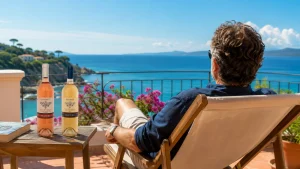
That’s why I keep cherishing my old bottles in the cellar, opening one without regret when shared with those I love or, at times, just with myself, immersed in the music I prefer, eyes half-closed.
Time always wins—it has, since our first breath. But perhaps we can trick it, or at least keep it company, by living at our own pace, even if offbeat, out of time, late compared to the rest of the herd.
So raise your glasses—to those who still know how to wait.