There are wines that don’t just need to tell their story—they need to defend it. Marsala is one of them. A name that carries an extraordinary history, but also a persistent misunderstanding: that of a product relegated to the role of a cooking ingredient, far from the idea of a great wine.
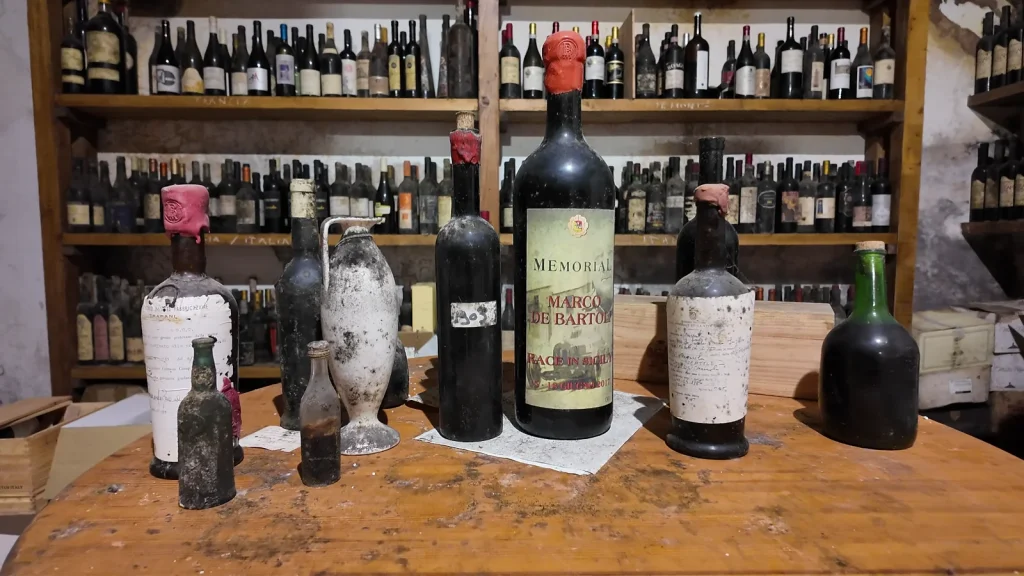
Stepping into the De Bartoli winery means crossing this paradox. On one side, the weight of an image built over decades; on the other, a determined effort that for more than forty years has worked to overturn it. Today, the situation is clear: something has changed, but not enough.
Over the past 15–20 years, Marsala has begun to regain credibility, thanks to a new generation of producers and—before them—pioneers like Marco De Bartoli, who as early as the 1980s understood the need to restore this wine to its original dignity. No longer a functional product, but an authentic expression of its territory.
And yet, beyond a circle of enthusiasts and informed professionals, the prejudice remains. Among the general public—both in Italy and abroad—Marsala is still often associated with industrial, low-quality production. A perception that struggles to evolve, despite a reality that has profoundly changed. However, if we narrow the focus, the picture looks different.
In the mid-to-high-end segment of the restaurant industry and among more attentive operators, Marsala has already found a new positioning. It is here that the work of wineries like De Bartoli is recognized and valued—not as an exception, but as a benchmark. Abroad, the path is similar, though with even sharper contrasts. In the United States, for example, Marsala is still largely confined to culinary use. Yet even there, a growing niche is beginning to interpret it differently, placing it within quality contexts and telling its story for what it truly is.
To understand how we got here, we need to look back. To a time when Sicilian wine production was dominated by completely different logics, focused on volume and bulk wine. In that context, choosing to focus on quality, on vineyards, and on varietal identity was a clear and radical stance. Marco De Bartoli was among the first to take that path. He vinified Grillo and Zibibbo in a modern way for the time, anticipated themes that are now central—such as sustainability and natural approaches—and built a production model based on low yields and a deep connection with the raw material.
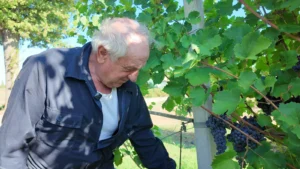
It was a long journey, often against the tide, whose recognition came only over time. Today, that vision has become a tangible legacy. A legacy that leaves no room for compromise: those who carry it forward must maintain the same level of rigor, the same coherence, the same attention to detail. There are no shortcuts, no simplifications. It is a form of viticulture that starts in the vineyard, before the cellar. A way of working built on precise choices, consistently applied over time: organic farming for decades, low yields, and an absolute focus on the grapes. Elements that may seem almost obvious today, but are in fact the result of a vision shaped when none of this was common practice.
In this context, speaking about the future takes on a different meaning. It is not about chasing trends or introducing revolutions, but about refining an already defined path. Gradual improvements, attention to detail, and the ability to evolve without betraying identity.
One aspect, however, remains central: communication. Because if the quality of Marsala is now, in many cases, beyond question, its perception still lags behind. And this is where the most important challenge lies: bridging the gap between what Marsala has become and what people still believe it to be.
The feeling is that the direction is the right one.
But also that, for this wine, the journey is far from over.