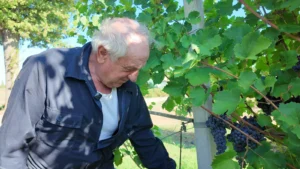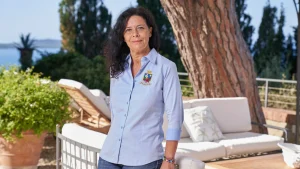
Gioia del Colle, on a hot August afternoon. I’m at Cantine Polvanera, welcomed by Filippo Cassano, owner and winemaker of the estate. We are received in the winery’s dehor, before beginning the actual visit.
The conversation starts with the family’s history, deeply rooted in the land, and with that healthy “drive” which, beginning at the enology school of Locorotondo, continues to express itself in a constantly evolving journey.
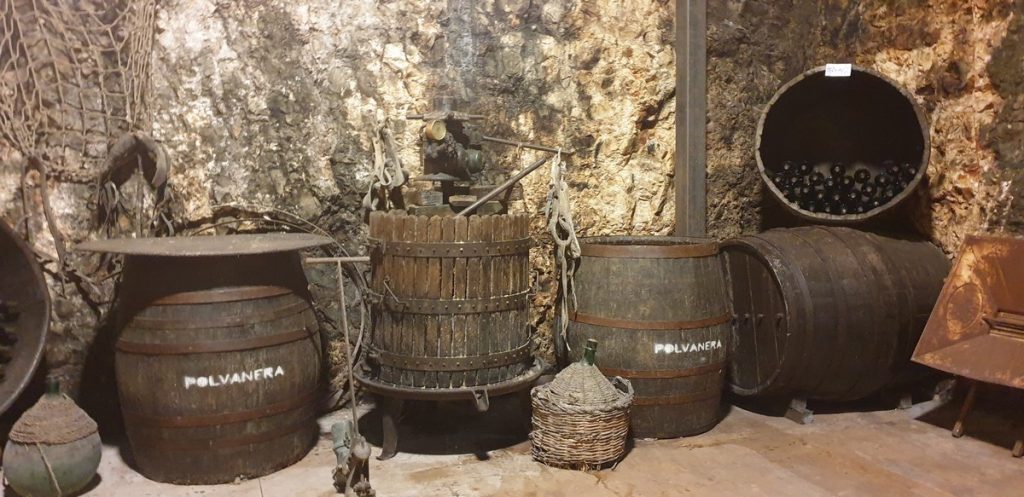
The winery is carved into limestone rock and the first thing we notice is the absence of barriques, or wood in general. Respect for the nature of Primitivo di Gioia del Colle seems to be the core philosophy of this estate. For Filippo, Primitivo doesn’t need wood. It must be respected and managed exclusively according to soil type and vine age.
Listening to Filippo is a pleasure—both for his pride in telling the story of his small “battle” for Fiano Minutolo, and for the way he carefully explains the traditional method process to the two “teenagers” I brought along this time. And yes, among Filippo’s projects there are also sparkling wines: a Metodo Classico based on Primitivo, with a blend of other native grape varieties.
From the cellar we move inside the masseria—a place that conveys history and hard work. Even more so when we come across a table of tomatoes left out to dry. But we’re here for the wine, so we step outside again, only to discover that beyond Primitivo there’s much more…
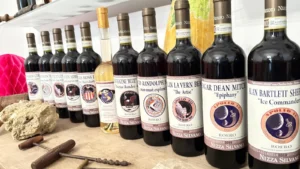
14, 15, 16, 17. Here we finally reach the title of this article.
Filippo once submitted his wines for evaluation when they still had no name.
When they were assessed, they were simply identified by the number of the container they were in—and from that moment on, no one ever thought of changing those names…????
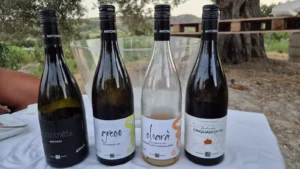
As I was saying—not just Primitivo… This was our tasting sequence:
Bianco d’Alessano 2019.
A grape I didn’t know. Pleasantly fresh and savory, with some aromatic herb notes adding character.
Minutolo 2019.
An aromatic grape, but not overly so—which is something I increasingly appreciate. Very interesting, with both apple and citrus notes.
Rosato 2019.
Usually, rosés here are made from Primitivo or Negroamaro. Filippo, instead, created his rosé differently, blending Primitivo, Aleatico, and Aglianico. Structure, raspberry, and salinity led me to buy a bottle for dinner two nights later.
Verdeca 2018.
Well then—I definitely wasn’t expecting a macerated wine at this point.
Herbaceous, balsamic—a glass you want to keep returning to. My son Federico even detects prickly pear (could it be true?). Confirmed on the palate. I like macerated wines, and this is one of them.
Aglianico 2017.
A surprising prelude to the Primitivo lineup. Tannic enough, with a strong character that immediately makes you crave grilled meat. Plum is there, along with tertiary notes that I would have expected from oak—but there is none.
Polvanera 14 Vigneto Marchesana 2017.
A Primitivo that goes down beautifully. Pleasantly tannic. I’m still surprised to find tertiary notes I would easily attribute to wood aging.
Polvanera 16 Vigneto San Benedetto 2015.
My favorite, chosen for its austerity. Made from bush-trained vines. Complex but not “showy.” A wine that forces you to “stay with it” for a while, to fully appreciate its typicity and its refusal to compromise.
Polvanera 17 Vigneto Montevella 2016.
Also from bush-trained vines. Less immediate than the previous one, but elegant and full of character. It’s easy to forget its 16.5% alcohol, even on a hot day like this.
Thank you, Filippo—we didn’t know Gioia del Colle.
This short journey from Minutolo to Primitivo helped us appreciate your land and your wines.