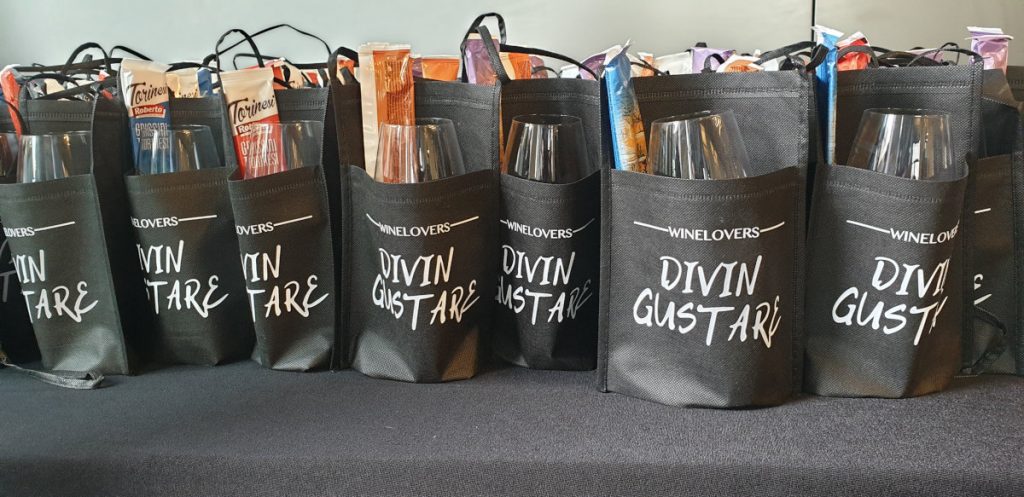
Yes, there are many ways to “have breakfast” on a Saturday morning. I chose to do it by visiting my friend Marco Sciarrini and letting myself be pampered by the Champagne masterclass he led as part of the “Divingustare 2020” event, currently taking place (until Monday) at the Città dell’Altra Economia in Testaccio.
The event continues in Rome until tomorrow, with many masterclasses on offer. As for my “breakfast,” I have to admit that I still have a lot to learn about Champagne—and relying on Marco to guide me through it is something I’m particularly happy to do.
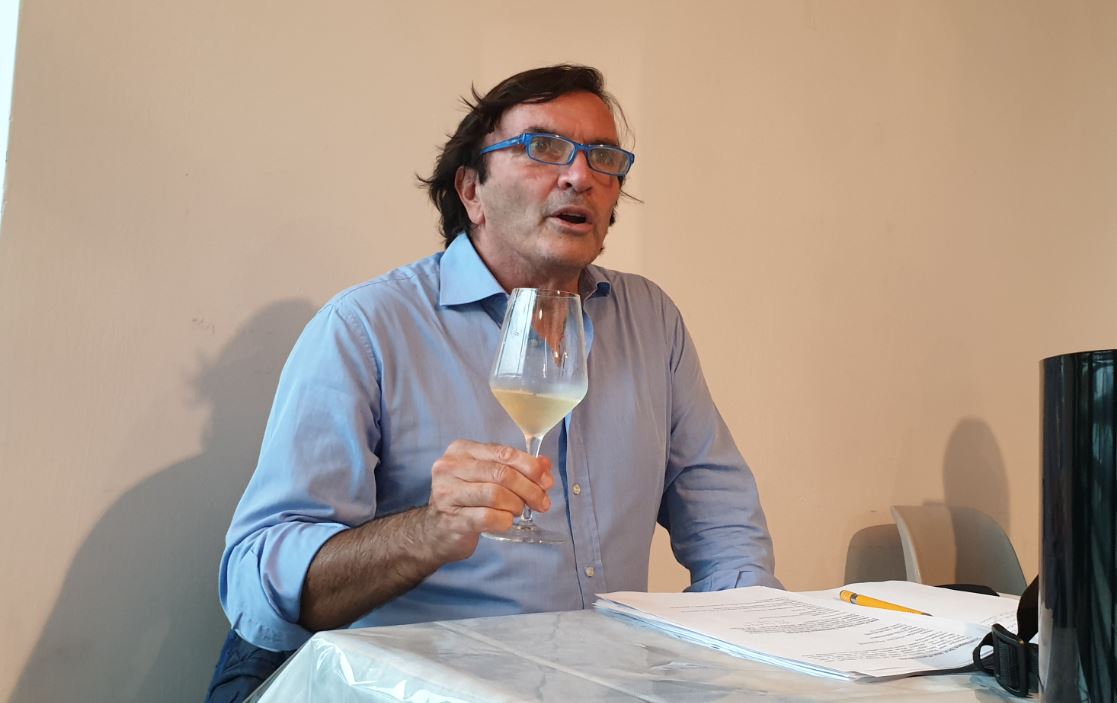
Pinot Noir, Pinot Meunier, and Chardonnay—as always—the true protagonists.
My teacher for the day manages, quite pleasantly, to ease my slow morning wake-up. First by telling the stories of the great historical figures: from Dom Pérignon, who found a way to manage the pressure inside the bottle, to Dom Ruinart and his discovery of the second fermentation in bottle; from “the Widow,” Madame Clicquot, with her remuage, to Pommery, who understood the potential of removing residual sugars from Champagne…
But it is also the terroirs that make Champagne such a great wine. Those soils, rich in marine fossil residues and chalk, allow water to drain easily, forcing the roots to dig deep—resulting in a rich uptake of minerals.
Reims, Côte des Blancs, Marne Valley—the golden triangle of Champagne. But now, English production is also beginning to emerge. According to regulations, the geographical limit roughly coincides with the 50th parallel, a boundary that aligns more or less with the White Cliffs of Dover. Because of this—and due to the climate changes of recent years—sparkling wine production has also started to develop in southern England.
There are many fascinating insights shared by Marco Sciarrini as we sip the Champagnes of Jean-Pierre De Long from Allemant—a small producer offering us four wines. Also worth noting is the French tendency to “write little” on labels (disgorgement dates, etc.) for these wines.
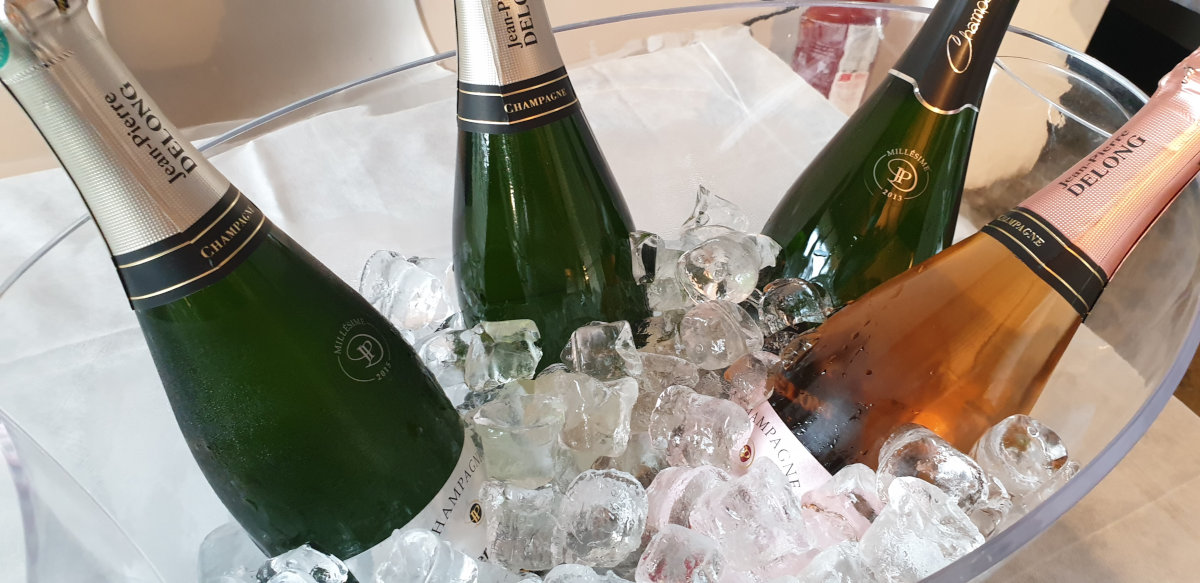
BRUT
55% Chardonnay, 25% Pinot Noir and Meunier, with the remaining part made up of vin de réserve.
Fine perlage and persistent mousse. On the nose, a dominant bread crust note. Chalky, pleasant.
A great way to start.
BLANC DE BLANCS
100% Chardonnay. While there is a more evident fruity component, bread crust and chalk still dominate.
MILLÉSIME 2013
50% Pinot Noir, 50% Chardonnay. 5 years on the lees.
It is a Brut, but comes very close to a pas dosé. Definitely more refined than the previous two.
The work of the lees—and the resulting bread crust notes—is softened by the aging period.
We don’t know the disgorgement date, but one thing is certain: we drink it—and happily go back for more.
ROSÉ
Classic blend of Chardonnay, Pinot Noir, and Pinot Meunier.
A typically “French-style” rosé color. A wine that is decidedly simpler than the others.
We end the day by pulling out a wild card and comparing these Champagnes with a Franciacorta (Greta, from the Brutell winery in Adro).
A comparison that allows us to fully appreciate the differences. Although both are traditional method wines, the diversity of terroirs clearly shows in the glass. Different styles, both enjoyable—but undeniably different.
A great Saturday. An interesting way to start the day.
More masterclasses are scheduled for today and tomorrow—and I might just be tempted to join again