Biodiversity, hospitality and a strong sense of teamwork define one of Piedmont’s most compelling wine regions. Alessandro Costa, the new president of the Consorzio Tutela Roero, takes us on a journey through a territory that is building on its distinctive identity, the elegance of Arneis and Nebbiolo, and a new generation of winemakers.
Some wine regions tell their stories through the fame of their appellations. Others, to be truly understood, need to be explored, experienced and discovered through the people who call them home. Roero belongs firmly to the latter category. This corner of Piedmont lives in the shadow of the internationally renowned neighbouring Langhe, yet retains a distinctive character of its own: remarkably varied landscapes, wines of exceptional elegance and an approach to hospitality that still seems to favour genuine warmth over the conventions of organised tourism.
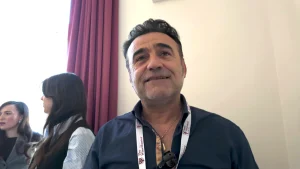
The word “surprise” is precisely where our conversation begins with Alessandro Costa, president of the Consorzio Tutela Roero, elected in July 2026. A fourth-generation member of the family behind Nino Costa winery in Montà d’Alba, with educational experience in France and the United States, Costa represents a new generation of producers entrusted with building on the achievements of recent years and bringing greater visibility to an appellation that still has so much to tell.
“I completely agree with that word, because surprise is exactly what stays with people after they visit our region,” Costa explains. “Roero is not yet as well known as other, more established wine regions, but it has an extraordinary variety of terroirs, crops and biodiversity. It’s not just about wine: there are fruit orchards, hazelnut groves and woodlands. And it’s precisely this diversity that surprises people.”
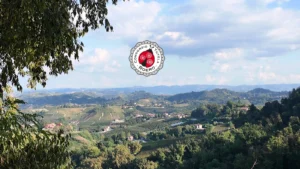
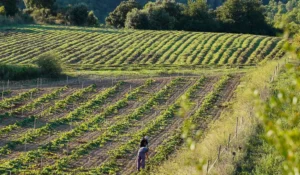
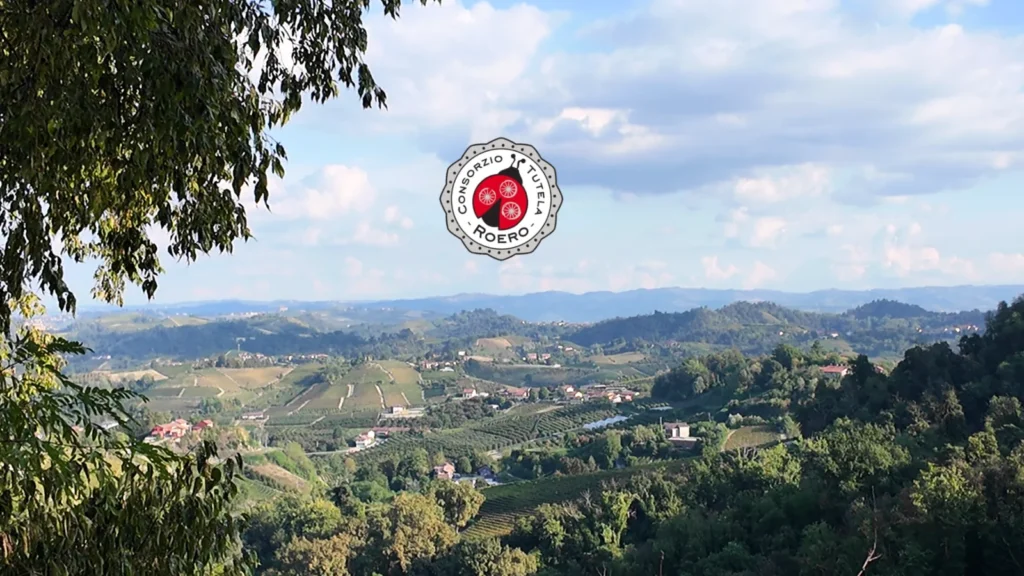
That diversity is immediately apparent in the landscape. On the left bank of the Tanaro River, in the heart of Piedmont’s wine country, vineyards do not dominate every hillside. Instead, they share the land with forests, orchards, vegetable gardens and traditional crops. There are the peaches of Canale, Madernassa pears, hazelnut groves and, of course, vineyards planted with Arneis and Nebbiolo. This agricultural mosaic helps define the region’s identity and finds one of its most spectacular expressions in the Rocche del Roero: dramatic erosion-carved ravines, in places more than a hundred metres deep, cutting through the hills and separating soils of different geological origins.
This complexity is more than a source of natural beauty. It is also one of the keys to understanding the character of Roero’s wines. The soils, predominantly composed of marl and sandstone with substantial sandy deposits of marine origin, vary considerably from one area to another. “Travelling from Montà to Govone, the terroir changes significantly,” Costa observes. “Some areas are better suited to white wines, others to reds, but both can express minerality, elegance and finesse. These are the qualities that make our wines distinctive.”
Arneis and Nebbiolo: Two Expressions of the Same Identity
Roero has also succeeded in establishing a recognisable identity around two grape varieties deeply rooted in Piedmontese winemaking tradition. DOCG status was awarded in 2004, while the Consorzio Tutela Roero was founded in 2014 and now brings together 265 members. The vineyard area exceeds 1,345 hectares, of which 990 are dedicated to Arneis and 355 to Nebbiolo. Annual production stands at approximately 8.3 million bottles, with Roero Bianco accounting for 90% of the total and Roero Rosso for the remaining 10%. One particularly significant figure concerns the region’s international reach: more than 60% of production is exported.
Behind these figures lies a journey of qualitative growth that has profoundly changed perceptions of the region’s wines over recent decades. This is particularly true of Arneis, a grape variety that came close to disappearing in the 1970s, when little more than ten hectares remained under cultivation, and which today has become the appellation’s leading ambassador.
For many years, Roero Arneis was associated primarily with the immediate appeal of a young, fresh, aromatic white wine, intended to be enjoyed within the first few years after harvest. Today, that perception seems increasingly restrictive.
“People used to think Arneis was a wine that had to be drunk young. Today, however, we are discovering wonderful older vintages,” Costa explains. “We can offer young, fresh, fruity and fragrant wines, but also wines with ageing potential, showing very different structures and expressions.”
This marks an important step in the appellation’s evolution. The ability to age gracefully, supported by individual producers’ interpretations and a growing appreciation of specific vineyard sites, opens up new possibilities for a grape variety whose history stretches far beyond its modern reputation. Alongside the traditional still and sparkling versions, the production regulations also recognise Roero Arneis Riserva, which requires a minimum ageing period of 16 months.
For red wines, Nebbiolo offers a distinctive interpretation of one of Italy’s greatest grape varieties. The sandy soils help shape wines in which fragrance, finesse and a generally less austere tannic structure coexist with considerable ageing potential. This is a Nebbiolo that has no need to imitate the expressions of neighbouring regions, because its distinctive interpretation is precisely what sets it apart. Roero Rosso DOCG, produced with at least 95% Nebbiolo, also includes a Riserva category, requiring a minimum ageing period of 32 months.
Further evidence of the region’s diversity can be found in its 134 Additional Geographical Mentions (Menzioni Geografiche Aggiuntive, or MGAs), introduced through the production regulations that came into force in 2017 after eight years of work. These individually identified vineyard areas allow for a deeper understanding of the relationship between grape origin, soil characteristics and wine expression, offering consumers an increasingly detailed and nuanced picture of Roero.
Hospitality as an Expression of Community
Yet Roero cannot be understood through wine alone. During our journey, one of the strongest impressions was that of hospitality that is professional without ever feeling formal, making visitors feel part of a community rather than simply recipients of a service.
Costa sees this as one of the foundations on which to build the region’s future. “We are a relatively young region in terms of promotion, and we need to develop hospitality and accommodation to encourage people to come and visit us. But it has to feel natural, not artificial. We are fortunate to have so many producers who can work together and who are able to convey that genuine feeling of being at home.”
This approach is particularly relevant at a time when wine tourism is increasingly moving towards experiences centred on human connections, local culture and an authentic understanding of places. Here, wine becomes the gateway to a much broader story encompassing gastronomy, agriculture, historic villages and nature.
There is certainly no shortage of initiatives designed to turn this natural inclination into a more structured visitor experience. The Wine Tours through Roero’s crus, developed in collaboration with the Ecomuseo delle Rocche, offer four scenic itineraries that can be explored on foot or by bicycle, supported by an app that guides visitors through the region. Alongside these initiatives, the Consorzio has developed events such as Roero Days and cultural projects such as Gustose Narrazioni, bringing together food, wine, literature and music.
These initiatives respond to a clear objective: promoting not just the bottles, but also the people, landscapes and cultural heritage from which the wines originate.
Working Together to Strengthen the Region
Another theme emerges particularly strongly from our conversation with Alessandro Costa, and perhaps best captures the direction Roero is taking: the ability of its producers to talk about their region before talking about their own wineries.
During our visits to the wineries, references to fellow producers, collaboration and the need to develop a shared vision came up with remarkable frequency. Costa considers this collective awareness essential.
“Of course, we all have our own businesses, but times have changed and markets are different. The most important thing is to promote the region, because when the region succeeds, we all benefit and prosper. Every producer has their own characteristics and style, but they must also be able to represent the region. If we all work together, in synergy, the whole region wins.”
This reflection extends well beyond the wine industry and touches on a central challenge facing many Italian destinations: the need to move beyond fragmented individual initiatives and build a strong, recognisable and shared regional identity.
It is no coincidence that the new president places particular emphasis on the contribution of young producers, who are increasingly taking centre stage in Roero’s qualitative transformation. His own election represents a sign of generational continuity, with the ambition of building on the achievements of his predecessors while embracing new perspectives.
The Consorzio’s promotional strategy reflects the same approach, with a programme of events that has brought the appellation to major Italian cities, from Rome to Turin, Naples, Bologna and Milan. The programme includes a further stop in Florence in November 2026, followed by Palermo in 2027. These events are designed to increase awareness of the wines and build relationships with trade professionals, enthusiasts and new audiences.
The Value of Still Being a Discovery
In a wine world where reputation often represents the main competitive advantage, Roero seems to have understood that its relatively understated profile can become an opportunity. The aim is not to chase the fame of neighbouring regions, but to communicate more confidently what makes Roero different: the diversity of its landscapes, its biodiversity, the style of its wines, the authenticity of its hospitality and a community of producers who recognise collaboration as a strategic strength.
In this respect, Roero’s sustainability finds one of its clearest expressions in the diversity of its agricultural landscape, where vineyards continue to coexist with other crops and extensive woodland. This is a heritage worth protecting, particularly in the face of climate challenges that are especially relevant in a region characterised by relatively low rainfall and sometimes limited water availability.
At the end of our interview, when we ask Alessandro Costa to extend an invitation to those who have yet to discover these hills, the president chooses to rely on the power of personal experience rather than a slogan.
“I invite you to visit Roero because it is a region with so many young producers who are doing an excellent job. Quality has improved enormously, and we are working together to make the region better known. All our producers are waiting to welcome you.”
He then adds a thought that captures the essence of his relationship with these hills: “I consider myself very fortunate to represent this magnificent region, especially alongside the team of producers who are carrying its story forward today.”
Perhaps this is the key to understanding the moment Roero is experiencing. An appellation that has reached maturity in terms of production and ambition, yet still manages to preserve that sense of discovery which has partly disappeared elsewhere. A place where wine is never entirely separated from the landscape, the people and everyday life.
And where surprise, rather than simply being a promise made to visitors, seems to be the most natural outcome of encountering a place that has no need to resemble anywhere else.