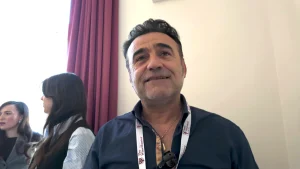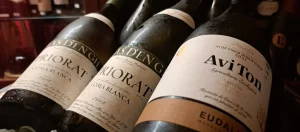
It’s not every day that you come across, in the world of wine, words like utopia, reality, loyalty and resilience. It happened to me recently in Bologna, at the Slow Wine Fair, at the stand of the Catalan friends of “L’Olivera”. As much as I can understand and love Spanish, it took me a while to grasp their project. On the table there was a range of wines, but from the words of Pau Moragas, the person I had the pleasure of speaking with, I understood that L’Olivera is something different.
I borrow from their website the definition that perfectly describes the manifesto of this company.
L’Olivera is a workers’ cooperative and a social initiative in rural and peri-urban areas. We cultivate vineyards and olive groves and produce organic wines and oils, incorporating people facing difficulties throughout the entire process, putting our abilities at the service of a shared project. We began this adventure in 1974 in Vallbona de les Monges, in the arid inland Catalonia, when a group of people, led by the Piarist father Josep Maria Segura, settled in the town with the idea of creating a community of life and work that, on the one hand, integrates people with difficulties, especially those in the most disadvantaged social situations and, on the other, proposes a productive economic outlet based on the values of the territory.
And again
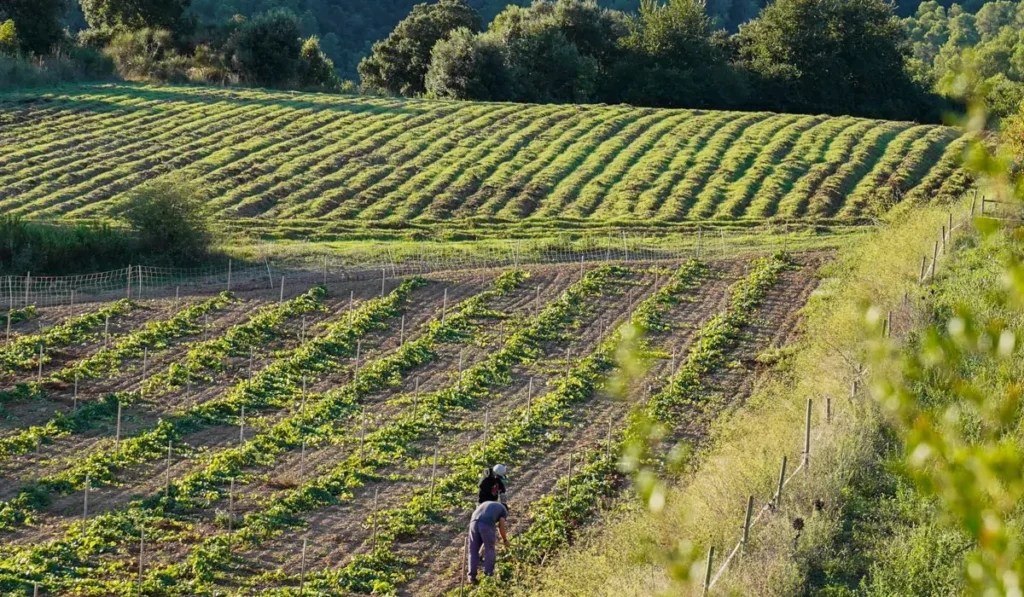
This alternative, socializing experience full of utopia sought forms of life and work that were humanizing, inclusive and, in a certain sense, dissenting from urban and industrial development. It was a collective project in a rural area, in line with other experiences that took place in various parts of Europe. What is now known as the Social and Solidarity Economy. The group’s economy was meant from the beginning to be agricultural — like that of the nearby villages — and cooperative — precisely because of the potential of this form of organization. The social dimension is at the center of the productive project, through a human-scale approach that puts people at the center. For this reason we maintain manual work on the vines and olive trees, label by hand and number the bottles one by one. We are interpreters of the territory and we work applying the principles of organic agriculture. Our challenge has always been to create products that come from the agricultural heritage and reflect their land and its people.
What also intrigued me is the fact that since 2010 L’Olivera has also settled in a natural park on the outskirts of Barcelona, and it is here that they produce the only wine of the city of Barcelona, again with a project of social agriculture that also generates opportunities for social inclusion for young people with special needs.
Talking with Pau I understood that at the base of this initiative there must be conviction and passion. After all, I believe that agriculture must also have a bit of passion for the land at its core. For some time now we have been hearing about urban gardens. I admit that when thinking about these initiatives I imagined zucchinis, salads and vegetables in general, but the idea of the concept of an urban vineyard had never crossed my mind.
So I discover the existence of the Urban Vineyard Association https://www.urbanvineyards.org//
, an association that promotes the rural, historical and landscape heritage represented by urban vineyards. A beautiful story. At this point I send a coded message to my friend Leonardo: what are we waiting for?
olivera.org