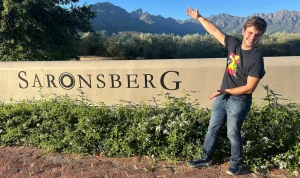
I share here on Wining.it my first South African experience as a young Italian winemaker, carried out at Saronsberg Cellar…
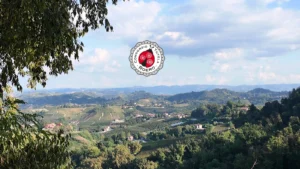
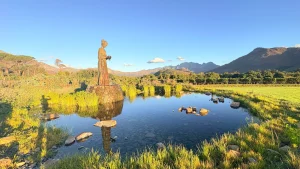
The first feeling I had when I arrived in South Africa was amazement. Not so much because of a single place, but because of the incredible variety of landscapes. It is a land that constantly changes its face: within just a few kilometers you can move from an almost forest-like panorama to a more mountainous one, all the way to the beach. It is a succession of scenarios that never stops surprising you.
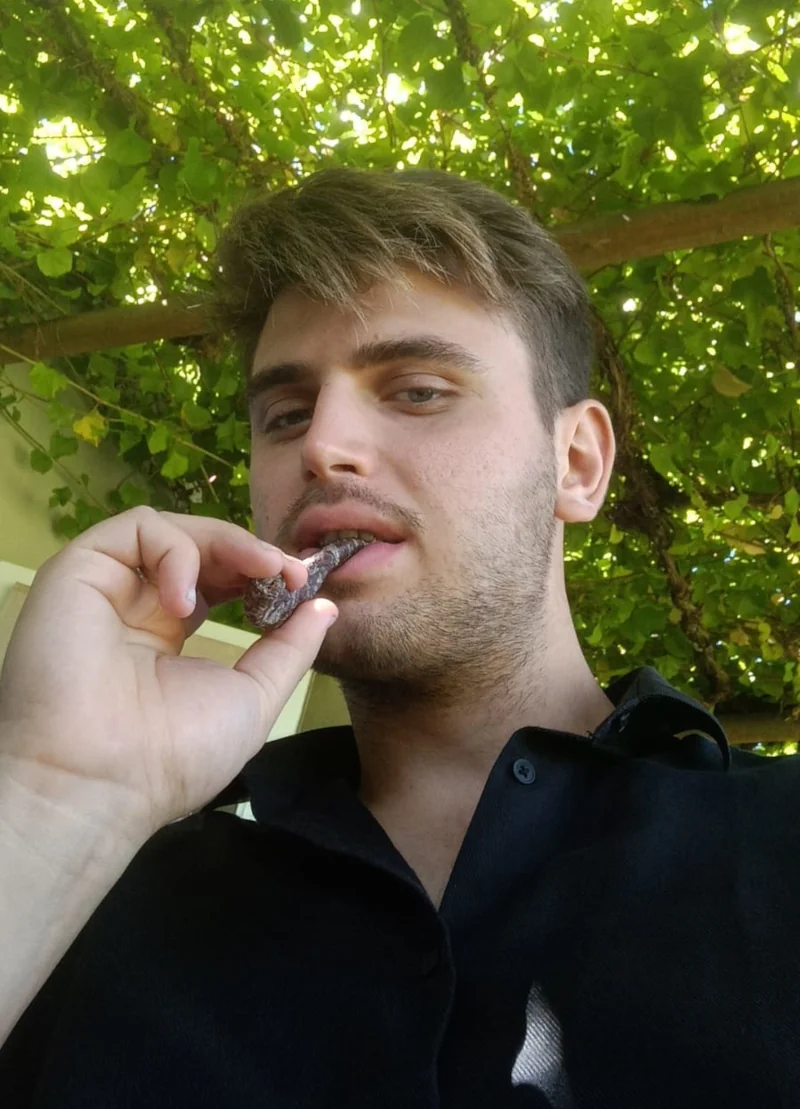 I think the moment when I truly realized I was on the other side of the world was not something solemn or particularly staged. It came in a very simple, almost everyday way: when I tasted antelope for the first time, when I tried the local dried meat, and especially when I started hearing people speak Afrikaans. In that moment I truly realized how far from home I was.
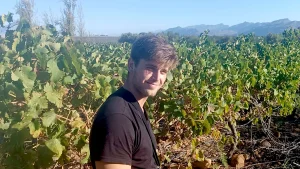
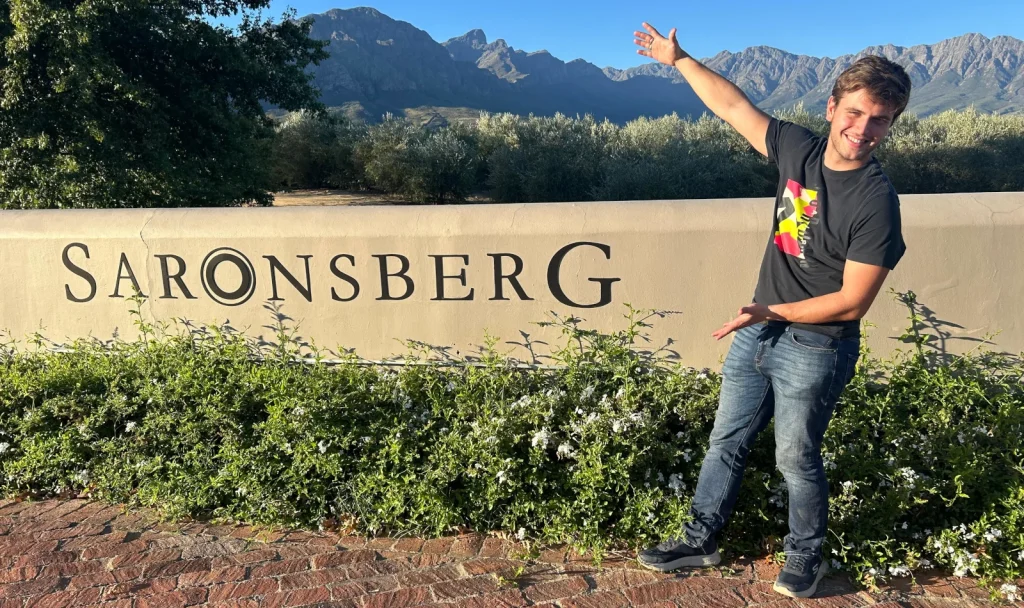
I came here to experience a harvest season at Saronsberg, a winery located in the Tulbagh Valley, one of the most fascinating wine regions of the Western Cape. From the very first days I understood that this experience would not be only technical, but also human.
One of the aspects that struck me immediately was the rhythm of life and work. We work a lot, as happens during every harvest, but at the same time I felt there was more space to actually live. On weekends, for example, people usually do not work. In some ways it feels like a more balanced style compared to what we are used to in Italy.
But perhaps the most interesting difference concerns the way relationships between people working in the winery are experienced. I found a great deal of attention toward employees: you are not simply someone performing a task, but part of a team. We all live together, we share the daily life of the harvest, and this creates a very strong sense of group.
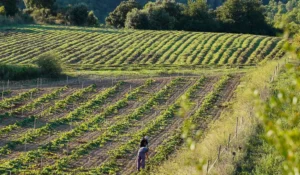
The wine landscape is also different from the European one. Here space dominates everything. The territory is less hilly compared to many Italian regions, and this allows your gaze to stretch across very wide vineyard expanses. In some places it almost feels like you cannot see the end of the rows.
The relationship between vineyard and nature is different as well. The climate is drier and irrigation is a very common practice. This inevitably influences the way vineyards are managed and the challenges faced during the season.
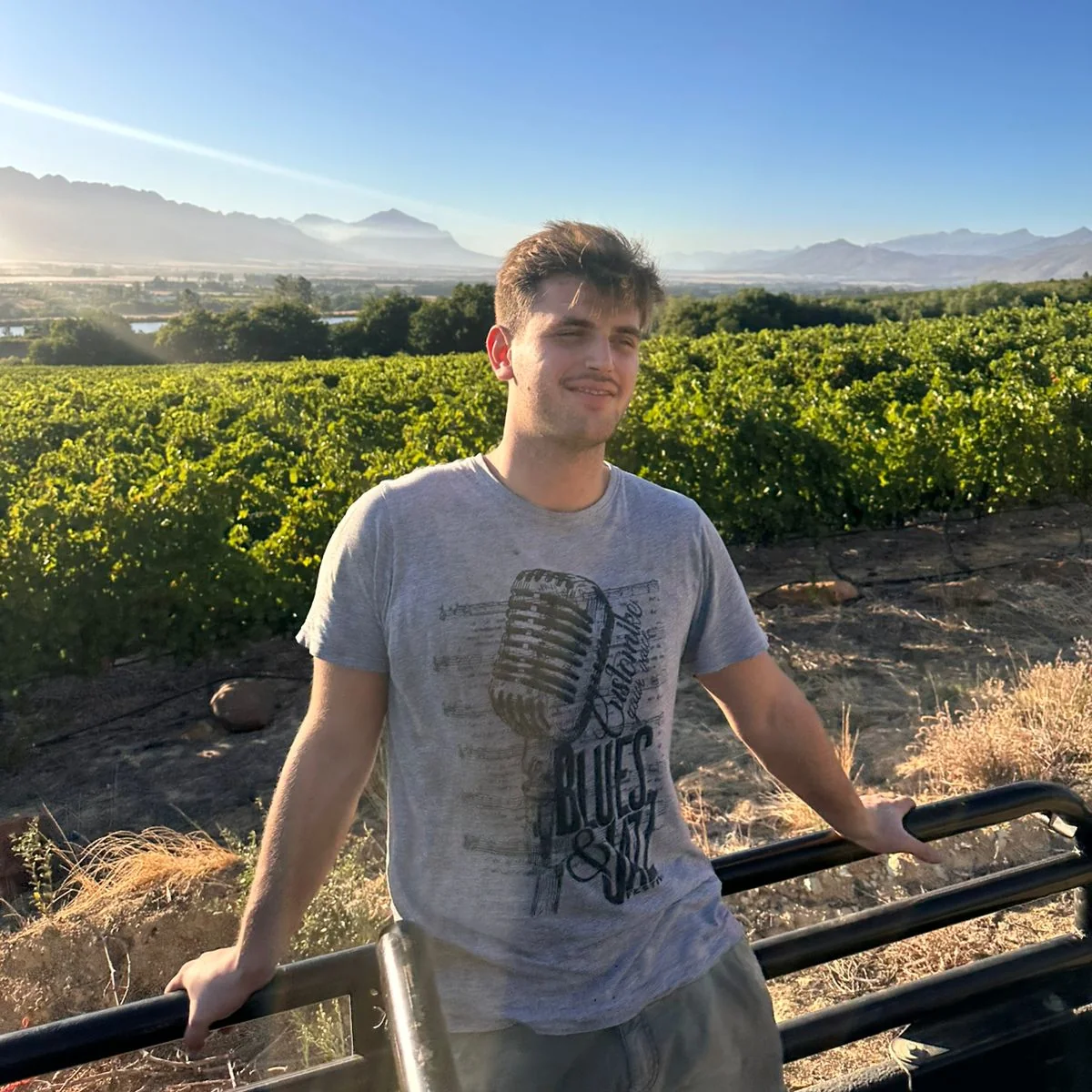
Harvest days start early. Very early.
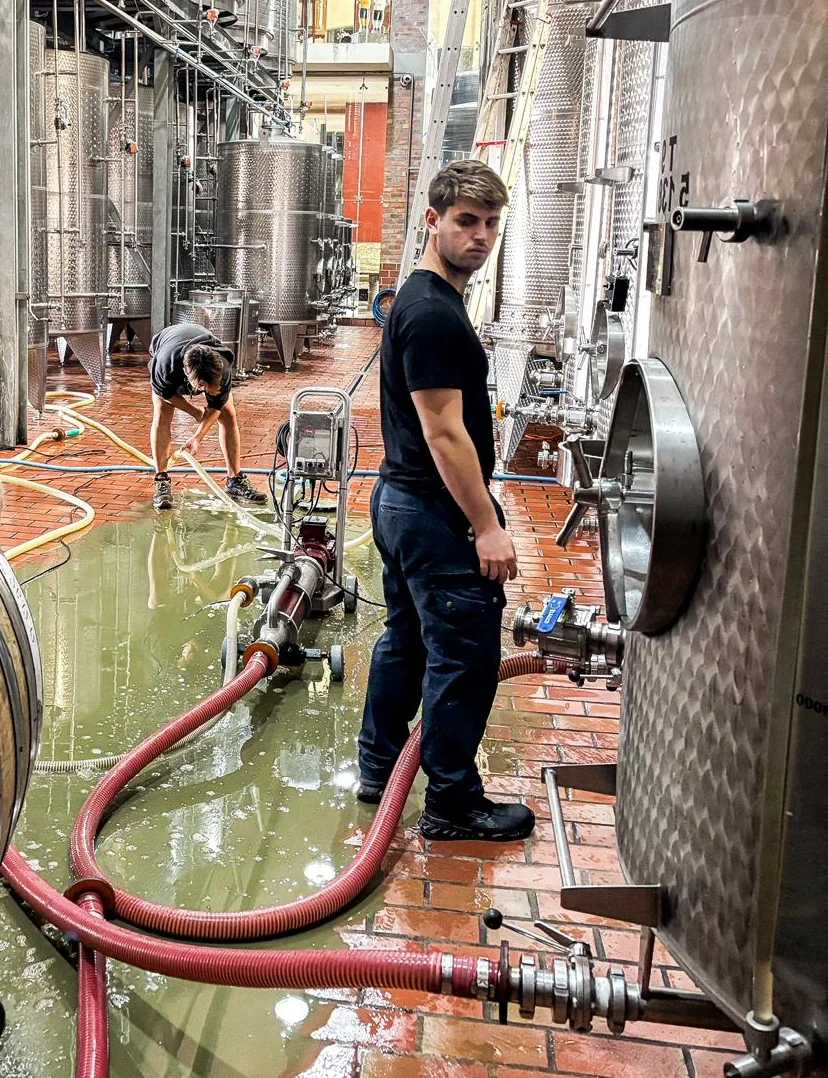
The alarm goes off at five in the morning. We arrive at the winery a few minutes before starting, have a coffee together, and then begin checking sugar levels and organizing the activities of the day. Work is guided by priorities: some operations must be done immediately, others find space during quieter moments.
The first task they assigned to me when I arrived was not particularly poetic: moving crates. In the end, it is a classic of harvest season everywhere in the world.
More than major technical revelations, this experience is teaching me many small details. There was no precise moment when I thought I had learned something completely new. It is rather a collection of different working methods, different attentions, and subtle nuances that enrich what I already knew.
From an oenological perspective, some differences do emerge. In some wineries I noticed a more hands-on approach and a fairly evident presence of oak. There is often a tendency to make wines rounder and softer, although of course it all depends greatly on the individual winery.
 Among the grape varieties I have worked with here, one in particular intrigued me: Pinotage. It is a symbolic variety of South Africa, and it was very interesting for me to work with it, also because I had never really had the chance to do so before.
Sauvignon Blanc also struck me for some clear differences compared to what I was used to. Here I saw very large, generous bunches, thanks also to the sun and irrigation. It was fascinating to observe how the same grape variety can express itself differently depending on the context.
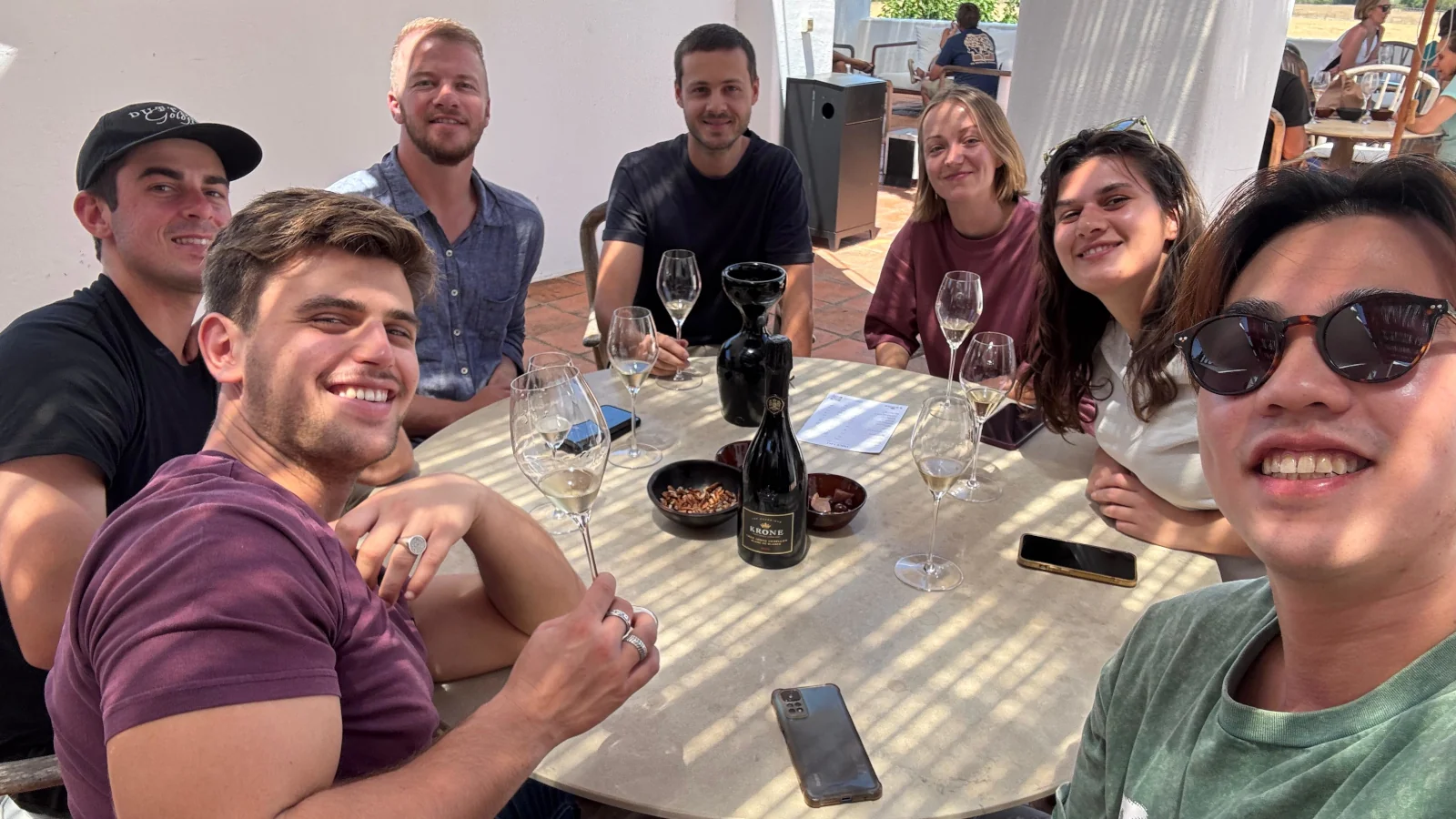
Life during harvest is not only about work. Living all together creates a very strong bond between people. And it is also through these moments that you come into contact with the local culture.
One thing that really struck me is people’s reaction when you try to say a few words in Afrikaans. They find it very funny, they smile, they almost get emotional. After all, it is something that also happens in Italy when a foreigner tries to speak our language.
If I had to summarize South Africa in three words, I would first say breathtaking, because of the landscapes. Then braai, the South African barbecue, which is a real institution here. And finally stars, because the night sky is something incredible: a sky full of stars like I had never seen before.
When I think about what I will take home from this experience, I do not think only about technical skills. There will certainly be friendships that will remain, scattered around the world. And then the memory of my first real harvest working with grapes, an important step for anyone who wants to work in wine.
If a wine lover asked me why it is worth coming to South Africa, the answer would be simple. Because it is a different reality, and because wine is only part of the story. Here wine regions coexist with orchards, cider production, and beer. It is a rich, dynamic, surprising territory.
And sometimes the journey is worth it simply for what you see. For those landscapes that, every day, continue to remind me how vast and full of discoveries the world of wine can be