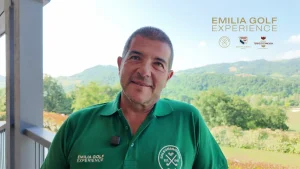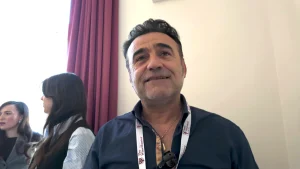
From Vinòforum 2026, Arturo Escudero, Head of Communication and Online Marketing at Turespaña, explains Spain’s vision: from Aragón’s Garnacha to the wines of Gran Canaria, and a promotional model that aims to turn wine into a gateway to the entire territory.
No longer just wineries to visit and wines to taste. In the vision Spain is trying to build, wine tourism is becoming a network made up of territories, hospitality, landscape, gastronomy and experiences. This was probably the most interesting aspect to emerge from Spain’s presence at Vinòforum 2026, where Turespaña took part for the second consecutive year, bringing to Rome a representation of some of the country’s many different wine identities.
“We believe it is very important to give visibility to our regions”, explains Arturo Escudero, Head of Communication and Online Marketing at the Spanish Tourist Office. “Spain is divided into 17 autonomous communities, and we want to give a voice to the territories themselves, which come here to present a complete tourism offer, including wine tourism.”
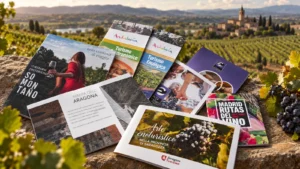
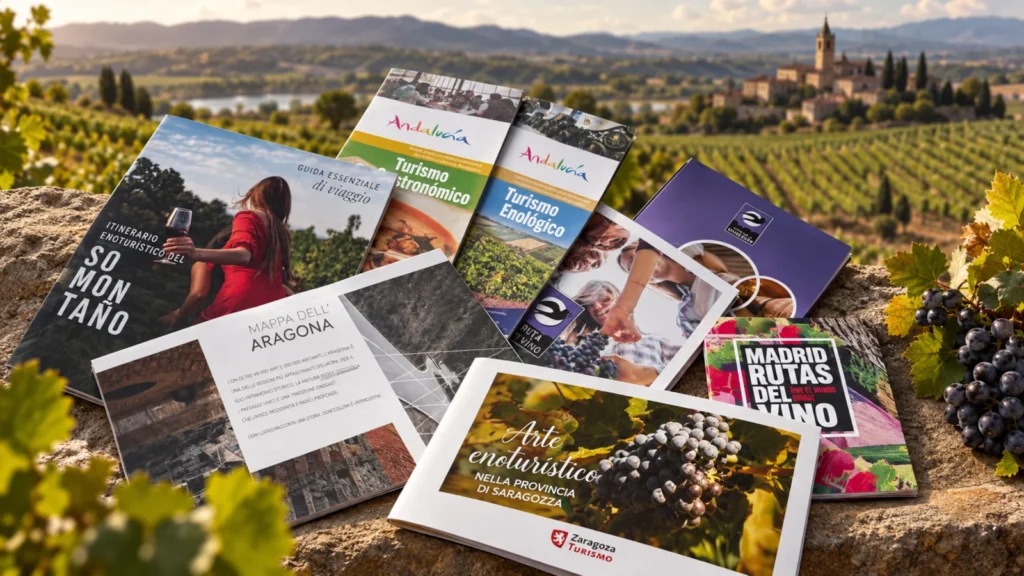
Very different destinations were represented at Vinòforum. Andalusia presented four wine routes: Condado de Huelva, Marco de Jerez, Ronda y Málaga, and Montilla-Moriles. Madrid brought its own regional wine route, while Aragón presented three itineraries, with Garnacha as one of its key elements of identity.
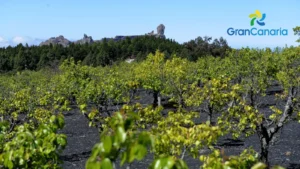
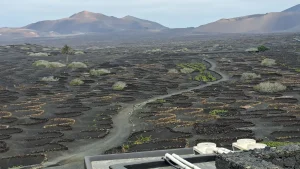
Then there is Gran Canaria. Probably the presence most likely to surprise those who still associate the Canary Islands almost exclusively with beaches, climate and seaside tourism. Here too, wine becomes a tool for discovering a lesser-known side of the islands, through local grape varieties and wines that are still relatively unfamiliar to the Italian public.
It is precisely from this diversity that the Spanish model begins. The question is inevitable: to what extent can wine tourism really be called wine tourism if it is limited to a winery visit and a tasting? For Arturo, the answer is clear: “When we talk about wine tourism, we are necessarily talking about experiential tourism.”
In Spain, much of the work carried out in recent years has focused on creating a more integrated tourism offer through a network of wine routes developed with the support of institutions and organisations operating within the territories. The result is a platform that today brings together 38 wine tourism routes. But the most interesting point is not so much the number as what these itineraries are designed to include. Visitors choosing a destination can find information about the area’s wine identity, but also about its broader tourism offer. Alongside classic guided tastings and winery visits, there may be dinners among the vineyards, distinctive experiences and even hot-air balloon flights offering a view of the vine-covered landscape from above.
Then there is accommodation. Hotels among the vineyards, immersive stays, vinotherapy experiences, itineraries combining wine and wellness. All of these help turn a winery visit into something broader: a stay in the territory. This is where wine tourism stops being an activity and begins to become a destination.
And the idea of destination is probably central to Spain’s international challenge as well. The domestic market continues to play an important role, but Arturo Escudero describes steady growth in visitors from the United States and northern Europe, particularly Germany, France and the Netherlands.
Italian travellers are also beginning to show greater curiosity. The relationship with Italy, however, is a particular one. “For us it is a little more difficult when we talk about wine tourism, because in some ways we are competitors, but we also have a major advantage: very similar habits and a food-and-wine culture that is very close to ours.” A proximity that can turn competition into curiosity.
Italian wine lovers are probably familiar with Rioja, Ribera del Duero, Catalonia and Cava. Much less so with other production areas and, above all, with what these territories can offer beyond wine. And this is precisely where Turespaña identifies one of the main challenges. Not infrastructure.
According to Arturo, even less central areas generally have good transport options. The real problem is different: Spain is still not spontaneously associated by the wider international public with a high-quality wine tourism offer. “This is the aspect we need to work on most: making people aware of areas that produce wines of outstanding quality but also have a very interesting tourism offer.”
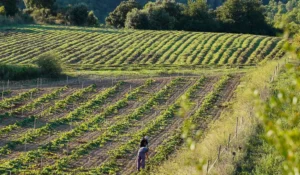
One example is Somontano. At the foot of the Aragonese Pyrenees, close to the French border, wine can become the thread running through a journey that also includes landscape, nature and active tourism. Not a destination where you spend a few hours visiting a winery, but a place where an entire holiday can be built around the territory. This is perhaps the most interesting cultural shift.
The winery remains important, but it is no longer necessarily the final destination of the experience. It becomes one of several possible gateways into a far more complex system. Wine leads to the territory. The territory leads to cuisine, landscape, hospitality, culture and outdoor activities. And this logic is particularly effective for lesser-known areas, where a denomination or grape variety can become a way of generating curiosity about places that might otherwise never appear on the routes of traditional tourism.
At the end of the interview, we ask Arturo to condense everything into a single invitation. His answer does not begin with a denomination, a wine or a route. It begins with people.
“In any of these areas, the first thing you will find is the warmth of the Spanish people and their kindness. Beyond the quality of the wines and the beauty of the landscapes, I believe this is one of the things that truly makes the difference when we travel.”
Perhaps this is also a useful lesson for anyone working in wine tourism.
You can build itineraries, platforms, tastings and hotels among the vineyards.
But in the end, a journey becomes memorable above all when a territory stops being simply a destination and starts welcoming those who arrive.