“Did you already know you were making one of the world’s greatest red wines?”
“Yes. That’s exactly the idea I started with.”
(From “Manteniamoci giovani, vita e vino di Emidio Pepe”)
Everything about Emidio Pepe is contained in that answer. The quiet confidence of someone who never needed to raise his voice to defend his convictions; the rural pride of a man accustomed to measuring himself against the land; and the almost disarming clarity of someone who had seen a path long before there were signposts—or fellow travelers—to follow it.
It was not arrogance. It was faith.
Faith in Montepulciano d’Abruzzo, in Trebbiano, in the vineyards of Torano Nuovo, and in a land that many considered too remote to produce wines capable of standing alongside the world’s greatest. Above all, it was faith in time—not the hurried time of markets and trends, but the slow, silent rhythm of nature, the seasons, and bottles left to rest in darkness until the day they were finally ready to reveal who they truly were.
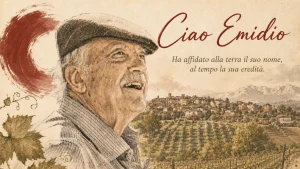
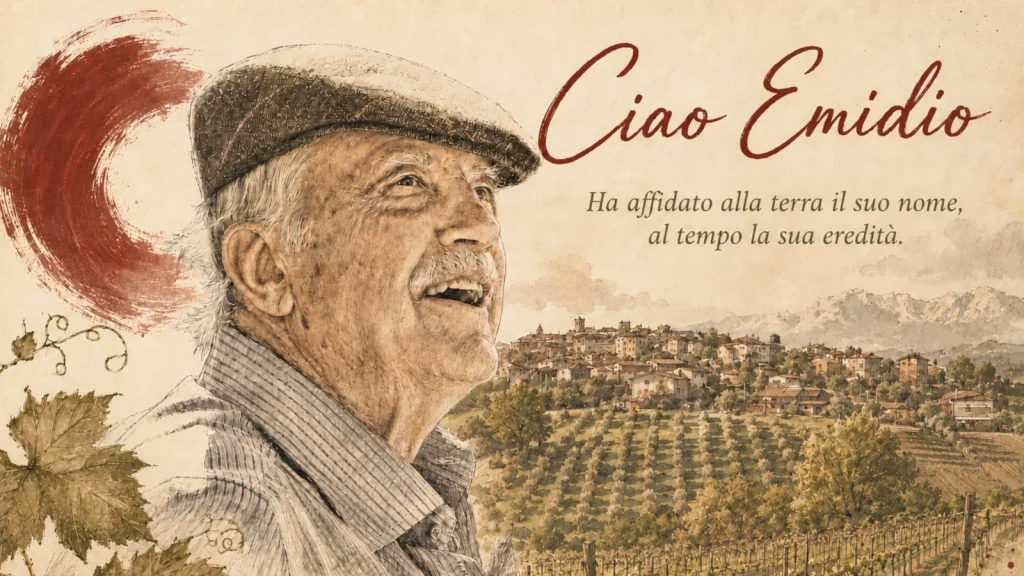
Emidio Pepe passed away on July 28, 2026, at the age of 94, after spending more than sixty years safeguarding his vision of wine. With him disappears not only one of the great patriarchs of Italian wine, but also the man who transformed the destiny of Abruzzo’s wines without ever leaving his home, his vineyards, or the gestures he had learned by watching his father and grandfather.
The story of wine at Casa Pepe had begun long before him. His grandfather had been making wine since 1899. But it was Emidio who, in 1964, transformed a family tradition into a project destined to cross borders and generations. He chose to bottle his own wines and place his name on the label at a time when Montepulciano and Trebbiano d’Abruzzo had not yet earned the prestige they enjoy today. Long before many others, he understood that these grape varieties possessed not only strength and identity, but also an extraordinary ability to evolve over time.
He did not prove it with grand speeches.
He proved it by keeping the bottles.
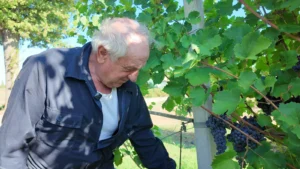
He set them aside one after another, vintage after vintage, as though preserving the pages of a story that no one had yet learned to read. While the world demanded wines ready for immediate consumption, he waited. While modernity promised to accelerate every process, he defended patience. While many searched elsewhere for models to imitate, Emidio continued looking at what was right in front of him: the traditional Abruzzese pergola, the color of the soil, the wind crossing the vineyards, the texture of the grape skins, and the almost imperceptible voice of the seasons.
Time proved him right.
The bottles preserved in the cellar at Torano Nuovo survived the decades with a vitality capable of astonishing tasters, critics, and wine lovers around the world. They were no longer simply wines from Abruzzo. They became tangible proof that the region deserved a place among the world’s great wine territories without sacrificing anything of its own identity.
Emidio Pepe did not try to make Montepulciano resemble other great red wines. Instead, he made it more profoundly Montepulciano. Nor did he attempt to ennoble Trebbiano by turning it into something it was not. He simply granted it the time, care, and freedom it needed to reveal its true character.
Perhaps this was his greatest revolution: demonstrating that a territory does not need to disguise itself in order to be recognized. It simply needs someone willing to believe in it.
His way of working was born from this absolute trust. Hand harvesting, crushing white grapes with his feet, manually destemming Montepulciano, spontaneous fermentations, and vitrified concrete tanks were never gestures designed to create a compelling narrative. They were neither folklore nor nostalgia. They were simply the natural consequence of one conviction: wine should remain alive, and every human intervention should accompany it—never dominate it.
Years later, these practices would be described using new words: sustainability, biodiversity, craftsmanship, natural farming, regeneration. Emidio had embraced them long before they became marketing concepts or appeared in trade fair manifestos. He never needed to belong to a movement because he already belonged to his land.
To define him merely as a pioneer of natural wine would therefore be accurate—but insufficient. Above all, Emidio Pepe was a guardian: one of those rare individuals capable of innovating quietly, simply by remaining faithful to what they believed was right while everything around them seemed to move in the opposite direction.
His greatness did not lie in rejecting the future.
Quite the opposite.
He understood it long before everyone else. He sensed that the day would come when respecting the land would no longer be regarded as an old-fashioned habit, but as a necessity; when identity would become more valuable than standardization; when wine would once again need to tell the story of the place from which it came.
Emidio never chased the future.
He waited for it in his cellar.
And yet portraying him as a solitary hero would betray an essential part of his story. By his side from the very beginning was Rosa, his partner in life and work, the true heart of the Pepe family. Then came Sofia and Daniela. Sofia learned by observing her father from an early age, gradually earning his trust and inheriting his knowledge of vineyard and cellar. Daniela guided the company’s growth with consistency and determination, transforming her father’s vision into a project capable of embracing the present without losing its identity.
Today that same story lives on through his granddaughters, Chiara and Elisa. Chiara continues the work in the vineyards and winery, weaving together the lessons learned within the family with studies and experiences gained beyond Abruzzo. Elisa welcomes visitors to Casa Pepe while caring for the agriturismo, the restaurant, the vegetable gardens, and the living agricultural ecosystem where every element remains part of a greater design.
Emidio therefore leaves behind something far more enduring than a celebrated winery.
He leaves a family capable of moving forward without merely repeating the past.
A family of women who embraced his vision not to preserve it unchanged, but to let it breathe and accompany it into a new era.
Perhaps this is the most authentic way to honor his memory: not by turning Emidio Pepe into a static figure trapped in nostalgia, but by recognizing that his story continues to move through the vineyards, the daily choices, and the hands of his daughters and granddaughters.
After all, at Casa Pepe tradition has never meant the sterile reproduction of the past. It has always been a living inheritance—one that demands responsibility, courage, and the ability to change without forgetting.
The passing of a man like Emidio leaves behind a particular kind of silence.
A silence that belongs to vineyards during the hottest hours of the day, when work pauses for a moment and everything seems suspended. Yet within that silence his words, his gestures, his determination, and his unique way of looking at wine—as though he already knew where it would one day arrive—continue to exist.
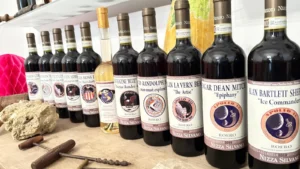
The bottles will remain.
Thousands of fragments of time preserved in darkness, each containing a harvest, a season, and a piece of his life.
They will be opened ten, twenty, or thirty years from now, and they will continue proving what he believed long before anyone else could be certain.
One day, someone will uncork an old vintage of Montepulciano d’Abruzzo. The wine will slowly fill the glass, still alive, carrying aromas that have taken decades to find their true form. Around the table, perhaps, the conversation will fall silent for a moment.
In that moment, Emidio will still be there.
He will be in the wine’s strength and in its fragility; in the soil still clinging to the roots; in the patience required to understand it. He will be in the courage of a man who, in 1964, chose to believe in what others were not yet able to see. He will be in that simple “Yes,” spoken without hesitation, as though the future had already been written inside the grape.
Great winegrowers die like all human beings.
But they do not disappear in the same way.
They remain in the landscapes they protected, in the people to whom they entrusted their knowledge, and in the wines they had the courage to let live.
That is how Emidio Pepe will remain: within the time he chose as his lifelong companion—and which, from this day forward, becomes the most faithful guardian of his memory.