There is a phrase that, for those born between Florence and its surrounding hills, is not merely a song but something closer to a call of the heart: “La porti un bacione a Firenze” (“Bring a big kiss to Florence”). Odoardo Spadaro wrote it in 1937 thinking of the nostalgia felt by those far from home, yet even today those words seem to describe the almost visceral bond between Florence and its land. Because Florence does not end with the stones of its historic center or the reflections on the Arno: it continues just beyond the city walls, across the hills that embrace it, among rows of Sangiovese vines, family-run wineries, and white country roads scented with cypress trees and freshly made wine.
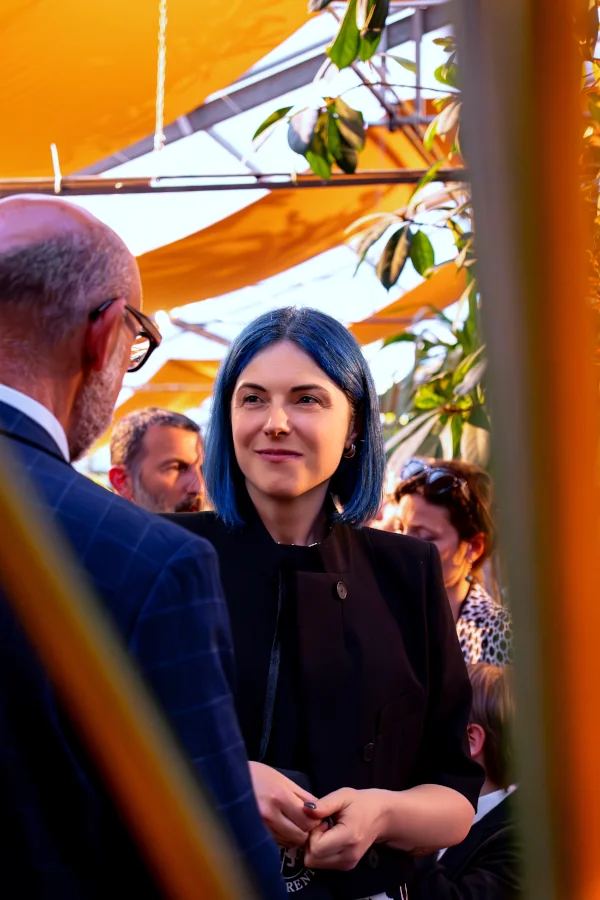
And it is precisely there that, over the past few months, the Consorzio Chianti Colli Fiorentini has chosen to bring the spotlight back through the series of events entitled “Un Giovedì da Leoni” (“A Thursday Among Lions”): traveling winery gatherings designed to tell the story not only of a wine, but above all of an identity. A journey that culminated on May 7th at the Serre Torrigiani, in the green heart of Florence, with a free final celebration — subject to availability — bringing together producers, enthusiasts, and curious visitors alike. A collective celebration of Florence and the wines of its hills, born from the union between Chianti Lovers Week and the Consortium’s own format.
Just below the city walls, the relationship between Florence and its wine-growing landscape feels almost ancestral. For centuries the hills have protected the city and, in the same way, they continue to safeguard an agricultural heritage that still defines the character of the territory today. Chianti Colli Fiorentini is perhaps one of the most authentic expressions of this connection: an honest, immediate, convivial wine capable of telling the story of Tuscan daily life without the need for embellishment.
The Consorzio Chianti Colli Fiorentini was founded in 1994 with the aim of protecting and promoting both the denomination and Vin Santo del Chianti Colli Fiorentini, strengthening the historic bond between wine and the city of Florence. Its symbol is the Marzocco, the famous lion of Palazzo Vecchio holding the Florentine lily, which in the Consortium’s logo symbolically grasps a wine glass: an image that instantly conveys the deep connection between Florence, its hills, and the territory’s winemaking tradition.
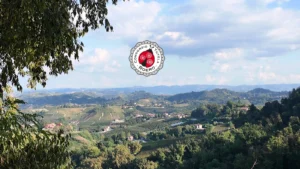
The Chianti Colli Fiorentini DOCG, officially recognized and delimited as early as 1932, stretches across the hills surrounding Florence from southwest to southeast and includes 18 municipalities historically devoted to viticulture, from Impruneta to Fiesole, from Scandicci to San Casciano Val di Pesa, reaching Pontassieve, Pelago, and Reggello. A diverse landscape made up of hills ranging from 150 to 400 meters above sea level, where Sangiovese finds elegant, terroir-driven, and deeply recognizable expressions.
During the winery Thursdays, I had the opportunity to attend some of the evenings in the program, visiting estates such as Tenuta San Vito and Azienda Agricola Malenchini, meeting Consortium members, listening to their stories, and tasting wines that reflected the image of a vibrant, welcoming territory deeply connected to its own identity. What emerges is the portrait of a young, dynamic Consortium with a strong desire to grow and make itself known. And it was precisely through the openness of these traveling events that this spirit became clear: the desire to create connections, to move beyond the more closed dynamics of the sector, and to bring wine back among people.
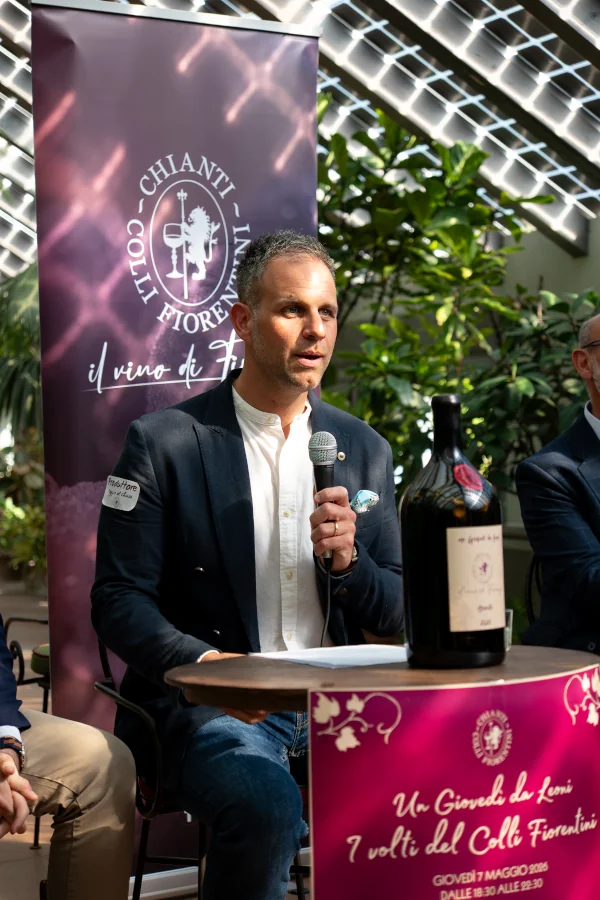 To better understand the vision and work the Consortium is carrying forward today, I asked a few questions to Andrea Corti, president of the Consorzio Chianti Colli Fiorentini and one of the faces of the new generation of producers in the area.
Having Florence so close is inevitably a great opportunity. But how do you work to ensure that Chianti Colli Fiorentini is increasingly perceived as a denomination with a clearly defined personality?
First of all through our claim: “Chianti Colli Fiorentini – The Wine of Florence.” We work extensively on our relationship with the city, collaborating with Florentine restaurants, wine bars, and shops, but also by creating events both throughout the territory and in the heart of Florence itself, seeking synergies with the city’s historic institutions.
Recently, for example, we worked alongside the Historic Central Market of Florence as the official wine partner for their events. In the past there have been other collaborations, and there will certainly be more in the future: every time we have the opportunity, we try to bring the denomination into Florence, which offers extraordinary settings and locations to tell the story of these wines.
Then there is the everyday work of the wineries themselves, built on direct communication with tourists and wine lovers. The goal is to explain the uniqueness of this territory and its deep bond with Florence, enhancing both the historic significance and the quality-driven vocation of these lands.
In recent years consumers seem to favor more territorial, gastronomic, and less “constructed” wines. Can the apparent stylistic simplicity of Colli Fiorentini become its real strength?
Absolutely. Thanks to its elegant and convivial nature, Chianti Colli Fiorentini perfectly embodies this return to more authentic, terroir-driven, food-friendly wines.
We are fortunate to rely on a varietal heritage that includes grapes too often considered secondary or merely blending varieties, but which actually contribute decisively to the personality of our wines. I’m thinking, for example, of Canaiolo, which is present in many Colli Fiorentini blends: a grape that helps preserve freshness and drinkability even in warmer vintages, lightening the body of the wine and making it incredibly contemporary.
The strength of Colli Fiorentini lies precisely here: in its ability to offer wines with a strong identity that are also approachable, bringing wine back to its most authentic dimension — the table, sharing, and conviviality. A wine meant to accompany good food and conversation, without the need for excessive technicalities or self-reference.
“Un Giovedì da Leoni” presented a Consortium that feels open, young, and deeply connected to the territory. How important is it today for a medium-small denomination to move beyond traditional communication and build a direct relationship with the public?
It is one of the aspects we are investing in the most. With the “Un Giovedì da Leoni” format, we want to bring people inside the wineries and allow them to experience the places where wine is truly born. Every month we organize an event at a different estate in order to showcase the nuances of the territory and the various production philosophies.
Even for the denomination’s major event at the Serre Torrigiani during Chianti Lovers Week, we chose a different approach from the traditional tasting counter. We wanted to eliminate the distance between producer and consumer: wines were served by sommeliers at tables divided by style, while producers experienced the event alongside the public, recognizable simply by a badge and ready to answer questions and curiosities.
Today, in an era dominated by virtual experiences and growing social isolation, we feel an almost physical need to return to human relationships, community, and togetherness. And this is precisely where Chianti Colli Fiorentini finds its natural role.
Ours is not a wine for collecting or solitary contemplation: it has always been a wine of gathering and connection. A wine born for the table, to accompany shared moments and celebrate the pleasure of conviviality. In a rapidly changing market, our answer is humanity.
The wineries of Colli Fiorentini enjoy the privilege of being just minutes away from one of the most visited cities in the world. How much can wine tourism still grow in this area, and what is still missing to transform these wineries into a true experiential destination connected to Florence and its hills?
The wineries of Colli Fiorentini have an almost existential relationship with Florence. Over the centuries, this connection has helped create an incredibly strong identity between the city and its countryside, and today it represents one of the territory’s greatest strengths.
Wine tourism still has enormous room for growth, both in numbers and in the quality of the experiences offered. Some wineries have been working on hospitality for years, while others are only now investing in visitor-focused activities.
Personally, beyond increasing visitor numbers, I would love to see growth in the quality and care of services: more authentic, personal, and direct experiences, but also increasingly consistent standards in hospitality and tastings.
To help visitors explore the territory, we created an interactive map of the Consortium’s wineries connected to Google Maps, allowing people to move easily from one estate to another according to location. We will also distribute QR codes and informational materials in hotels, hospitality structures, and tourist centers across our municipalities, making the experience even more accessible and immediate.
Andrea, you represent a new generation of Tuscan producers: in your opinion, what is the biggest mistake the Italian wine world still makes when trying to communicate, especially with younger consumers?
I believe one of the most common mistakes made by the Italian wine world is trying to speak to young people as if they were something mysterious or incomprehensible. In reality, they are simply curious people exploring new tastes, experiences, and products — sometimes following trends, other times simply looking for something different.
The risk, however, is that wine tries to chase this audience by completely losing its identity. It’s a bit like seeing someone desperately trying to dress like a twenty-year-old: often the result feels unconvincing.
Wine communication certainly needs to evolve, becoming more contemporary and simplifying language, terminology, and even packaging, but without losing authenticity. We must remain genuine, human, and credible.
Completely overturning the image of wine just to appeal to younger audiences risks creating even more confusion. We are not producing energy drinks, but wine — a product that carries centuries of history, culture, and identity. And that, in my opinion, is precisely what we must continue to tell.
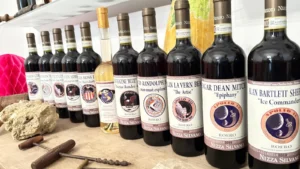
 After listening to the producers, experiencing the Consortium’s events, and tasting the wines, all of this also takes shape in the glass. Colli Fiorentini expresses itself through versatile, direct, terroir-driven reds: bright ruby colors, floral and spicy aromas, tannins that are present but never aggressive, great drinkability, and a natural affinity for the table. Wines that do not seek special effects, but rather the authentic pleasure of sharing.
And it is difficult to separate all of this from the surrounding landscape. As in Spadaro’s song, these hills speak both to those who leave and those who return. Because there are wines you simply taste, and wines that somehow bring you home.
And as the Serre Torrigiani filled with people, toasts, and Florentine accents, it almost seemed possible to hear once again that voice from 1937 crossing through time: “La porti un bacione a Firenze.” Only this time, that kiss was not traveling aboard a train, but inside every glass raised toward the hills that have always safeguarded the truest soul of the city.