I still remember the summer of 2010, when I told my AIS wine instructor, Leonardo Taddei, that I would soon be leaving my beloved Lucca for faraway Australia. Whenever, as a young girl, I shut myself away in my bedroom to daydream, scribbling down lists of exotic places I wanted to visit, Australia would invariably end up at the very bottom of the page. “Too far away,” I would think.
An enthusiastic Leonardo exclaimed, “Wow, Australia! Home of Penfolds Grange and great Shiraz wines.” Looking back, I realise just how reductive, and ultimately misleading, that simple remark was. Much like my decision to pack nothing but summer clothes and flip-flops: once I arrived in Sydney, it didn’t take long to realise that a few warmer layers would have been a very good idea.
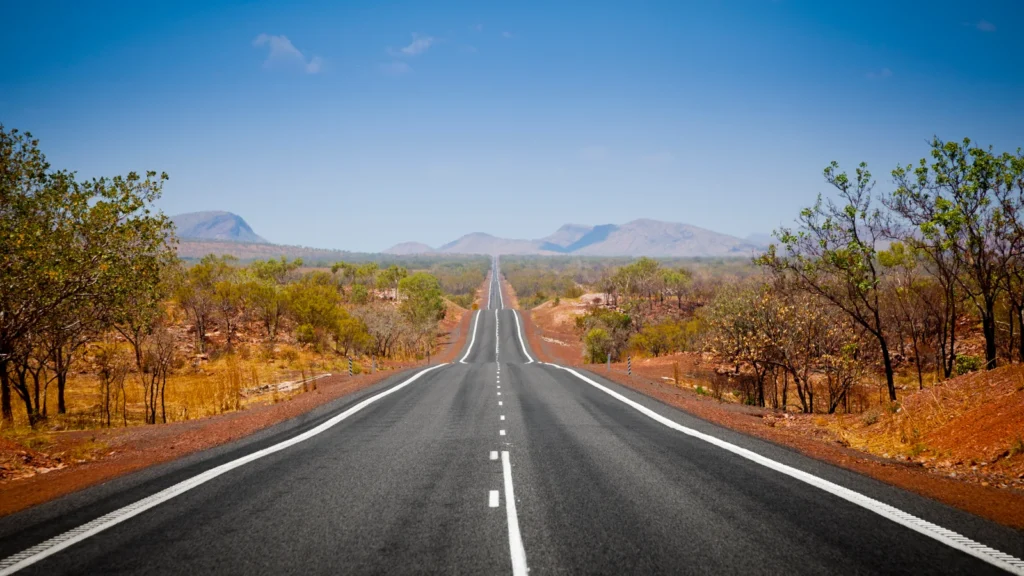
Australia, after all, is not just a land perpetually scorched by the sun, where clouds of red dust rise from the vast desert wilderness of the Outback. Nor is it simply kangaroos, Crocodile Dundee and surfers living out of their Kombi Vans (Volkswagen Type 2s), forever chasing the perfect wave. Yes, of course, we have Robert Irwin, son of the legendary conservationist Steve Irwin, the “Crocodile Hunter”. We also have the Rip Curl Pro at Bells Beach, one of the most coveted stops on the World Surf League. And the Outback, covering approximately 5.6 million square kilometres, occupies almost 70% of the continent, yet is home to only around 607,000 people. The rest of Australia’s nearly 28 million inhabitants (yes, you read that correctly: our “little” Italian peninsula has a much larger population) live along the coastal regions and across the country’s islands, the largest of which is Tasmania.
Australia is also a land of skiers and snow-covered peaks (the highest, Mount Kosciuszko, reaches 2,228 metres), of changing seasons and days that can bring all four seasons at once. In Melbourne, it’s not unusual to leave the house carrying an umbrella and wearing a windbreaker, even when the sun is shining. There are icy winds blowing mercilessly from Antarctica, much to the delight of the penguins on Phillip Island, in the state of Victoria, and the famous Neil the Seal, a young southern elephant seal who periodically returns to visit the residents of Tasmania’s southeastern coast, taking over the streets as though he were the town sheriff.
With such a remarkable diversity of climates and elevations, it should come as no surprise that Australia produces far more than the full-bodied, fruit-driven Shiraz wines that were all the rage in London decades ago (and that still have their devoted nostalgic followers).
It is also worth remembering that the first vines arrived in Australia only in the late eighteenth century, brought by British settlers who, confronted with an unfamiliar and challenging climate, initially opted for the safest approach to winemaking: fortification. Australia still produces outstanding fortified wines from Muscat, Shiraz, Touriga Nacional and Palomino grapes, particularly around Rutherglen (Victoria) and the Barossa Valley (South Australia), but the focus has shifted decisively towards dry wines.
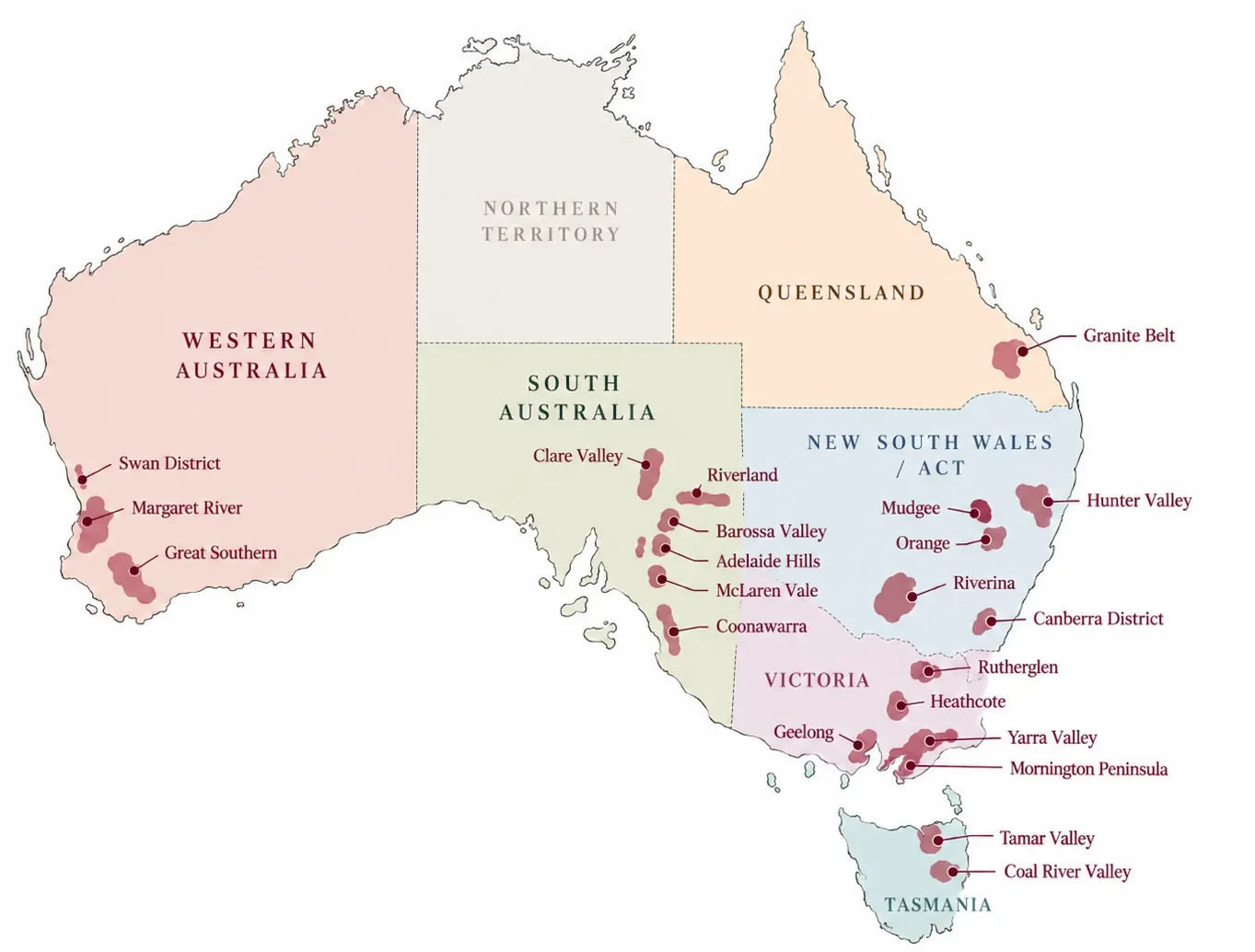
Successive waves of immigration, particularly those following the Second World War, helped enrich and further diversify the country’s wine landscape. During my time working at Il Globo, Australia’s Italian-language newspaper published twice weekly, I had the opportunity to interview many immigrants, some of them over a hundred years old, who could still vividly recall their long voyage by sea, filled with uncertainty and fear, carrying little more than a suitcase packed with hopes, memories and, occasionally, bottles of wine and vine cuttings. Regions such as the King Valley (Victoria), the Riverina (New South Wales) and the Riverland (South Australia) are largely shaped by families whose roots stretch back to different parts of Italy. Many of them, including the Calabria family in the Riverina, have helped write the history of modern Australian wine, playing an important role in promoting it throughout Europe and the rest of the world.
Today, however, some of Australia’s most beloved wines, which have also developed passionate followings in markets across Asia, North America, the United Kingdom and parts of Europe, are made from Chardonnay and Pinot Noir. Tom Carson, one of Victoria’s leading winemakers, who heads Yabby Lake on the Mornington Peninsula and Serrat in the Yarra Valley, has an encyclopaedic knowledge of these two Burgundian varieties, acquired without ever losing sight of Australia’s distinctive terroir. Tom explains that the dominance of high-alcohol and fortified wines began to wane in the late 1960s, making way for fresher, more approachable styles, marked by pronounced minerality and aromatic and flavour complexity, enhanced by the use of French rather than American oak. Around that time, ambitious vignerons at Mount Mary, Yarra Yering and Wantirna Estate began moving into Victoria’s cooler regions, particularly the Yarra Valley, experimenting with Chardonnay and Pinot Noir, as well as Cabernet Sauvignon. Initially, these niche wines attracted little attention, but over time they began to capture the imagination of a growing number of outsiders.
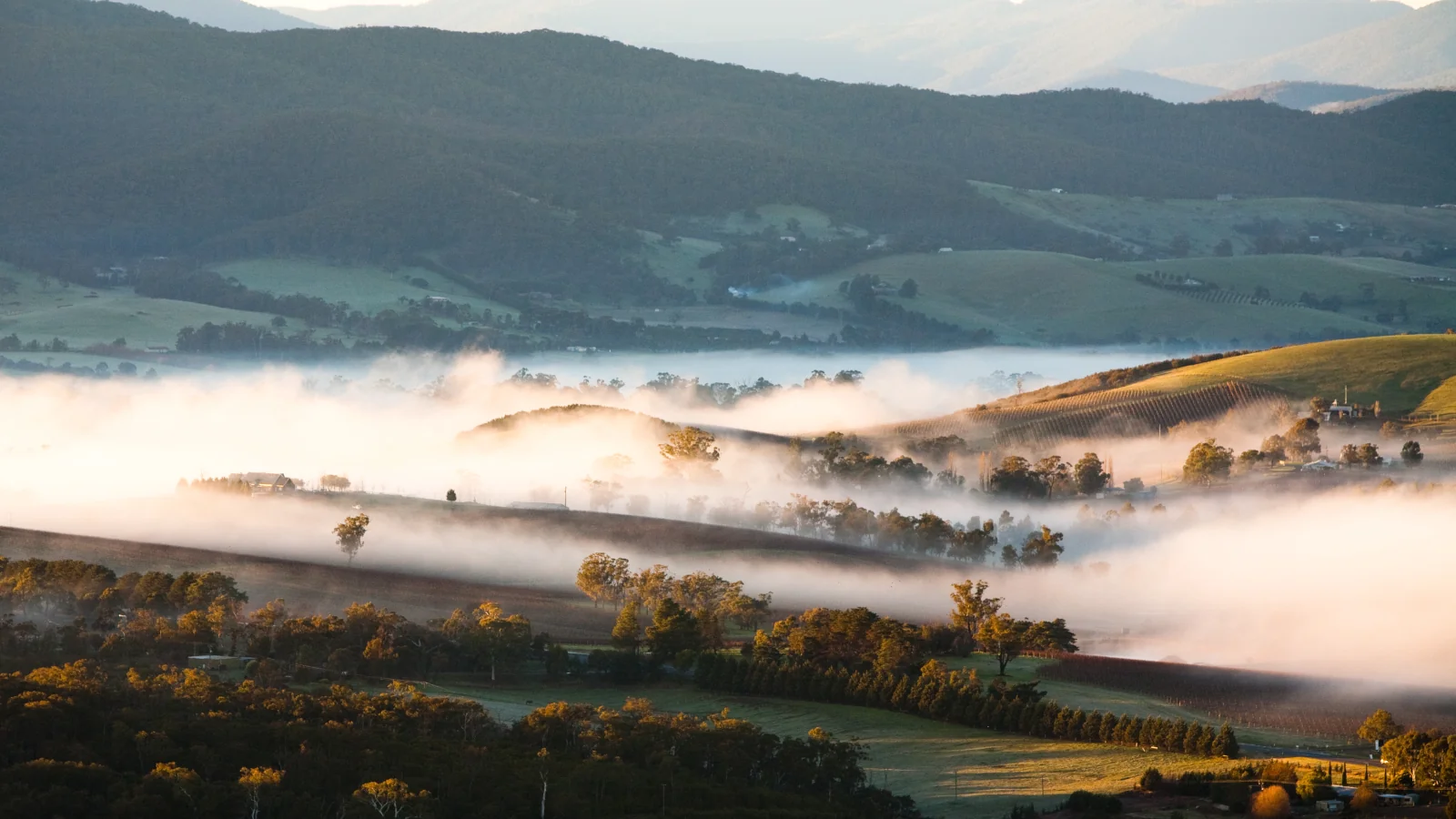
The real boom came in the 1980s, with producers such as Coldstream Hills, founded by renowned wine critic James Halliday, and Domaine Chandon, followed by Gary Farr, Phillip Jones of Bass Phillip and Nat White of Main Ridge, on the Mornington Peninsula. From then on, plantings of Chardonnay and Pinot Noir spread rapidly throughout Victoria and Tasmania. Yet, as Tom points out, “Young vines, a few oversized egos and a tendency to prioritise the winery over the vineyard resulted in many ‘manufactured’ wines, far removed from any true expression of place.”
With the beginning of the new century came a change of direction: producing less, but producing better, and paying closer attention to the vineyard and its ecosystem. “This evolution has been slow but steady, and today we have an extraordinary range of producers who are deeply connected to their land, working with relatively mature vines, 30 to 40 years old and beyond.” Nevertheless, Tom acknowledges that there is still much to learn. “Our understanding of the land is still limited, whereas the Old World has centuries of successes, and failures, behind it.”
Chardonnay, Pinot Noir and Pinot Meunier are also the foundation of Tasmania‘s traditional-method sparkling wines. The “Apple Isle”, as Tasmania is affectionately known because of its long history of apple production, has now also established itself as Australia’s leading region for premium sparkling wines. Further proof comes from the recent recognition awarded to Ed Carr of House of Arras, named “Sparkling Winemaker of the Year” at London’s International Wine Challenge (IWC). This is the second time Ed has received the prestigious title, having first won it in 2024, and he remains the only winemaker from the Southern Hemisphere, and only the second from outside Champagne, to be recognised among the crème de la crème of sparkling wine.
For Ed, there has never been any doubt that Tasmania is naturally suited to producing exceptional sparkling wines. Its more southerly latitude compared with the rest of Australia, together with a generally cooler, windier climate resulting from its exposure to the ocean and Antarctic winds, creates ideal conditions. “Approximately 42% of all grapes grown in Tasmania go into sparkling wine production, resulting in a remarkable diversity of styles,” Ed explains, before highlighting one characteristic they all share: purity. “The air here is incredibly clean. The rain coming in from the ocean is pure, and there’s more sunlight. Low humidity and the absence of particles in the air mean that sunlight is exceptionally intense, so you get more pronounced fruit characters in the wines. The cool climate also ensures excellent acidity.”
Until you experience it firsthand, this apparent contradiction is difficult to grasp, especially if you’ve spent your entire life in a Mediterranean climate. I still remember when a dear friend came to visit me from Calabria in spring. To be fair, spring in Melbourne is one of the most unpredictable times of the year. In Italy, we have a saying about the fickleness of March weather; in Melbourne, the entire spring season seems to have a mind of its own.
On one particularly sunny day, we decided to drive down to the coast for lunch. Throughout the journey, my friend kept opening and closing the car window, taking off her cardigan and putting it back on until she finally lost patience. Inside the car, the intensity and almost perpendicular angle of the midday sun had turned the cabin into a veritable furnace. Yet the air rushing in through the window was so icy that it cut through you like a steel blade. A situation as comical as it was exasperating for my unsuspecting friend.
Then again, the Antipodes and their people have always been something of a paradox. In McLaren Vale, for instance, Grenache vines dating back to the nineteenth century still grow, yet the red wines for which the region is now celebrated have only recently begun to receive the recognition they deserve. Yangarra, one of McLaren Vale‘s most prestigious wineries, owned by California-based Jackson Family Wines, boasts bush-trained Grenache vines dating from the 1940s. “Although Grenache has been grown in McLaren Vale since the late nineteenth century, for decades it was used almost exclusively for fortified wines. As a result, many of those old vines were pulled out, and today only a handful of bush vines remain. We own 25% of the total,” explains Yangarra vigneron Guillaume Camougrand.
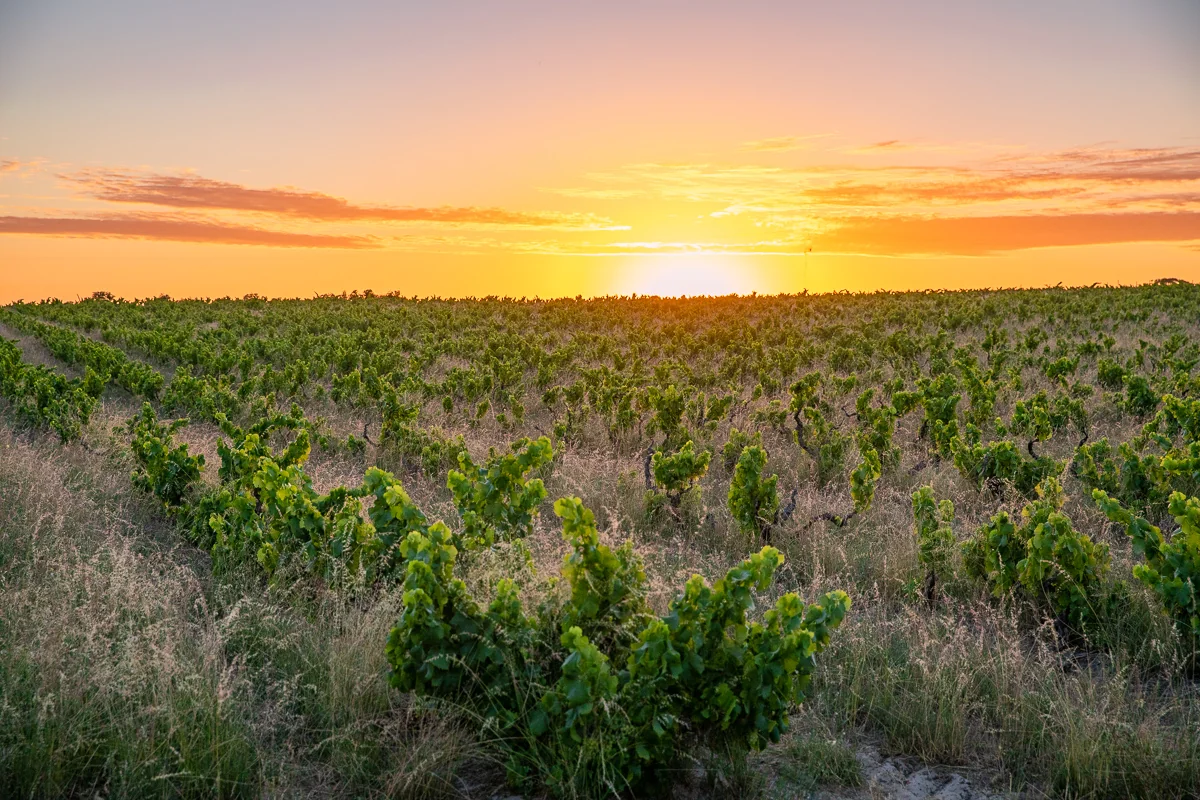
Yangarra’s Grenache vines grow in the highest part of the vineyard, at an altitude of 210 metres. They are unirrigated, their roots reaching deep into extraordinarily sandy soils, surviving in an extremely challenging environment with little in the way of nutrients or water retention. “But the sand is extraordinary in the way it enhances fruit purity, while also encouraging low pH levels and very precise tannins, which are the hallmarks of Yangarra Grenache.”
I’ll leave you wondering what these wines taste like, especially the High Sands. I’ll return to the subject in a dedicated article on Australian Grenache, exploring both Yangarra and Cirillo, the latter custodian of some of the oldest Grenache vines in the world, dating back to 1848.
Before bringing this “brief” introduction to the real face of Australia and its wines to a close, as a proud Italian I cannot resist a few observations on the evolution of Italian grape varieties Down Under. When I was working as a sommelier in Sydney and Melbourne’s fine-dining restaurants between 2010 and 2020, despite the growing demand for Italian wines, particularly those from Piedmont and Tuscany, and more recently Sicily, locally produced wines made from Italian grape varieties were few and far between, and generally of rather poor quality. And yet, Italians and Australians of Italian descent have long represented one of the country’s largest communities.
Ashley Ratcliff, a highly respected viticulturist from the Riverland, named “Viticulturist of the Year” this year by the prestigious Halliday Wine Companion, was among the first to research and invest in Italian varieties in Australia. “Back in the early 2000s, when I was working at Yalumba as technical viticulture manager, my first assignment was to travel around the world looking for grape varieties better suited to warm climates like ours.”
“When I visited the Grosseto area with the Antinori family to study varieties such as Vermentino, and then travelled down through Sicily, Campania and Puglia, I came back thinking, ‘My God, there are all these extraordinary grape varieties producing wines that are absolutely perfect for the table!'”
Today, Ashley grows more than 42 different grape varieties, many of them Italian. Nero d’Avola and Fiano have become genuine superstars, adapting remarkably well to Australia’s climatic extremes and pairing beautifully with the country’s rich and diverse cuisine, shaped by the flavours and culinary traditions brought from Asia and Europe.
“Consumers today prefer lighter, fresher wines. Whether you call it sheer luck or a successful strategy, these varieties work incredibly well in this country, not just in the vineyard, but in the glass too. I certainly don’t feel like drinking big, full-bodied reds somewhere as hot as Brisbane.”
Fiano has even earned its own award categories and classes at wine shows, while Sangiovese and Nebbiolo continue to gain ground. And then there are the unexpected discoveries. “We’ve just released Pecorino as a single-varietal wine, and I’m genuinely surprised by how well it’s been received. I thought it was a relatively unknown variety, but despite the production being limited to just two hundred cases, it seems to be the real revelation at the moment.”
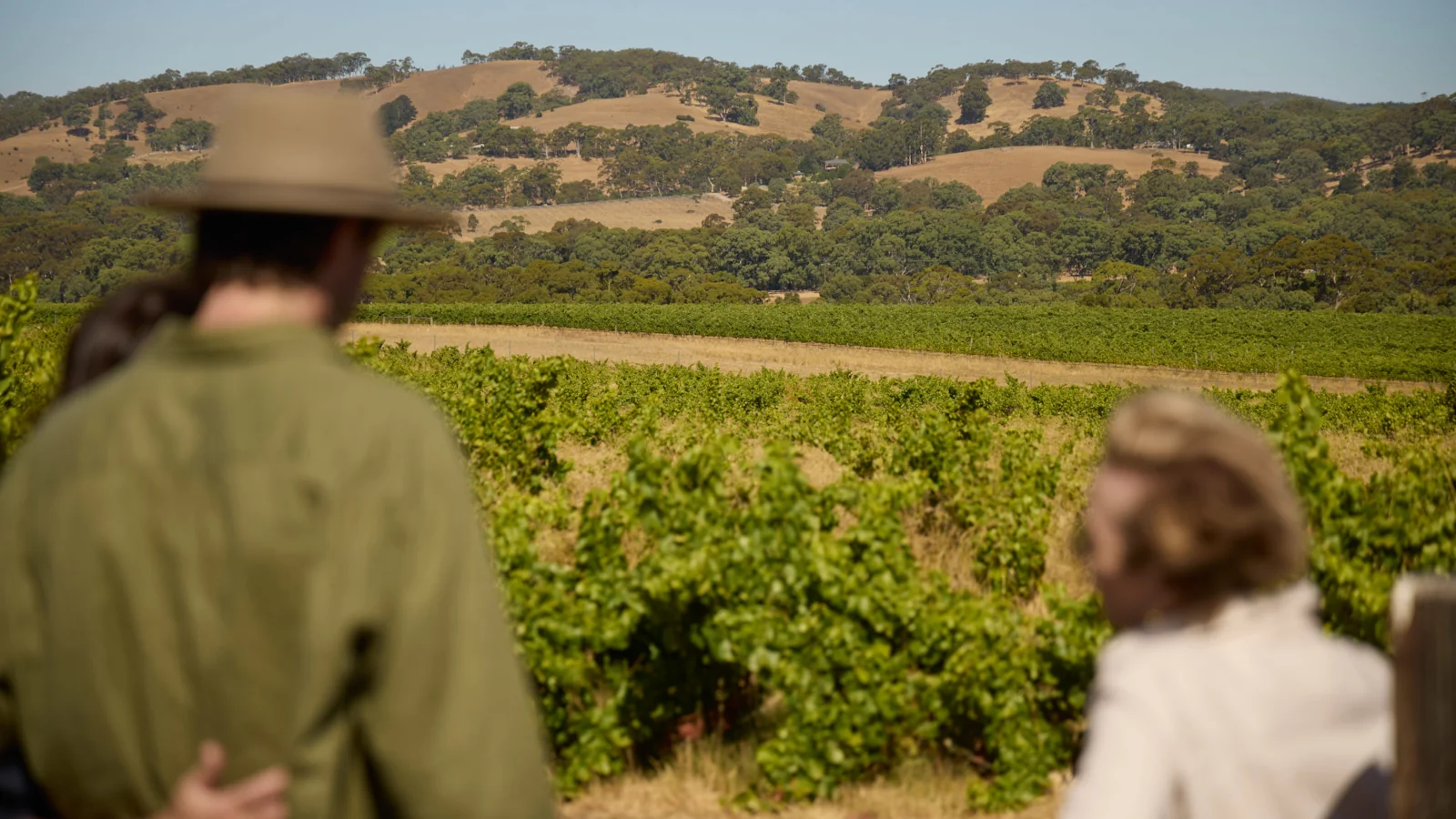
It is also worth recognising the important role played by competitions such as the Australian Alternative Varieties Wine Show in Mildura (Victoria), established in 2001 by Veneto-born Stefano de Pieri, local vigneron Bruce Chalmers and viticulturist Dr Roderick Bonfiglioli. The competition has worked tirelessly to promote grape varieties considered “alternative” to the traditional French classics, educating consumers while reflecting the continent’s remarkable ethnic diversity.
For Ashley, however, the term itself has had its day. “I almost think we should stop calling them ‘alternative’. Italian grape varieties originated in Italy, and if you go back far enough, many of them have Greek origins somewhere along the line.”
Australia now occupies the other half of my heart, alongside Italy. My son was born here and speaks perfect Australian English, as well as Italian, with a distinctly Tuscan accent somewhere between Lucca and Arezzo.
And to that young girl who used to shut herself away in her bedroom, dreaming of faraway places while relegating Australia to the bottom of her wish list, there’s just one thing I’d like to say today:
“How wrong you were.”