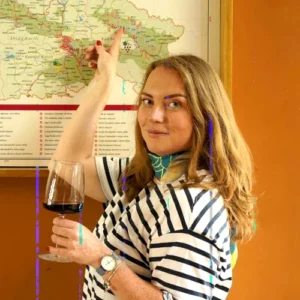
Visiting Georgia for a week or two is wonderful, but living here really makes you understand why wine occupies such a peculiar place in Georgian life. I first came to Georgia while I was living in Berlin, and I remember being swept away by a country that felt exotic and strangely familiar at the same time. Perhaps being Ukrainian had something to do with it: although the language, landscape and food were new to me, the way people gathered around a table, fed their guests and treated hospitality almost as a responsibility felt much closer to home.
There was also this inexplicable sense of being welcome. Georgians are famously hospitable, of course, but it goes beyond good service or being friendly to visitors. You can arrive as a paying client on a tour and somehow leave as a friend, with someone’s phone number, an invitation to their family home and vague plans to meet again next year.
Friendships were one of the reasons I eventually decided to move to Georgia and stay for “some time”. That was thirteen years ago, and I am not planning to move anywhere.
Once I started living here and being invited into people’s homes rather than simply visiting restaurants and wineries, however, I realised that the Georgian wine I knew from abroad was only a small part of the picture. Names such as semi-sweet Kindzmarauli, dark and powerful Saperavi or crisp Tsinandali were familiar, but at home people often drank something completely different. Wine came in bottles without labels or plastic jugs, was poured into small stemless glasses and could be anything from pale gold to deep amber. The names were new to me too: Mtsvane, Kisi, Krakhuna and dozens of others I had never encountered before.
What surprised me even more was how naturally wine came with its own rituals. Even when the people around the table were in their twenties, toasts appeared, stories followed and someone inevitably explained that the strange dark amber wine in my glass was not some new experiment but the ancient way Georgians had always made wine.
I couldn’t quite wrap my head around that claim. Every country with an old wine culture has a good origin story, after all, and “we invented wine” sounded suspiciously convenient.
Then the evidence began catching up with what all those Georgian uncles and grandfathers had been telling me.
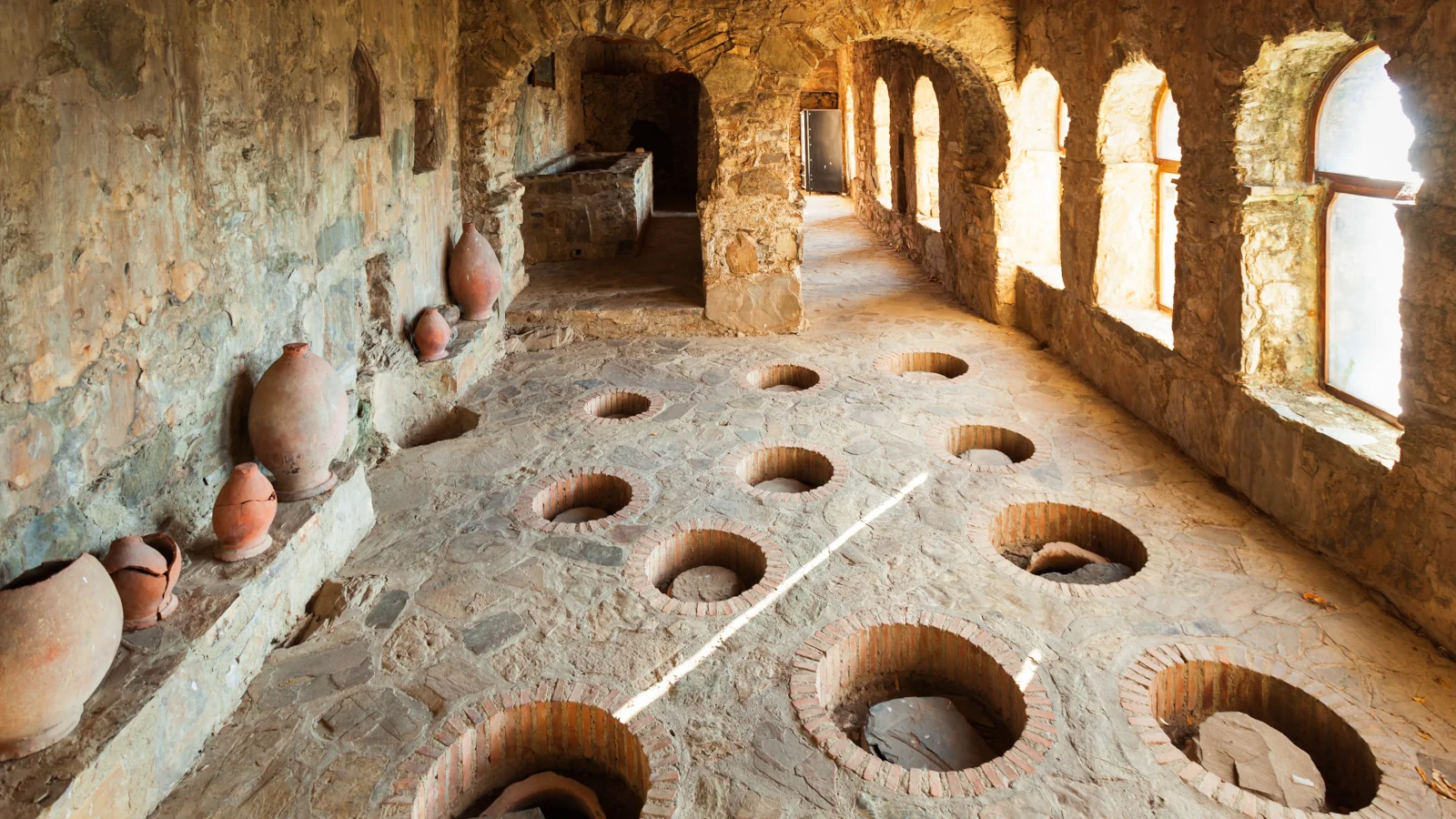
In 2013, UNESCO inscribed the ancient Georgian traditional qvevri winemaking method on its Representative List of the Intangible Cultural Heritage of Humanity. It was an important distinction because UNESCO was recognising not simply a clay vessel or a technical method of fermentation, but a living tradition: the knowledge of making wine in qvevri, the rituals surrounding it and the way that knowledge is passed through families and communities.
Then, in 2017, an international team of researchers published evidence of grape wine from Neolithic sites in today’s Georgia dating to approximately 6000–5800 BC. Suddenly, the claims I had heard from grandfathers, doctors, lawyers, taxi drivers and practically everyone else had some serious archaeological backing. Eight thousand years was no longer merely a beautiful national story.
By then, I had started spending my weekends visiting wineries, initially out of curiosity and eventually because Georgian wine became my work. What struck me was that the stories I heard were incredibly varied in their details and remarkably similar in their structure.
There was often an ancestor who had owned vines or made wine, followed by a rupture: Soviet collectivisation, war, economic hardship or simply a generation that moved away from agriculture. Then somebody came back. One family managed to buy ancestral land again; another planted a vineyard somewhere new; somebody discovered an old qvevri in a grandfather’s cellar and decided to use it. The commercial winery might be only five or ten years old, while the family’s relationship with wine stretched much further back.
This matters because Georgian wine existed in the home long before today’s Georgian wine industry took shape. There is still an expectation in many families that you should have some wine for yourself, for guests, for celebrating births and marriages and for mourning those who are gone. It isn’t necessarily fine wine by international standards, and sometimes it is rustic, cloudy or technically imperfect, but that is almost beside the point: this is wine made primarily to share rather than to sell.
The Soviet experience strengthened this attachment to homemade wine in another way. Decades of industrial production, including plenty of poor-quality and falsified wine, created a mistrust of mass-produced bottles that has not entirely disappeared. Even today, for many Georgians, knowing the person who grew the grapes can carry more weight than knowing the brand.
Living in a country where wine works like this is not always easy to understand at first, but after a while you stop observing the culture and realise that you have somehow become part of it yourself.
For me, that moment came when I was expecting my first child and discovered that I had gone shopping for winemaking equipment before buying a baby cot. The reasoning seemed perfectly sensible at the time: the baby could have more skin contact with me without the cot, whereas I needed to make wine to celebrate his arrival.
Skin contact is essential to the ancient Georgian tradition, you know.
After almost ten years of working with Georgian wine and wine tourism, I have also watched the way international visitors approach the country change considerably. A decade ago, many travellers discovered qvevri and amber wines after they arrived, much as I had. Today, they increasingly come looking for them. They know what skin-contact wine is, they want to taste indigenous varieties and they are curious about small family cellars where the line between someone’s home and their winery can be wonderfully unclear.
Most importantly, Georgian wine begins to make more sense when you experience it together with Georgian food and hospitality. Amber wines that might seem challenging at a conventional tasting can suddenly feel completely logical beside a table covered with khachapuri, aubergines with walnuts, herbs, cheeses and slow-cooked meat. Add a supra, with its sequence of toasts, stories and conversations, and wine stops being an isolated object in a glass and returns to the context in which it developed.
Perhaps that is what living in a country with 8,000 years of wine history really means. The archaeological dates are extraordinary, and Georgia has every reason to be proud of them, but the more interesting part is that wine here never became only a historical artefact or, later, simply an industry. It remained something families made, stored, opened, argued about and shared from one generation to another.
Over the coming months at Wining, I hope we can look beyond the convenient label of “the cradle of wine” and explore what grew out of those 8,000 years: the grapes, the regions and qvevri, certainly, but above all the people who keep the tradition alive.