A reflection on how consumption habits have changed in recent years and what place wine occupies today in the everyday lives of Spaniards.There was a time when wine was simply part of everyday life. It did not need to be explained, promoted, or justified. In Spain, as in much of Mediterranean Europe, wine was as common on the table as bread. It accompanied lunch, dinner, local celebrations, and conversations among friends.
Today, the situation is different.
Spain remains one of the world’s leading wine-producing nations, with one of the largest vineyard areas on the planet and an extraordinary diversity of regions, grape varieties, and appellations. Yet when we look at daily consumption habits, a question increasingly emerges: is Spain still truly a wine country?
The numbers reveal a clear transformation. Over recent decades, per capita wine consumption has steadily declined. While wine was once a nearly mandatory presence at family meals, today its consumption has become more occasional and selective. People do not necessarily drink less in restaurants or during special occasions, but they drink significantly less in their everyday lives.
This change goes beyond wine itself. The way Spaniards eat, work, and socialize has evolved. Urban lifestyles have replaced many traditional habits. Meals are often quicker, consumed outside the home, and at irregular times. In this new context, wine has lost part of its role as a daily food product and has taken on a more cultural and experiential dimension.
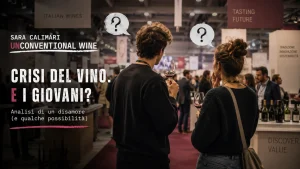
Younger generations perhaps offer the most interesting perspective on this evolution. Contrary to common belief, young people are not rejecting wine. They simply engage with it differently from their parents and grandparents.
For many under 35, wine is no longer an everyday beverage but a choice connected to a specific experience. It may be enjoyed at a wine bar, during a winery visit, at a tasting event, on a wine tourism weekend, or during a dinner with friends. Consumption becomes less frequent but often more conscious.
At the same time, attention to wellness, moderation, and sustainability continues to grow. Younger consumers seek authenticity, transparency, and a strong sense of place. They want to know the story behind the bottle, understand where it comes from, and discover what makes it unique.
In this environment, wine faces an important challenge. For decades, it relied heavily on tradition. Today, it must learn how to tell its story in a new way.
Wine communication in Spain is undergoing a profound transformation. Social media, digital creators, and new forms of storytelling are gradually replacing the highly technical language that dominated the sector for years. Increasingly, the conversation focuses on people, territories, and emotions rather than tasting notes and scores.
This is not necessarily a simplification. It is a shift in perspective.
Today’s consumers are not merely looking for information. They are looking for connection. They want to understand why a particular wine deserves their time and attention.
Perhaps this is where the answer to the original question lies.
Spain is still a wine country, but in a different way than it once was.
It is no longer the wine of everyday habit. It is the wine of choice. Of discovery. Of travel. Of experience.
A change that may seem like a loss when viewed through nostalgia, but one that could also represent an extraordinary opportunity. Because wine still holds an important place in Spanish culture. Today, however, it must earn that place every day through the value and meaning it is able to convey.