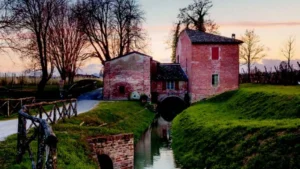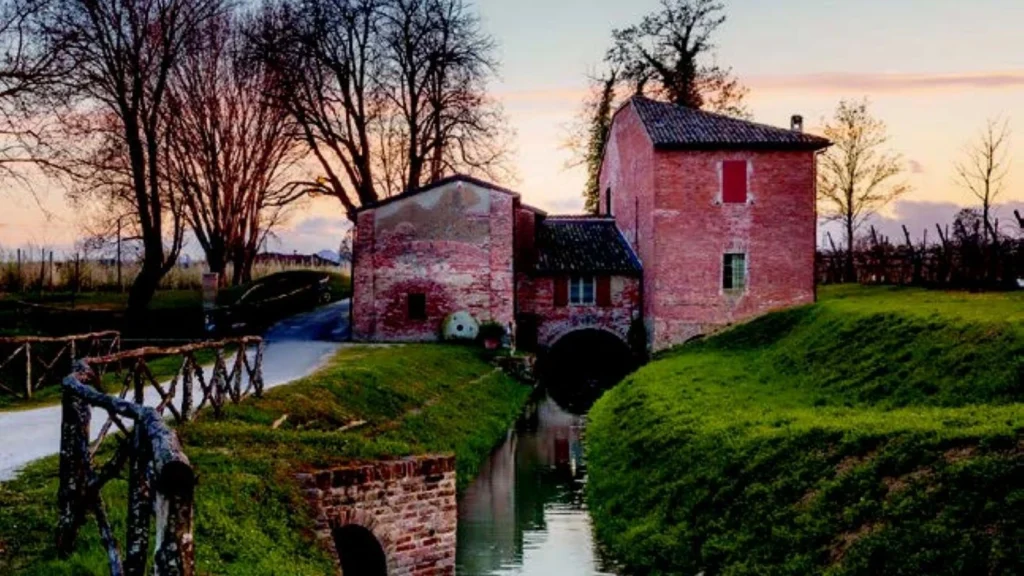
Along the Canale dei Mulini, from Castel Bolognese to Alfonsine, a cycling and walking route winds through nature and history, leading to the Mulino Scodellino, also known as the Countess’s Mill. Today, this historic mill produces flour in compliance with production and distribution standards and hosts a rich programme of cultural events.
The last working brick-built mill
Dating back to the 14th century and now protected by the Ministry responsible for architectural and environmental heritage, through the Ravenna Superintendency, the mill is at the centre of a programme of activities organised by Amici del Molino Scodellino APS. Publicly owned, Scodellino is one of the region’s 500 historic mills and the focus of a restoration project that also seeks to preserve the memory of a time when it was at the heart of local life. It is the last working brick-built mill along the canal.
Its name comes from the measure of flour — a scodella, or bowl — traditionally left to the miller as payment for grinding grain. The mill has remained virtually unchanged since its construction around 1398. It operated until 1982, when it closed as local agriculture increasingly turned to fruit trees and vines, and resumed its original function in 2016 during the FAI Heritage Days.
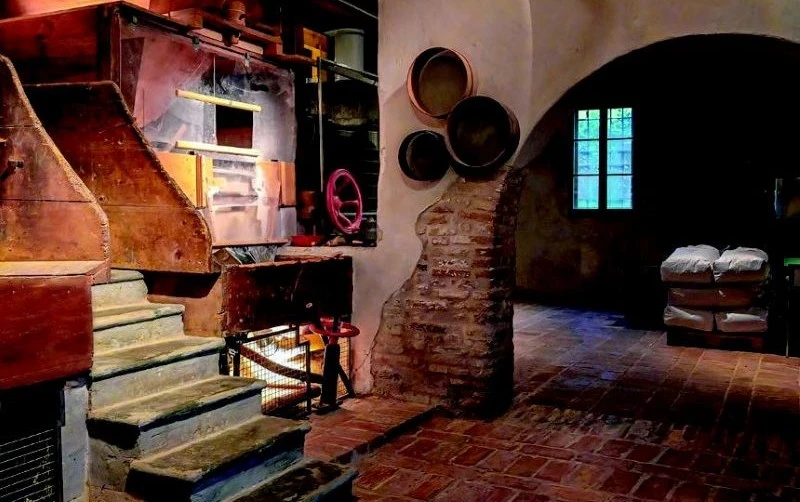
The medieval building, which houses the miller’s workshop and living quarters complete with kitchen, welcomes visitors. Several pieces of machinery are preserved inside the mill as examples of industrial archaeology.
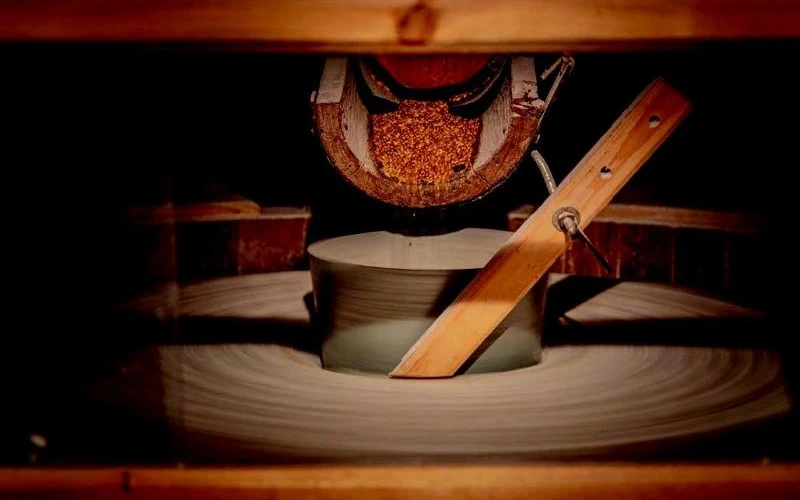
On the ground floor, in the first room, stand two monolithic stone millstones, dated 1843, used respectively for grinding wheat and other grain.
A little history
Contemporary with the founding of the castrum bononiense, the mill is part of the village’s earliest history. Documents record that on 1 December 1392 the Senate of Bologna ordered the construction of the mills of Castel Bolognese. Over the following three years, a weir was built and the canal excavated, both to fill the moat protecting the recently constructed castle and to power the mill wheels.
The virtual miller
The mill can be explored through its Virtual Museum by booking on the website and interacting with a virtual woman miller. During exhibitions and cultural events, visitors can also explore the mill in person and use state-of-the-art headsets to experience the interactive world of a miller 2.0.
Dining at the mill
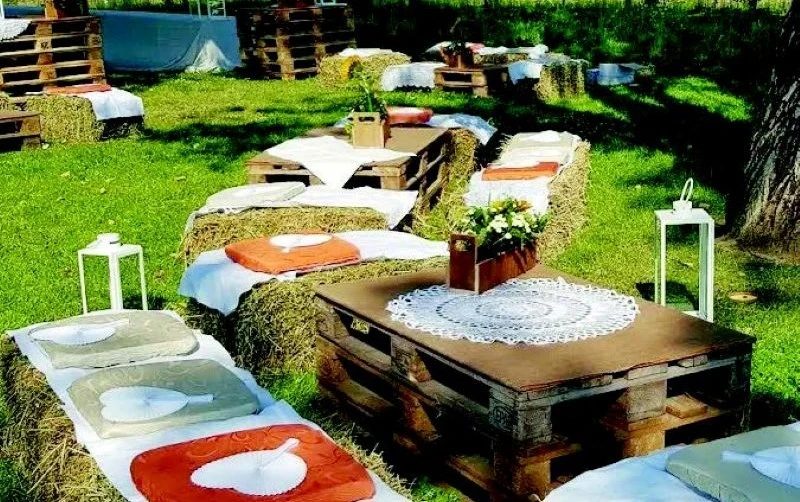
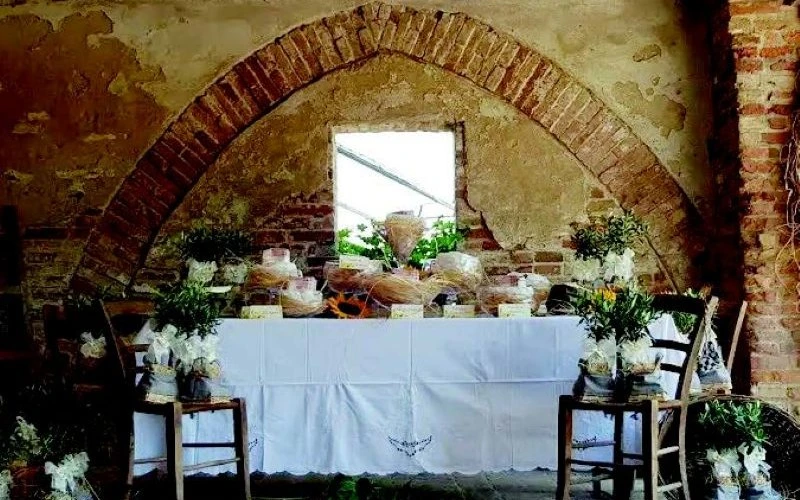
Visitors can book tours that include products from the mill — flour, pasta, breadsticks, crackers, biscuits and diamantini — made by workshops and businesses along the Canale dei Mulini. They can also enjoy a traditional lunch (at 12:30 p.m.) featuring local produce, or an afternoon snack (at 4:00 or 5:00 p.m.) of bread with Brisighella PDO olive oil, or pizza alla pala, accompanied by a glass of wine from local wineries.
Mulino Scodellino
Via Canale, 7 – Castel Bolognese (RA)
tel. 339 6487370 – scodellino@gmail.com
aperto solo su prenotazione
www.mulinoscodellino.it